Health and finances predict sustained robustness in older adults
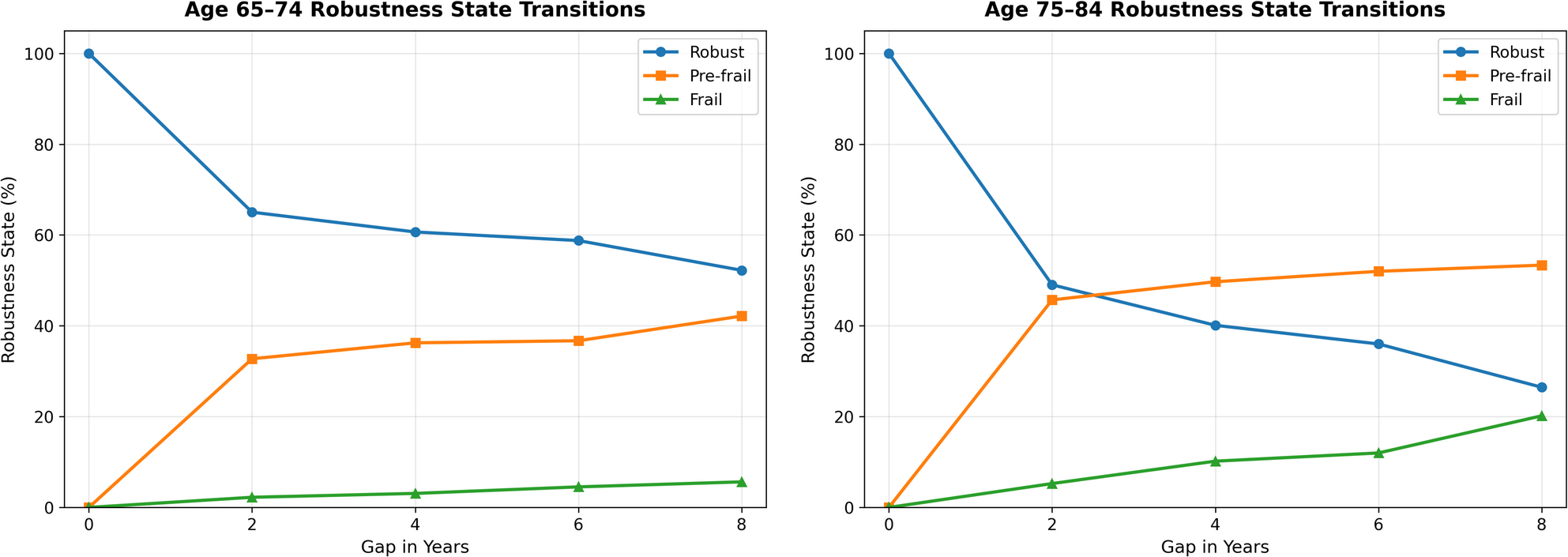
Over eight years, 52% of adults aged 65–74 and 26% aged 75–84 stayed robust, with health and financial security predicting the outcome.
BMC Geriatrics
Researchers analyzed 7,865 adults aged 65 to 84 across 27 countries who were robust at baseline in the Survey of Health, Ageing and Retirement in Europe. The team tracked participants over eight years across Waves 4 to 8, stratifying them into younger-old (65–74) and older-old (75–84) groups. Overall robustness declined steadily over time. Logistic regression models showed that better self-rated health (OR ≈ 0.72, p < 0.001), fewer chronic conditions (OR ≈ 0.89, p < 0.001), and greater financial security (OR ≈ 1.11, p = 0.018) were the strongest and most consistent predictors of remaining robust. Participation in social and cognitive activities was also linked to sustained robustness in some models.
Why it matters
Most longevity studies focus on risk factors that accelerate frailty rather than the determinants of staying robust. Tracking sustained robustness provides a measurable framework to target resilience and functional maintenance in older populations.
Caveats
The study is observational and cannot confirm causal relationships. Additionally, baseline physical activity contributed directly to the study's operational definition of robustness, complicating the interpretation of its association with the outcome.
The paper
Tel Aviv University · University of Haifa
BMC Geriatrics · 19 Aug 2026