Persistent depression speeds frailty accumulation in older adults
Across 57,894 older adults, a persistent high depression burden predicted faster frailty accumulation at 1.42 × 10⁻³/year and elevated odds of incident frailty.
Journal of Affective Disorders
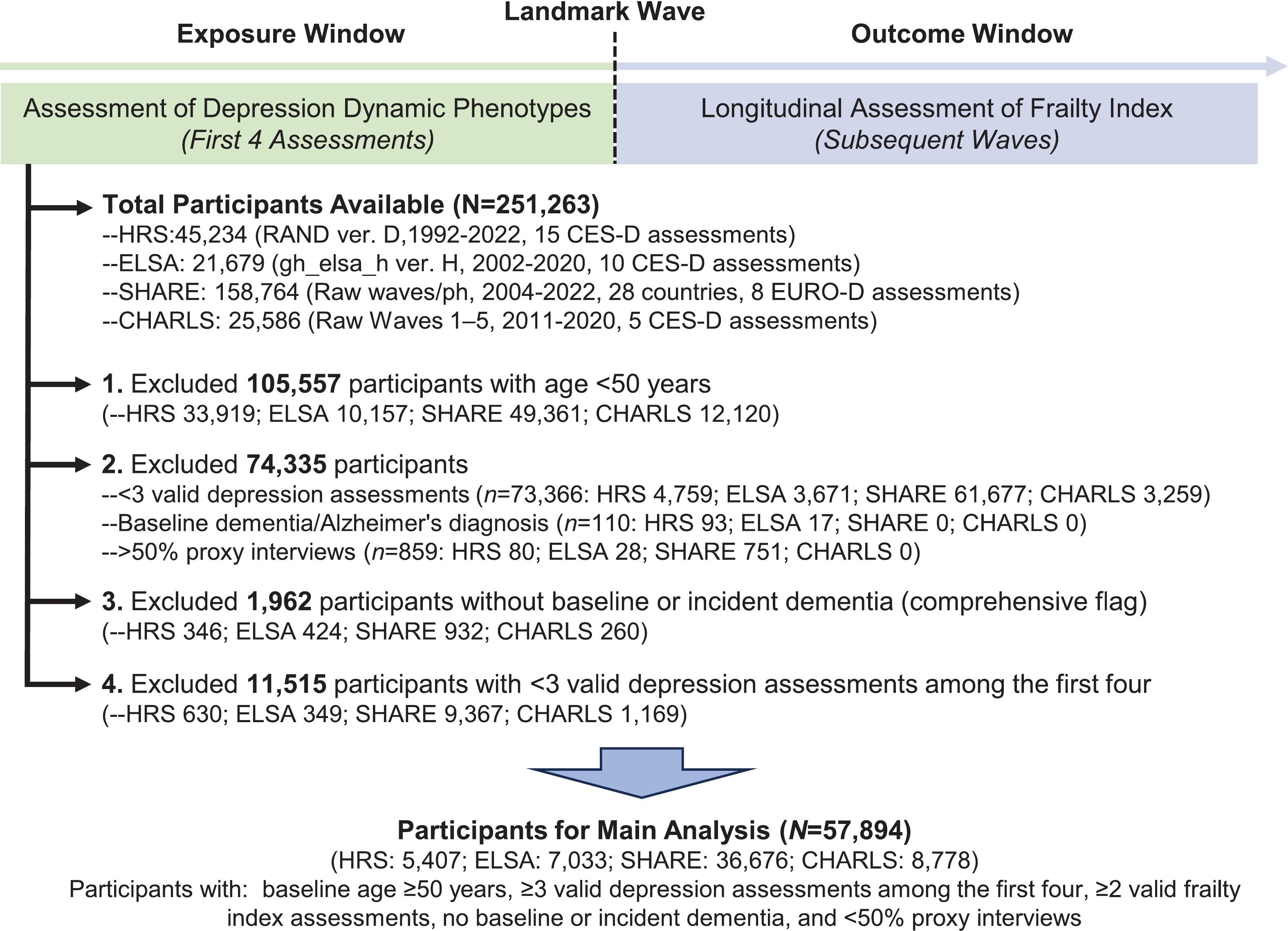
In 57,894 older adults from four prospective cohorts, researchers evaluated how dynamic depression trajectories relate to frailty progression over time. Using data from the HRS, ELSA, SHARE, and CHARLS studies, the team classified participants into five phenotypes based on depressive symptoms across their first four assessments. Five phenotypes emerged across all cohorts: persistently healthy, remitting, late-onset, fluctuating, and persistent high burden. The persistent high burden group comprised 7.9% to 20.3% of participants. In three cohorts amenable to landmark analysis, persistent high burden consistently predicted faster non-cognitive frailty accumulation (meta-analysis 1.42 × 10⁻³/year, 95% CI 0.65–2.19) and significantly increased the odds of incident frailty, with odds ratios between 1.29 and 2.75. In contrast, the fluctuating phenotype linked to frailty mostly concurrently rather than temporally.
Why it matters
The findings show that chronic depressive symptoms, rather than temporary or fluctuating episodes, track closely with accelerated physiological deficit accumulation during late life.
Caveats
The study was observational, cannot establish causation, and landmark predictive analyses could not be conducted across all four cohorts.
The paper
Huazhong University of Science and Technology
Journal of Affective Disorders · 1 Oct 2026