Age and frailty interaction models predict hip fracture mortality
Across 115,643 patients, predicted 30-day mortality ranged from 0.48% to 32.06% depending on age, frailty, and surgical fixation type.
Injury
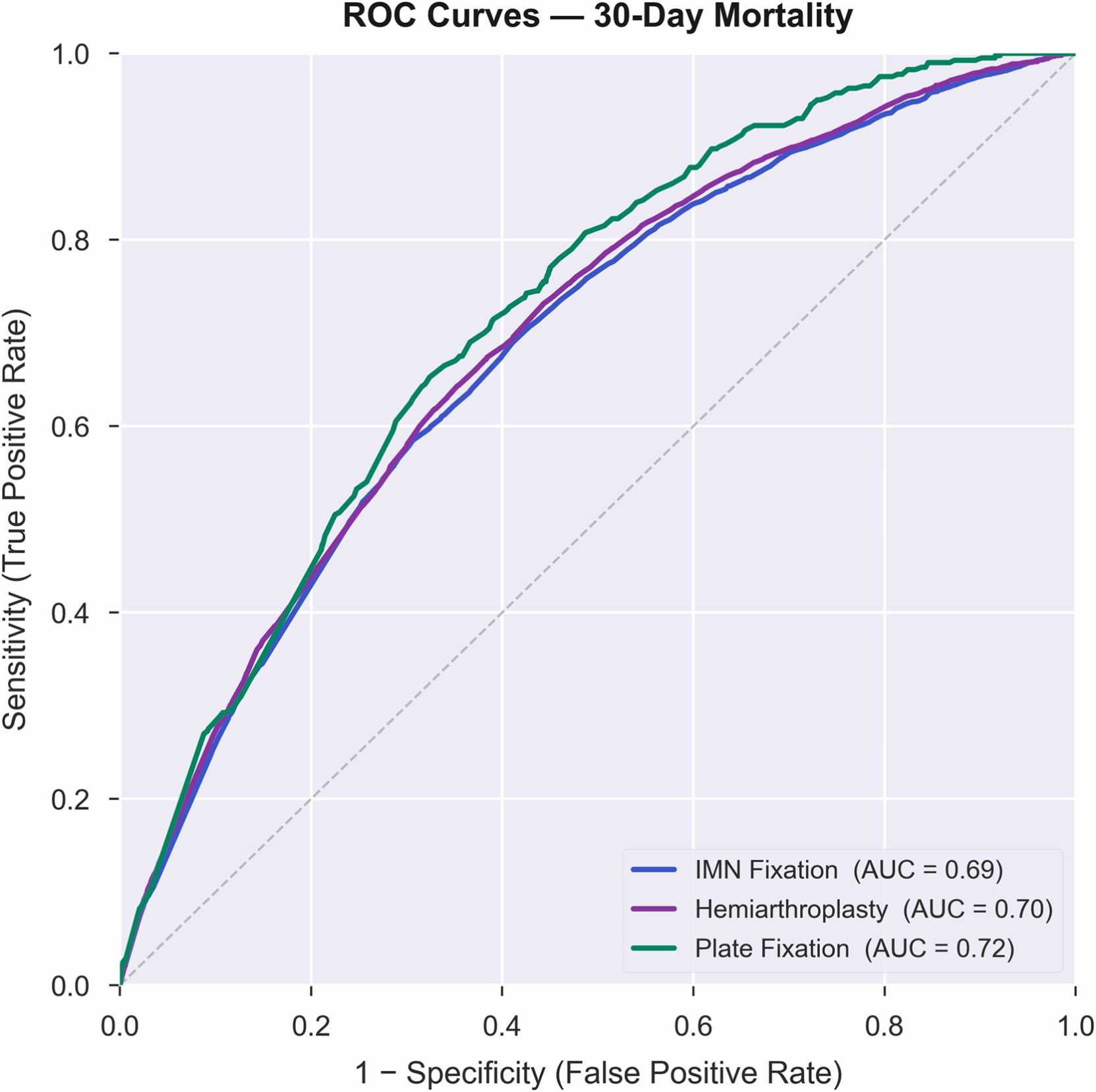
In a retrospective study of 115,643 adults, researchers analyzed how age and frailty interact to influence 30-day mortality after hip fracture surgery. Using ACS-NSQIP data from 2019 to 2023, the team assessed patients who underwent intramedullary nailing, hemiarthroplasty, or plate fixation. Frailty was tracked with a 5-item modified frailty index. Overall 30-day mortality was 5.25%. Predicted mortality varied across age-frailty combinations: 1.41% to 28.83% for intramedullary nailing, 1.26% to 32.06% for hemiarthroplasty, and 0.48% to 20.37% for plate fixation. In propensity-matched analyses, intramedullary nailing showed higher transfusion rates, whereas hemiarthroplasty had higher cardiopulmonary complication rates. Hospital length of stay did not differ between procedures.
Why it matters
Frailty captures differences in physiologic reserve that chronological age alone cannot account for. Modeling how both variables interact can sharpen risk estimation and help guide surgical choices in older adults.
Caveats
The findings come from a retrospective analysis of database records. Because the study was observational, it cannot prove that selecting a particular fixation technique directly causes differences in mortality.
The paper
Show 8 more authors
Michael P. Fice, Christopher David Hamad, Casey Abernethy, Sumin Jeong, Amanda Perrotta, Ezekiel Dingle, Othneil Noble Sparks, Alexandra Stavrakis,University of California, Los Angeles · Los Angeles Medical Center
Injury · 30 Sep 2026