Neighborhood disadvantage links to dementia in kidney failure
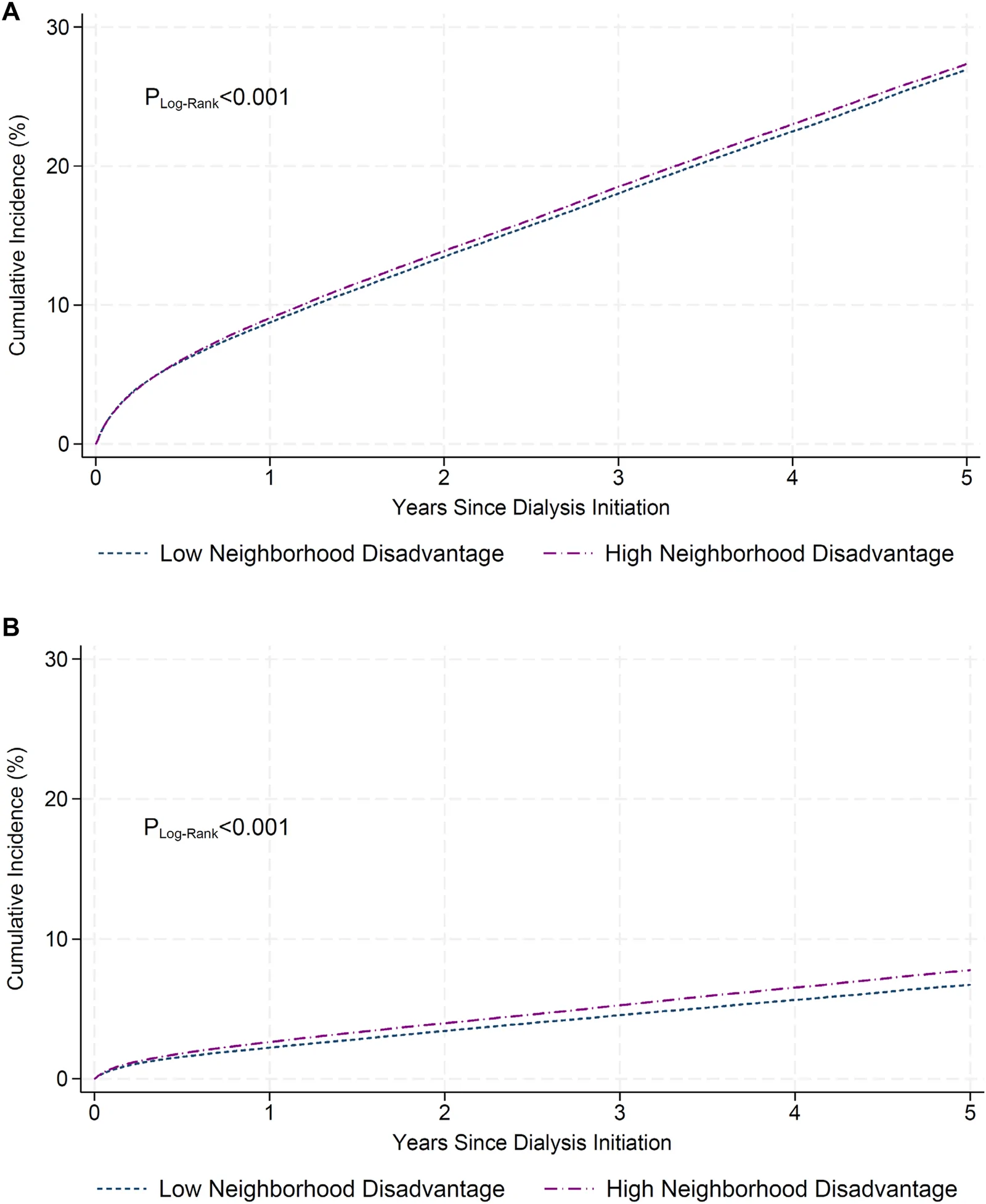
Among older dialysis patients, living in highly disadvantaged neighborhoods was linked to adjusted hazard ratios of 1.09 for dementia and 1.25 for Alzheimer's disease.
Kidney Medicine
Older patients aged 55 and older who began dialysis between 2003 and 2021 were evaluated using United States Renal Data System records. Researchers measured neighborhood disadvantage with a ZIP-code index across nine domains and tracked Alzheimer's disease and related dementias via diagnosis codes. Patients in high-disadvantage neighborhoods had higher risks of dementia (adjusted hazard ratio 1.09) and Alzheimer's disease (adjusted hazard ratio 1.25) than those in low-disadvantage neighborhoods. These patterns varied across race, ethnicity, and urbanicity. Older Black patients in high-disadvantage areas had adjusted hazard ratios of 1.19 for dementia and 1.31 for Alzheimer's disease versus those in low-disadvantage settings. Higher risks also appeared in disadvantaged suburban, rural, and small-town areas.
Why it matters
The findings show that environmental and structural factors may compound the risk of late-life neurodegenerative disease in older adults experiencing kidney failure.
Caveats
The observational analysis relied on administrative diagnosis codes to detect dementia cases and used ZIP codes as a proxy for neighborhoods.
The paper
Show 10 more authors
Byoungjun Kim, Sunjae Bae, Babak John Orandi, Mario P. DeMarco, Wenbo Wu, Deidra C. Crews, Tanjala S. Purnell, Roland J. Thorpe Jr., Sarah L. Szanton, Dorry Lidor Segev,New York University
Kidney Medicine · 20 Jul 2026