Metabolically unhealthy normal weight tied to carotid disease
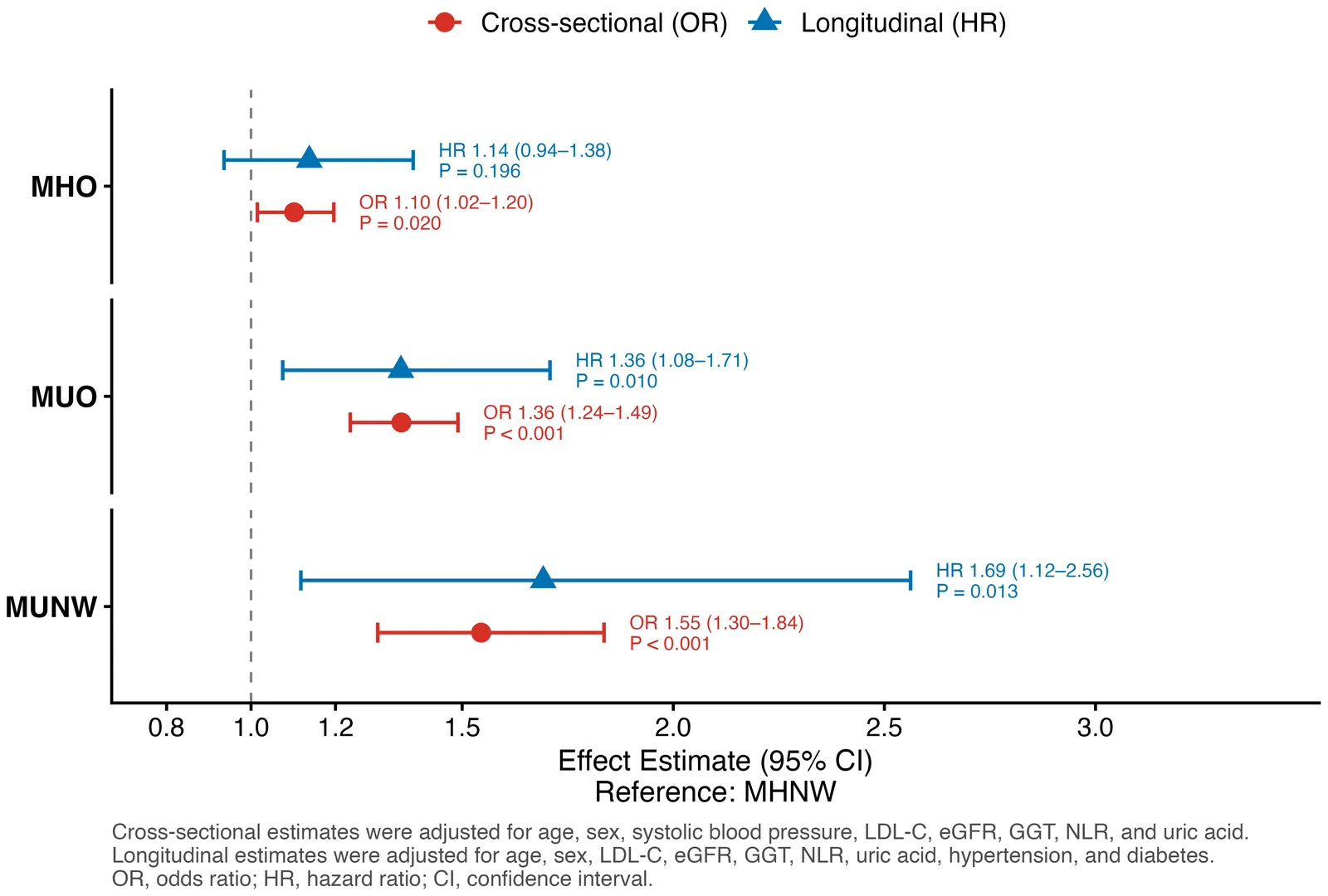
Normal-weight adults with metabolic dysfunction showed a hazard ratio of 1.69 for incident subclinical carotid atherosclerosis compared with metabolically healthy normal-weight peers.
Frontiers in Endocrinology
In a cohort of Chinese adults undergoing routine health examinations, researchers evaluated how metabolic health and body mass index relate to subclinical carotid atherosclerosis. The cross-sectional analysis examined 26,202 individuals, while a longitudinal subcohort tracked 4,938 participants without carotid disease at baseline over a median of 1.78 years. Compared with metabolically healthy normal-weight individuals, metabolically unhealthy normal-weight adults had higher odds of prevalent carotid atherosclerosis (odds ratio 1.55) and higher risk of incident disease (hazard ratio 1.69). Risk estimates for this group were numerically higher than those for metabolically unhealthy overweight or obese participants, though direct comparisons between them were not statistically significant. Metabolically healthy overweight participants showed no statistically significant increase in incident disease.
Why it matters
The findings show that metabolic dysfunction associates with early arterial disease even without excess body weight. Relying on body mass index alone may overlook individuals experiencing accelerated vascular aging.
Caveats
This retrospective observational study was conducted at a single hospital center with a median follow-up of only 1.78 years. In addition, the longitudinal subcohort of metabolically unhealthy normal-weight individuals was small, and medication use was not recorded.
The paper
Hubei University of Arts and Science
Frontiers in Endocrinology · 16 Sep 2026