Biomarker score with ketone bodies predicts atrial fibrillation
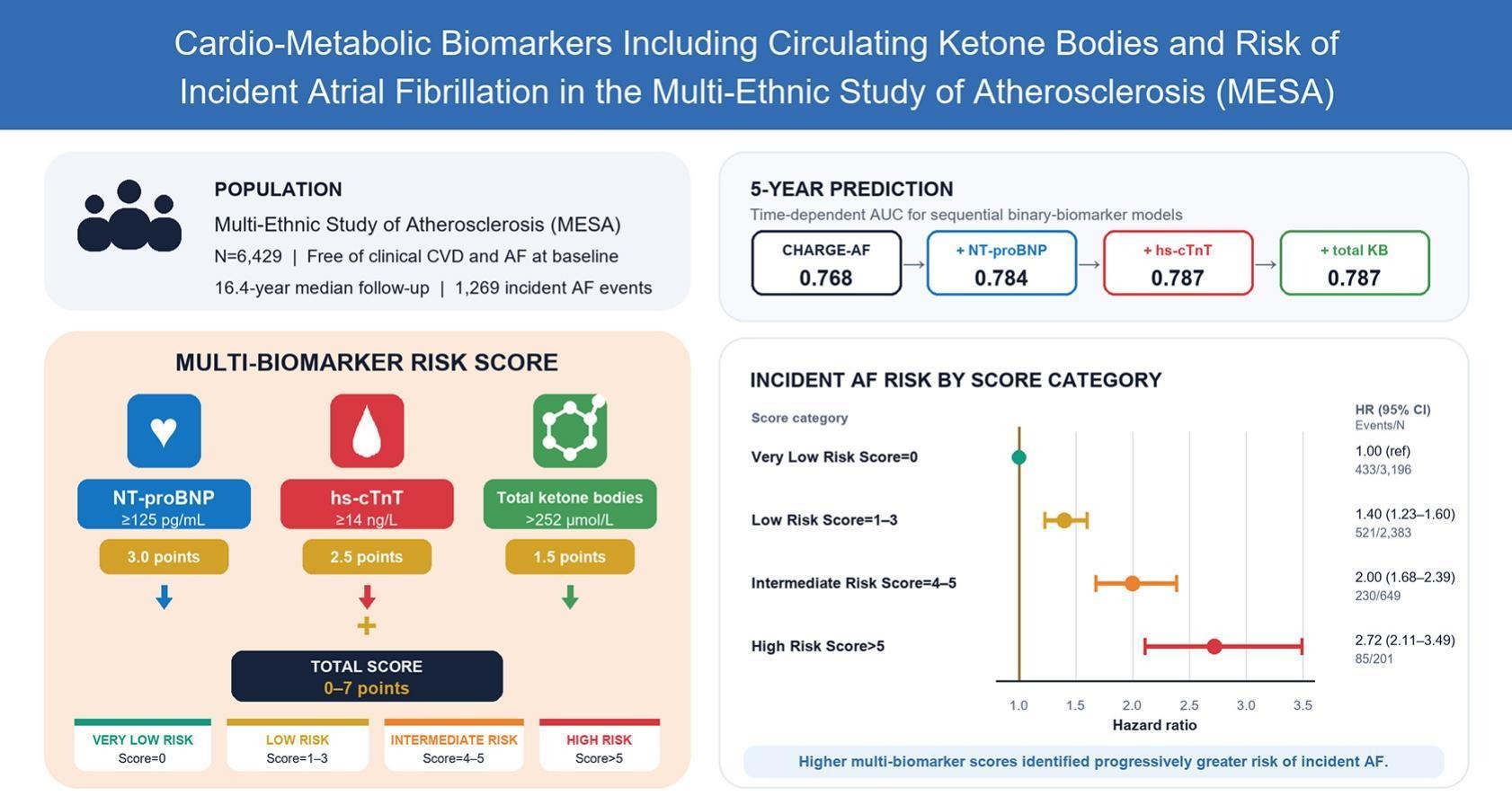
A high biomarker score carried nearly threefold greater atrial fibrillation risk than a very low score (HR 2.72; 95% CI, 2.11-3.49).
Progress in Cardiovascular Diseases
In a study of 6,429 Multi-Ethnic Study of Atherosclerosis participants initially free of atrial fibrillation and clinical cardiovascular disease, researchers tested a multi-biomarker score to predict incident atrial fibrillation. The score integrated circulating ketone bodies (above 252 μmol/L), NT-proBNP (at or above 125 pg/mL), and hs-cTnT (at or above 14 ng/L), classifying individuals from very low to high risk.
Over a 16.4-year follow-up, 1,269 participants developed atrial fibrillation before death. Higher risk score categories demonstrated a strong, graded increase in atrial fibrillation risk independent of demographic, socioeconomic, and clinical covariates. The high-risk category carried nearly threefold greater risk than the very low category (HR 2.72; 95% CI, 2.11-3.49). The biomarker score also provided modest incremental predictive value beyond the CHARGE-AF clinical model.
Why it matters
Atrial fibrillation reflects systemic cardio-metabolic dysfunction that accumulates with age. Combining circulating ketone bodies with established markers of cardiac stress highlights the role of metabolic alterations in the development of late-life arrhythmias.
Caveats
The study was observational, and the biomarker score offered only modest predictive gains over the CHARGE-AF tool. The authors emphasize that external validation is required before any clinical application.
The paper
Show 9 more authors
Kaushik Gokul, Margery A. Connelly, Christopher R. deFilippi, Natalie Bradford, Anvi Raina, Susan R. Heckbert, Moyses Szklo, Takeki Suzuki, Michael David Shapiro,Wake Forest University
Progress in Cardiovascular Diseases · 30 Sep 2026