PFAS exposures link to glaucoma and cataract risks
An analysis of 2005–2008 NHANES data, Mendelian randomization, and cell assays linked PFOS exposure to glaucoma risk through PI3K/Akt signaling.
Food and Chemical Toxicology
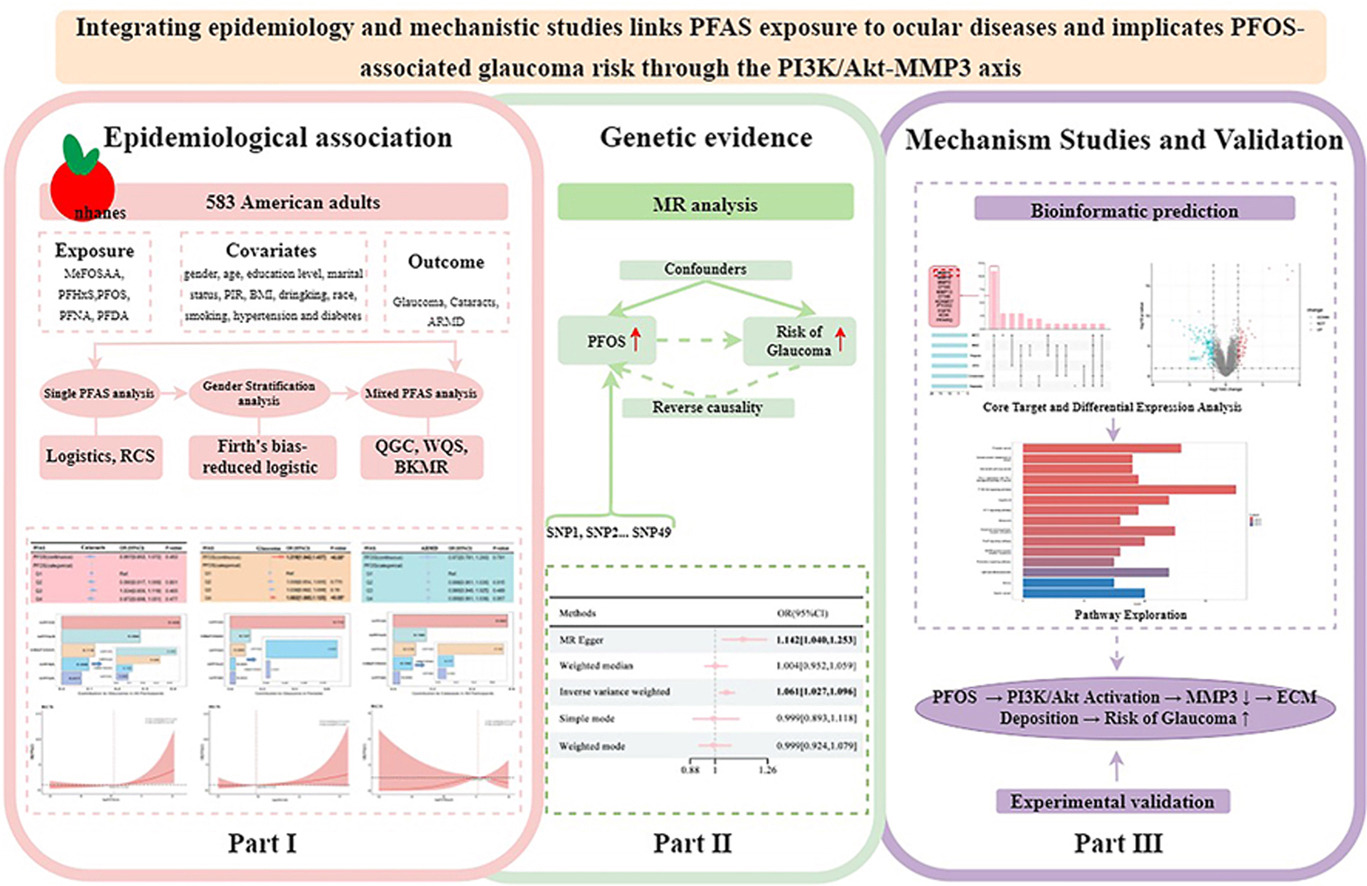
In a study of U.S. adults from the 2005–2008 NHANES survey, researchers evaluated associations between perfluoroalkyl substances and ocular diseases. Cross-sectional analyses linked PFOS to glaucoma and PFNA to cataracts. In sex-stratified models, PFOS was associated with glaucoma in females, whereas PFDA was linked to glaucoma and PFNA to cataracts in males. Mixture models indicated PFOS may drive glaucoma risk. Mendelian randomization further supported a positive PFOS-glaucoma association. Follow-up network toxicology and in vitro tests showed that PFOS activated PI3K/Akt signaling and reduced MMP3 expression. Treating cells with LY294002 partly restored MMP3 levels, suggesting this pathway alters extracellular matrix dynamics in trabecular meshwork cells.
Why it matters
Glaucoma and cataracts are common age-related eye conditions, and identifying environmental pollutants that disrupt tissue homeostasis could reveal modifiable risk factors for sensory decline.
Caveats
The primary epidemiological results come from a cross-sectional dataset that cannot establish causality. Furthermore, the mechanistic pathways were examined only in cell cultures.
The paper
Show 7 more authors
Zengxu Shen, Yue Fei, Luyao Jiang, Mingjing Sun, Zihan Wang, Jing Xiao, Demin Cheng,Nantong University
Food and Chemical Toxicology · 30 Sep 2026