Type 2 diabetes prevalence fell in Mauritius after 2009
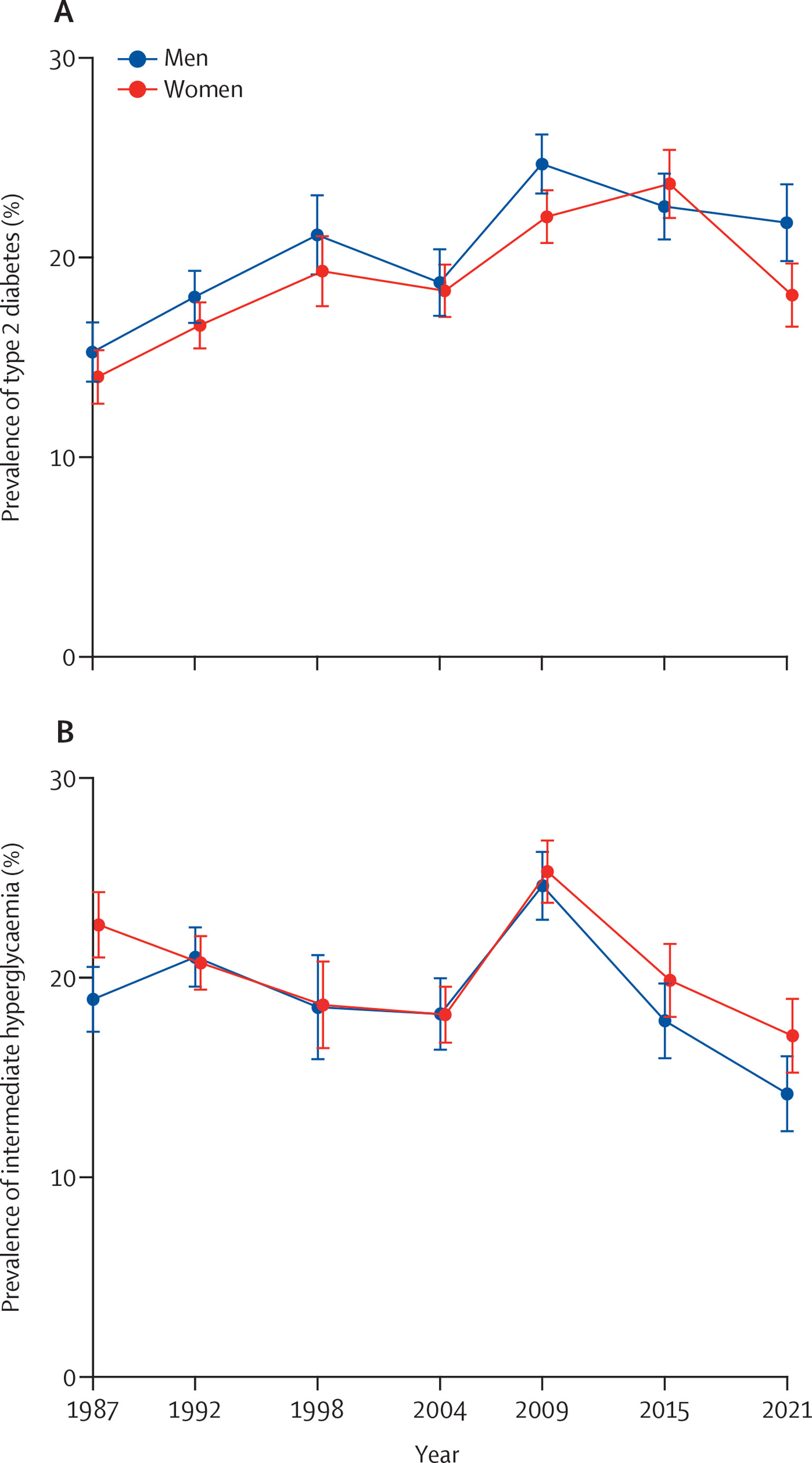
Standardised type 2 diabetes prevalence rose from 14.7% in 1987 to peak at 23.3% in 2009 before falling to 19.9% in 2021.
The Lancet Diabetes & Endocrinology
In a nationwide study of adults aged 25 to 74 years in Mauritius, researchers tracked metabolic trends across seven population surveys between 1987 and 2021, totaling 36,744 attendances. Participants underwent fasting plasma glucose testing and oral glucose tolerance tests to classify glycaemic status according to World Health Organization criteria. Age- and sex-standardised prevalence of type 2 diabetes grew from 14.7% in 1987 to peak at 23.3% in 2009, before decreasing significantly to 19.9% in 2021 across all sexes, age brackets, and ethnicities. Intermediate hyperglycaemia followed a parallel course, peaking at 24.9% in 2009 after starting at 20.8% in 1987, and dropping to 15.6% in 2021. The proportion of diabetes cases that were newly diagnosed also fell from 67.0% in 1987 to 32.5% in 2021.
Why it matters
Impaired glucose metabolism and type 2 diabetes are major contributors to age-related vascular and functional decline. The findings demonstrate that population-level burdens of metabolic dysfunction can be reduced over time.
Caveats
The repeated cross-sectional design cannot track individual disease trajectories or establish direct causal mechanisms for the decline. The results also reflect the specific public health context and demographics of Mauritius, which might not apply to other populations.
The paper
Show 5 more authors
Jaysing Heecharan, Noorjehan Joonas, Per Liv, Jonathan E Shaw, Dianna J. Magliano,University of Helsinki · Umeå University
The Lancet Diabetes & Endocrinology · 30 Sep 2026