Comorbidity predicts disability only in nonfrail older patients
Higher comorbidity scores raised disability odds in nonfrail patients (OR 1.44) but not in frail patients (OR 0.98) across 1,299 hospitalized older adults.
Journal of the American Medical Directors Association
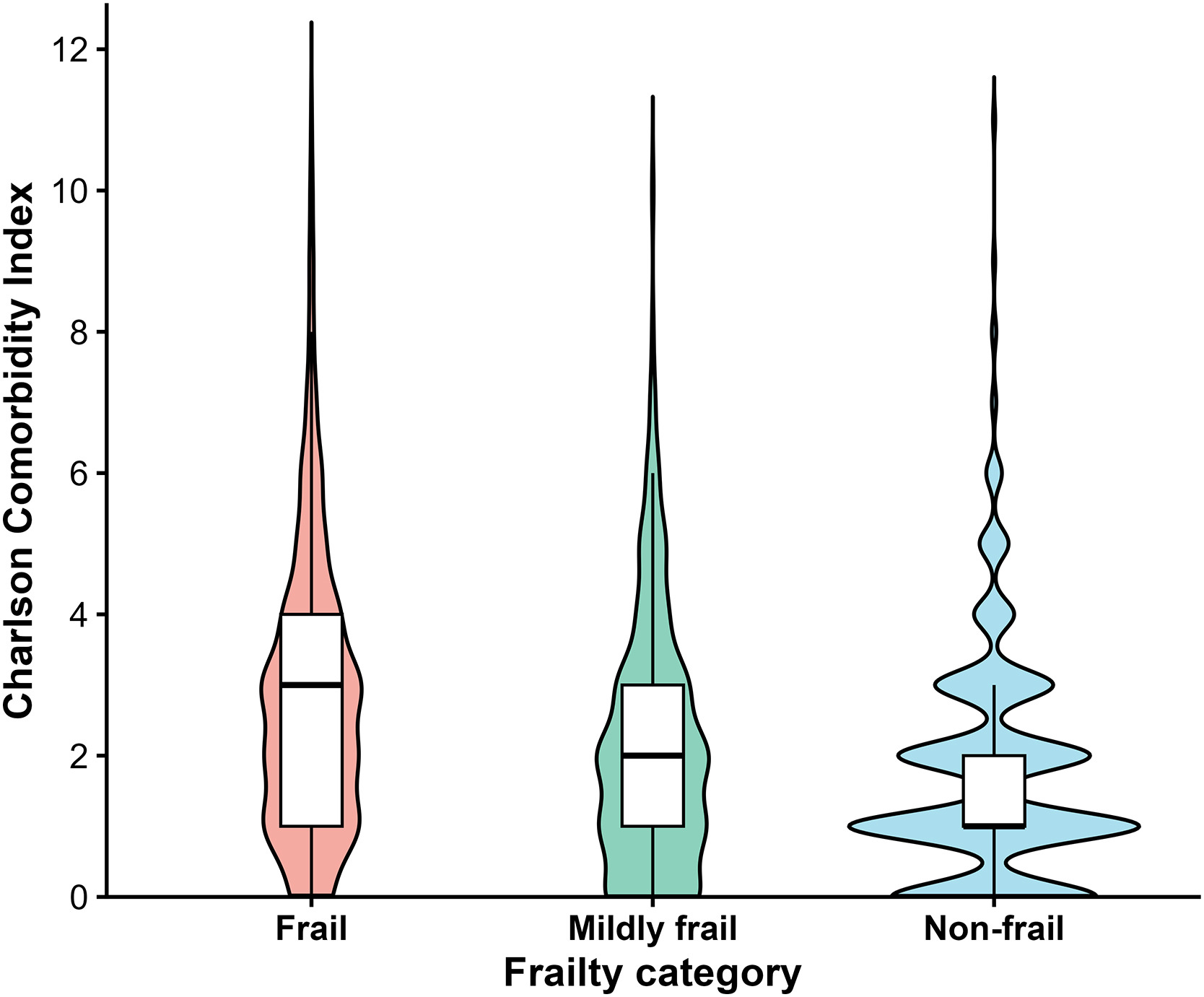
In a retrospective cohort of 1,299 adults aged 65 and older admitted to acute care hospitals in Japan, researchers evaluated how frailty alters the risk of hospital-associated disability from multimorbidity. The team measured comorbidity burden with the Charlson Comorbidity Index and frailty using the Clinical Frailty Scale. They tracked hospital-associated disability, defined as a decline of at least 5 points on the Barthel Index during hospitalization. In multivariable models adjusted for age, sex, and cognitive function, comorbidity burden predicted higher odds of disability in nonfrail patients (odds ratio 1.44, 95% CI 1.20–1.73). This relationship attenuated in mildly frail individuals (odds ratio 1.11, 95% CI 0.91–1.35) and was not observed in frail patients (odds ratio 0.98, 95% CI 0.90–1.06).
Why it matters
The findings show that prognostic risk from chronic diseases diminishes as physiological vulnerability rises. This suggests acute functional decline in frail older adults depends more on overall frailty than on specific disease counts.
Caveats
The investigation relied on a retrospective observational design limited to acute care hospitals in Japan, and the analysis only followed functional changes during inpatient stays.
The paper
Show 6 more authors
Kazuhisa Watanabe, Chisato Fujisawa, Hitoshi Komiya, Tomihiko Tajima, Shosuke Satake, Yasushi Takeya,Nagoya University · University of Tokyo Hospital
Journal of the American Medical Directors Association · 30 Sep 2026