Tailored text messages sustain exercise in older people with HIV
Recipients of tailored messages maintained 30.5 minutes of daily physical activity compared to 26.0 minutes in the educational control group over 12 weeks.
AIDS and Behavior
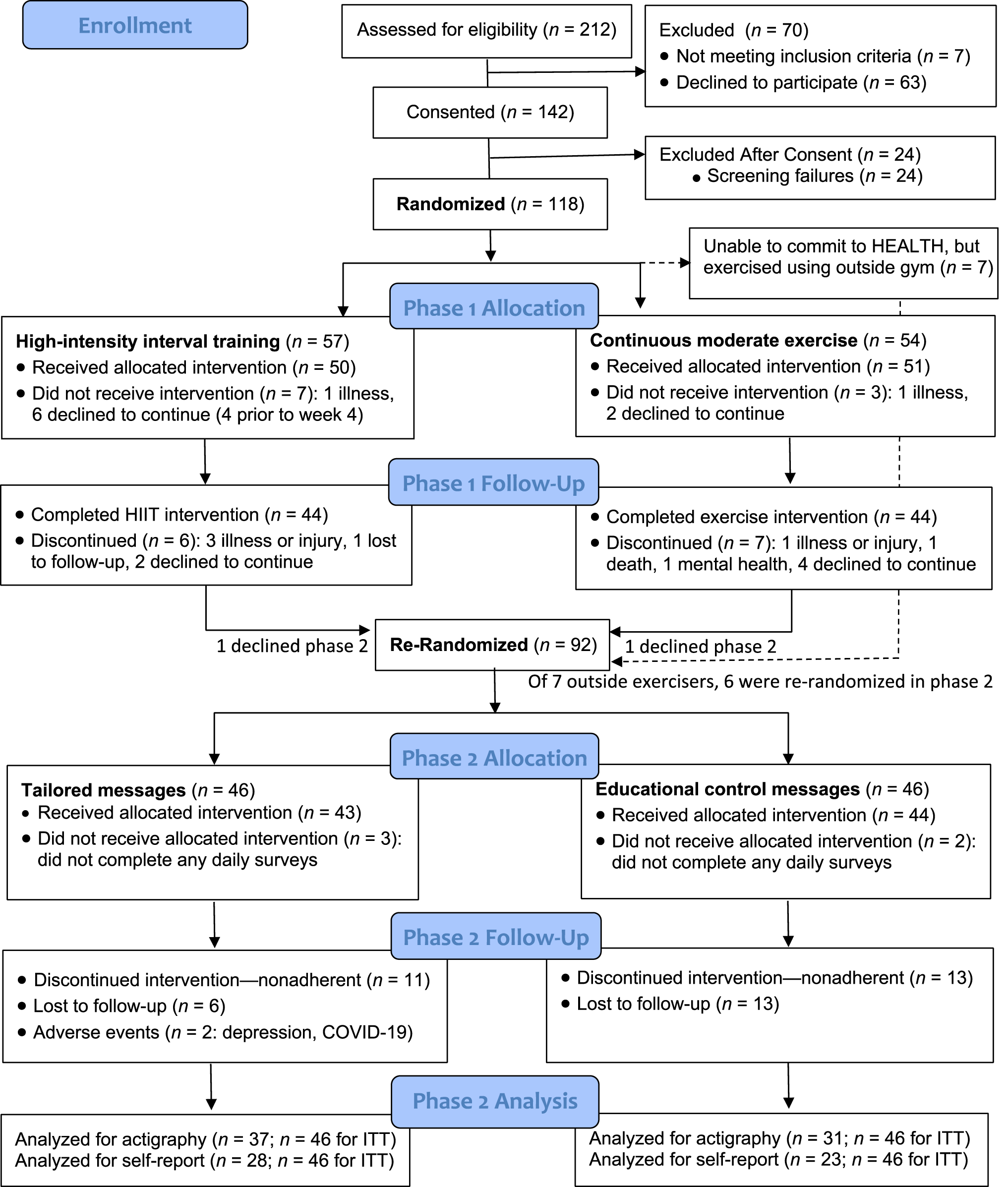
In a clinical trial of 118 people with HIV aged 50 and older, researchers examined behavioral strategies to preserve physical activity. Participants first completed 16 weeks of either high-intensity interval training or continuous moderate-intensity exercise. Following this initial phase, 92 participants were re-randomized for an additional 12 weeks to receive either tailored text messages combined with motivational interviewing or standard educational control messages. Messages were matched to daily survey responses assessing exercise barriers.
Participants receiving tailored messages and motivational interviewing sustained their moderate-to-vigorous physical activity, averaging 30.5 minutes per day, whereas activity declined to 26.0 minutes per day in the educational control group. The tailored-intervention group also reported higher exercise self-efficacy and better perceived health over time.
Why it matters
Sustained physical activity mitigates risks for cardiovascular disease and other age-related comorbidities that disproportionately affect older adults living with chronic infections like HIV. Identifying behavioral interventions that prevent exercise relapse helps preserve functional health as vulnerable populations age.
Caveats
The study tested a relatively small sample of 92 re-randomized participants over a 12-week maintenance window following structured exercise training. Longer-term follow-up is needed to determine whether activity persists once automated messaging stops.
The paper
Efficacy of Tailored Messages for 28-Week Exercise Sustainability in People with HIV
Show 7 more authors
Christine Horvat Davey, Vitor H. F. Oliveira, Vincent Khuu, Samantha Matzio, Grace L. Kulik, Samantha MaWhinney, Catherine M. Jankowski,University of Colorado College of Nursing · University of Colorado Anschutz
AIDS and Behavior · 30 Sep 2026