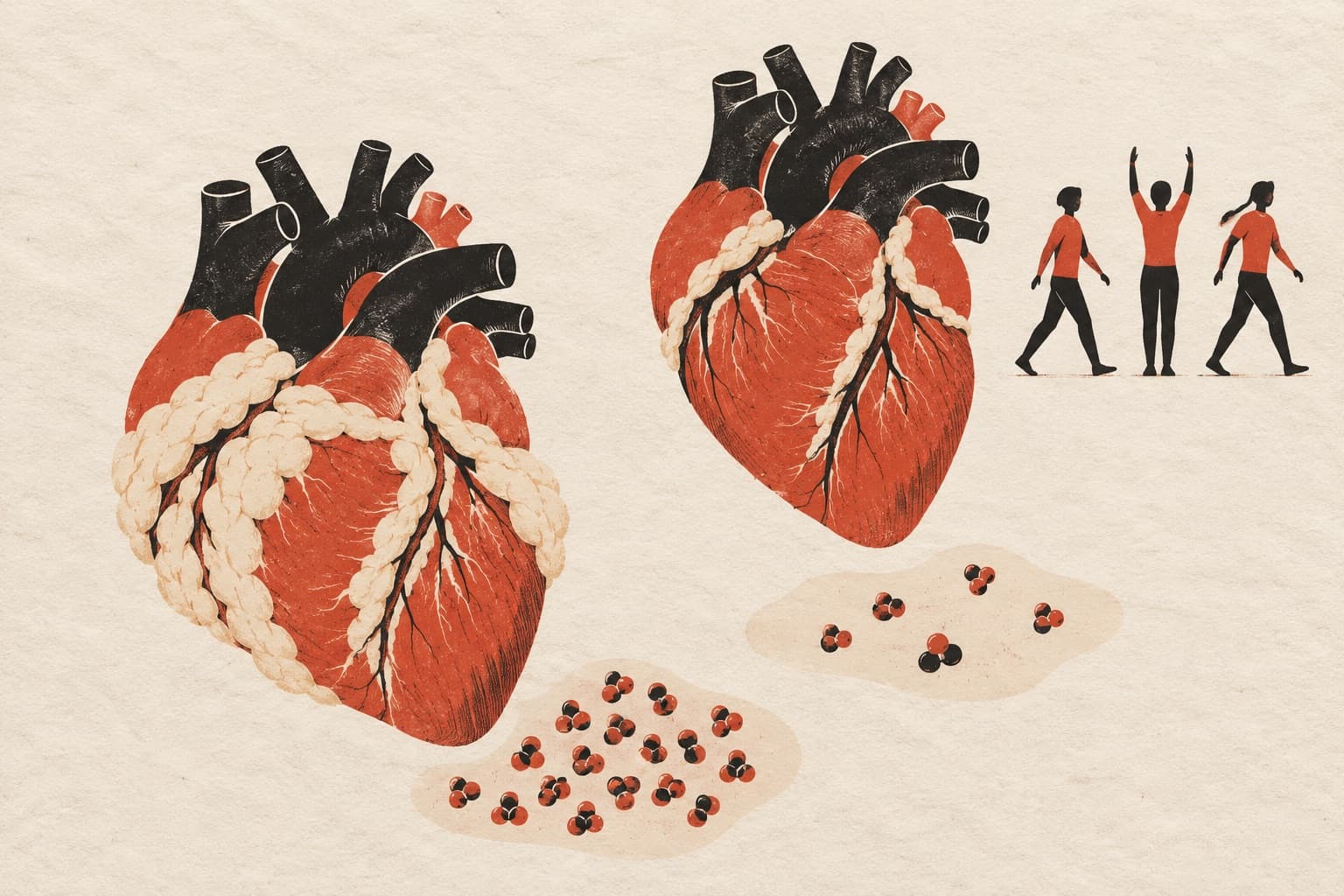
Peak oxygen uptake falls in older cyclists over nine years
In 82 older cyclists followed across nine years, peak oxygen consumption fell 19.7%, dropping from 44.1 to 35.4 ml·kg⁻¹·min⁻¹.
GeroScience
In a cohort of older human cyclists, researchers examined how nine years of continued cycling exercise affected physiological aging. The team followed 82 participants—53 males and 29 females aged 64 to 86 years at follow-up—out of an original group of 125 evaluated in 2012–2013. Investigators measured a range of cardiorespiratory indices, with peak oxygen consumption (V̇O2peak) serving as the primary outcome. Over the nine-year period, V̇O2peak declined by 19.7%, falling from 44.1 to 35.4 ml·kg⁻¹·min⁻¹. Despite this reduction, almost all measured physiological indices showed no difference between health groups over time. The authors concluded that regular exercise maintains good physiological function even as the body undergoes inherent age-related decline and emerging disease.
Why it matters
The findings help isolate inherent biological aging from inactivity, showing that cardiorespiratory capacity declines over time even among consistently active individuals.
Caveats
The study was observational, included a relatively small cohort, and was subject to potential survivor bias because 43 of the original 125 cyclists did not return for follow-up.
The paper
A 9-year longitudinal investigation into physiological aging in highly active older adults
Show 7 more authors
Esme Newton, Leah Siegel, Suzanne Taylor, Niharika Arora Duggal, Janet M. Lord, Norman R. Lazarus, Ross D. Pollock,King's College London
GeroScience · 28 Sep 2026