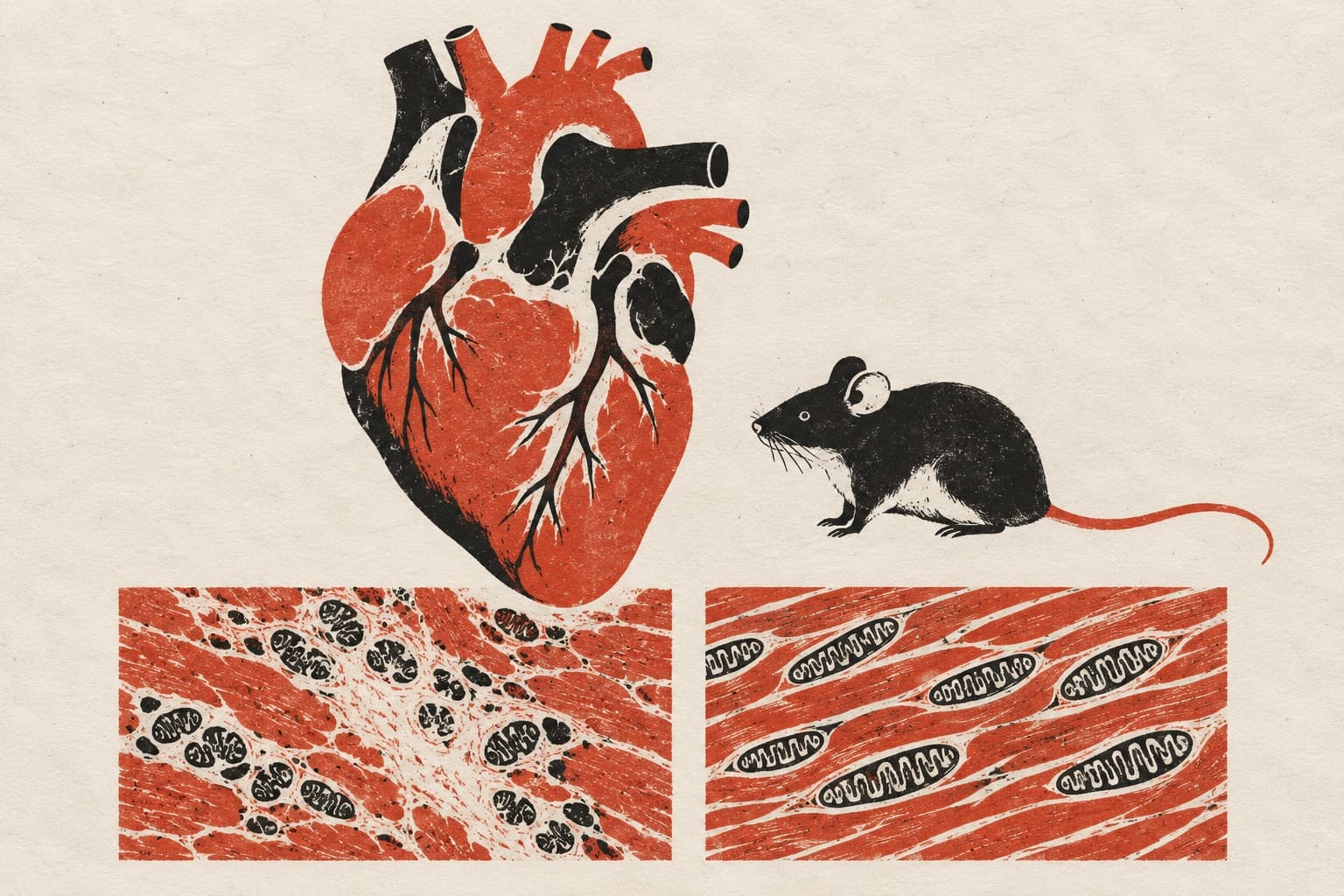
Lack of the AT2R receptor accelerates cardiac senescence and fibrosis in aging mice
Mice lacking the receptor also showed higher inflammation, elevated DNA damage, and a five-month reduction in median lifespan.
Clinical Science
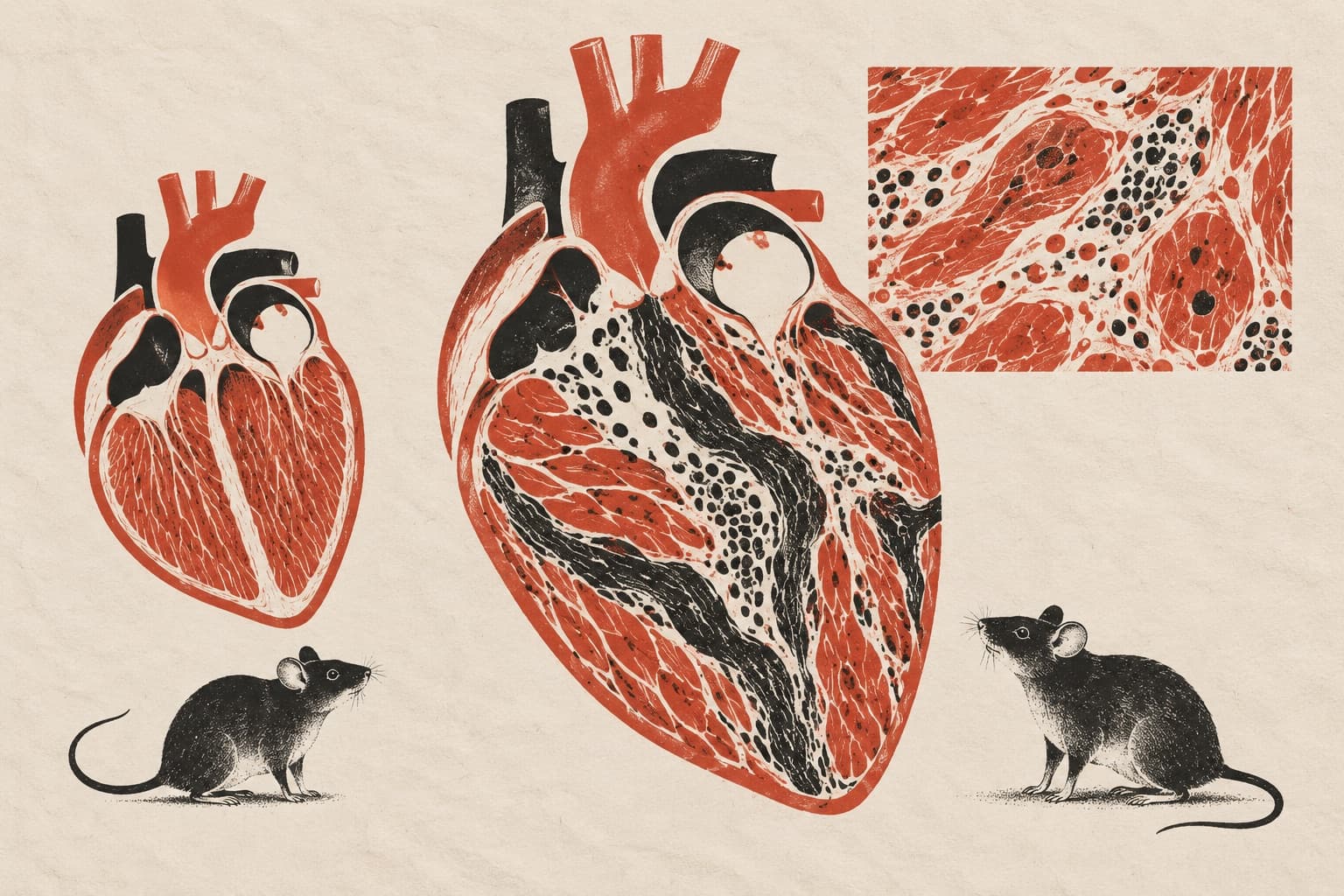
In a study of young and aged mice, researchers investigated how Type 2 Angiotensin II receptor (AT2R) deficiency affects cardiac aging. The authors compared wild-type mice to AT2R knockout mice at 4 to 5 months and 18 to 21 months of age.
Old knockout mice exhibited impaired systolic and diastolic cardiac function alongside exacerbated fibrosis. Missing AT2R accelerated cardiac senescence, indicated by an early increase in p53, p21, and markers of the senescence-associated secretory phenotype. Aged knockout hearts also showed activation of NF-kB and the NLRP3 inflammasome, accompanied by higher levels of IL-1β and IL-18. In addition, AT2R deficiency caused significant DNA damage even in young animals and reduced median lifespan from 31 months to 26 months.
Why it matters
The findings suggest that AT2R serves as an important mediator of cardioprotection and cellular senescence during aging. Clarifying its role could help researchers understand the biological mechanisms driving age-related cardiac dysfunction.
Caveats
This research was conducted entirely in mice, and these mechanisms may operate differently in humans. In addition, the abstract does not report whether restoring or stimulating the receptor can reverse existing cardiac senescence.
The paper
Show 6 more authors
Tábatha de Oliveira Silva, Wenddy Wyllie Damasceno Sougey, Nathalia Senger, Michael Bader, Ana Paula Cremasco Takano, Robson Augusto Souza dos Santos,Universidade de São Paulo
Clinical Science · 25 Sep 2026