Protein fragment extended life in mice with premature aging
Median survival rose from 95 days in controls to 115 days in mice given a peptide designed to stabilize a protein involved in DNA packaging.
Limit: Lifespan effects in naturally aging mice were not measured
Edited by Boris Djordjevic · AgingResearch.News
Experiments in mice genetically engineered to model Hutchinson-Gilford progeria syndrome, a rare premature aging disorder, tested a peptide, or short protein fragment. The researchers injected the fragment into the abdomen at 10 milligrams per kilogram of body weight every other day, starting at two weeks of age. Median survival rose from 95 days in controls to 115 days in mice given the fragment. The fragment also reduced weight loss and spinal curvature.
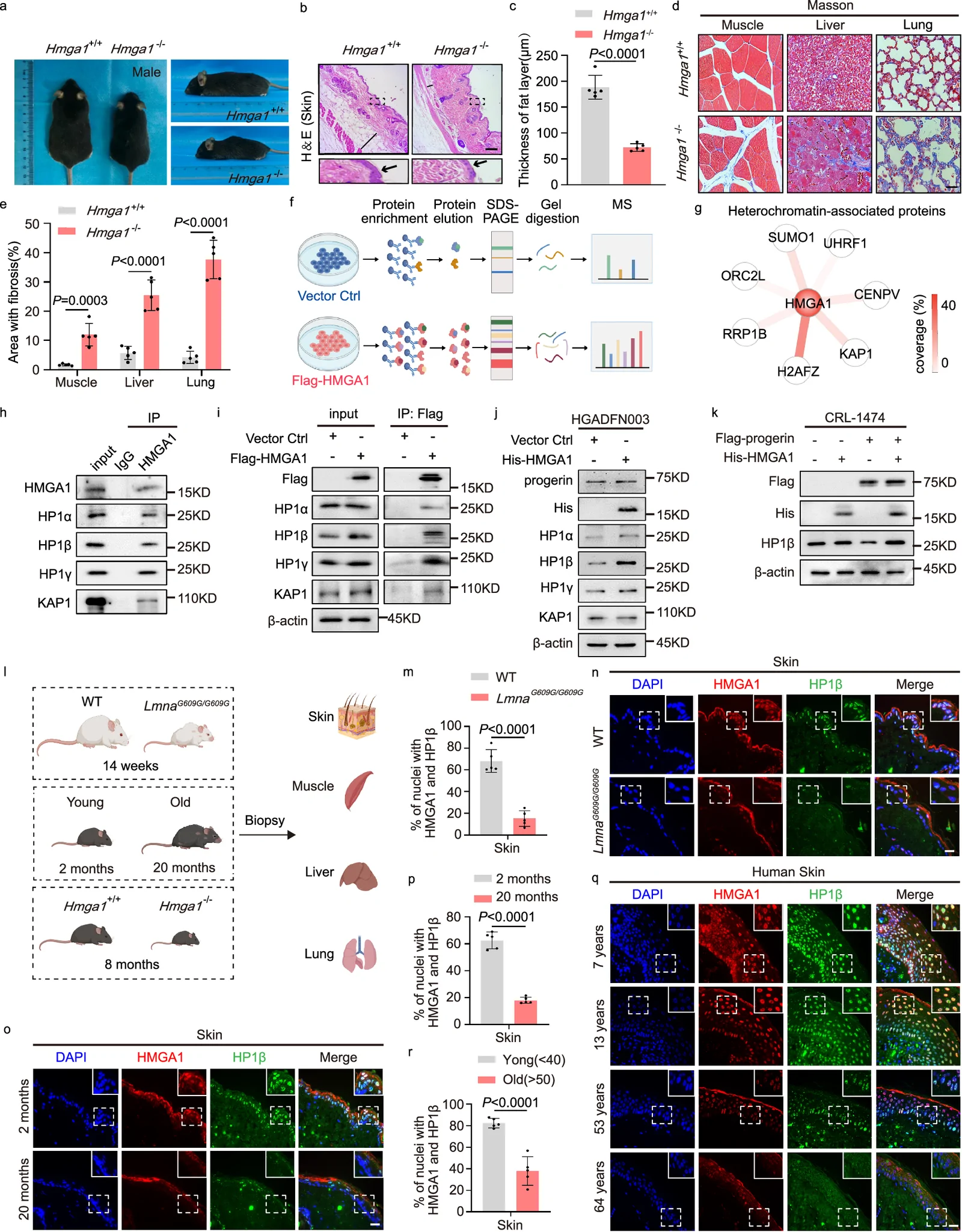
The researchers designed it from HMGA1, a protein that helps stabilize HP1β, a protein involved in tightly packing DNA. In cell experiments modeling the syndrome, the fragment prevented HP1β breakdown and reduced senescence, a state in which cells stop dividing.
Why it matters
The work examined how DNA packaging relates to cellular senescence in a premature aging disorder. The authors suggest that strategies based on the peptide may hold promise for progeria.
Caveats
The lifespan experiment tested a genetic mouse model of progeria, not people or normally aging mice.
The paper
Jilin University
Nature Communications, Aug 19, 2026, Open access


