Dietary Resistant Maltodextrin Attenuates Skeletal Muscle Atrophy in Association with Modulation of the Microbiota-Gut-Muscle Axis in Aged Mice
12 weeks, declared no competing interests
Abstract
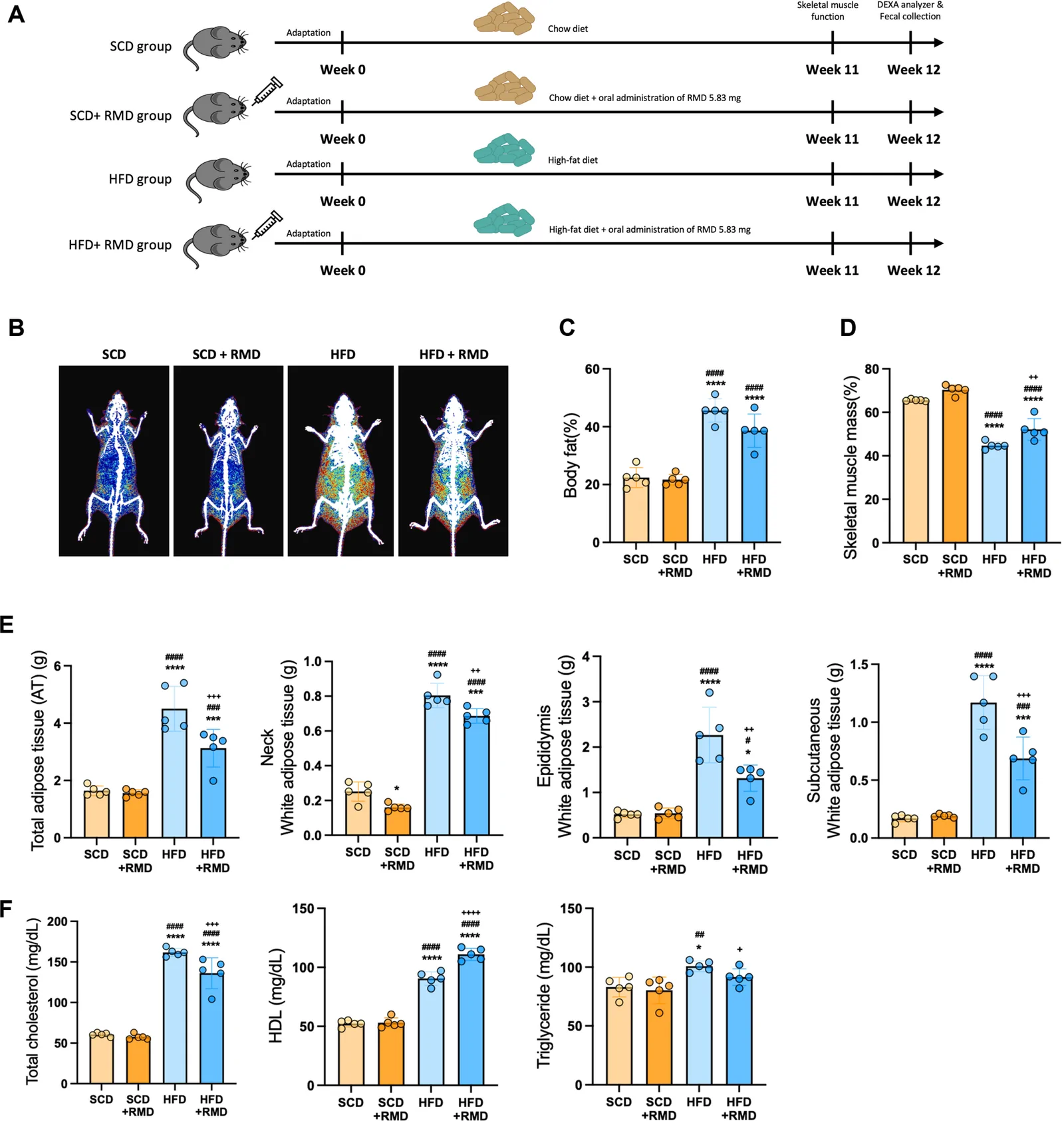
Resistant maltodextrin (RMD) is a water-soluble dietary fiber with prebiotic properties. This study investigated the effects of RMD on skeletal muscle atrophy and associated molecular and microbial changes in eighteen-month-old mice fed a standard chow diet (SCD) or high-fat diet (HFD) for 12 weeks. RMD supplementation improved muscle strength, endurance, and muscle mass under both dietary conditions. In HFD-fed mice, RMD also reduced fat accumulation and adipocyte size. Gut microbiota analysis showed distinct responses to RMD according to dietary condition, including enrichment of Lactobacillus and Alloprevotella under SCD and Allobaculum and Akkermansia under HFD. RMD also increased fecal SCFA levels under HFD conditions and was associated with increased expression of PI3K/Akt/mTOR-related and myogenic genes in skeletal muscle. These findings indicate that RMD attenuates skeletal muscle atrophy in aged mice in association with changes in gut microbiota composition, microbial metabolites, and muscle-related gene expression.
- Resistant maltodextrin
- Microbiome composition
- mTOR signalling
- Skeletal muscle atrophy
- Short-chain fatty acids
- Mice
The paper
Chung-Ang University
Journal of Microbiology and Biotechnology, 2 Sep 2026