Gut bacteria modify protein link to post-stroke recovery
In 152 older rehabilitation patients, an interaction between dietary protein density and putative butyrate-producing bacteria was linked to motor recovery (β = 0.046).
Clinical Nutrition ESPEN
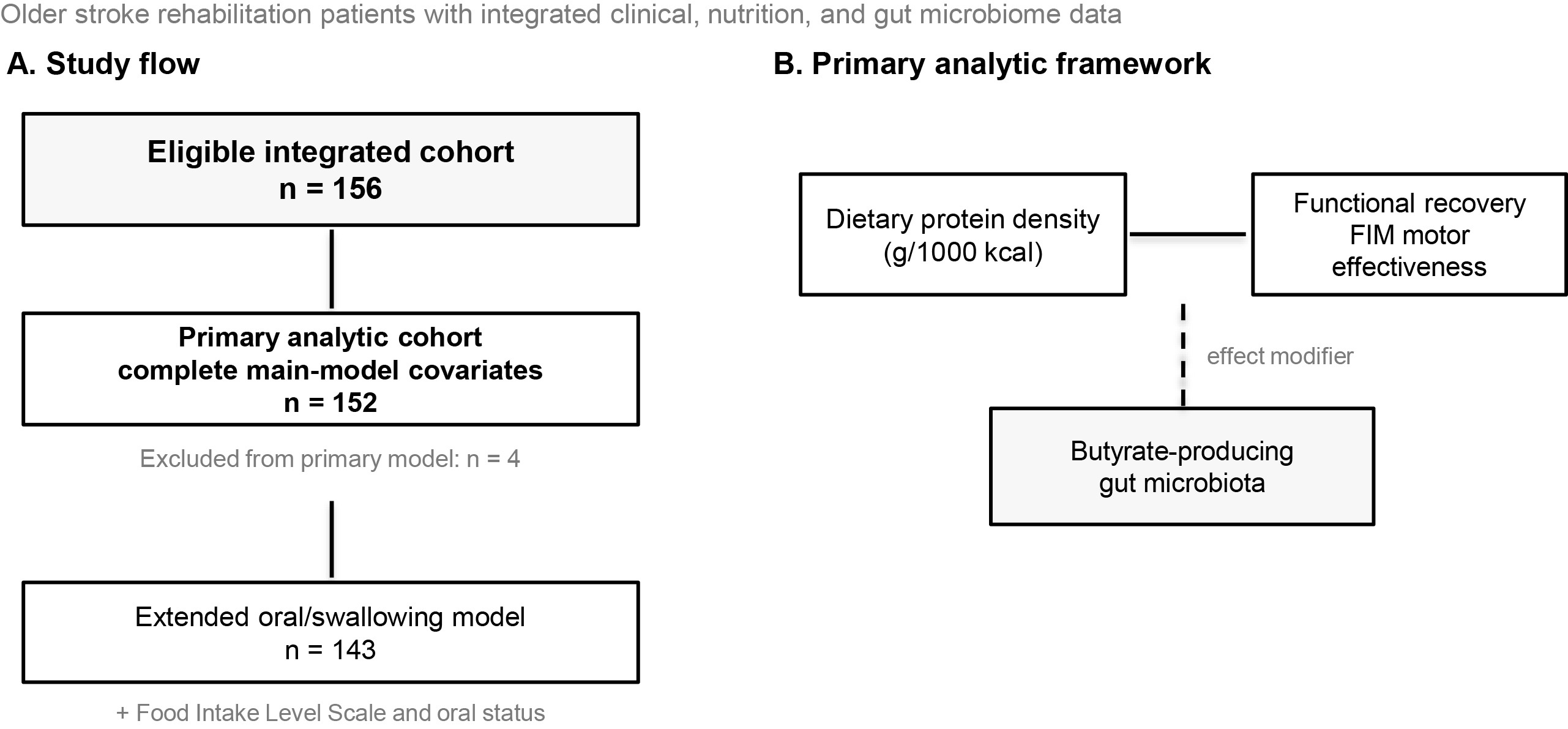
In 156 older patients undergoing post-stroke rehabilitation, researchers evaluated whether gut bacteria modify the relationship between dietary protein intake and functional recovery. The registry-based observational study examined patients aged 65 and older with a mean age of 78.4 years. Investigators assessed dietary protein density during the first week of admission and profiled gut microbiota using 16S ribosomal RNA gene sequencing of stool samples collected within 14 days.
In 152 patients analyzed in the primary complete-case model, the interaction between dietary protein density and the proportion of putative butyrate-producing bacteria was significantly associated with motor recovery in activities of daily living (β = 0.046, 95% CI 0.013–0.079; p = 0.006). Similar signals appeared for other Functional Independence Measure outcomes, but not for handgrip strength or skeletal muscle mass index.
Why it matters
The findings suggest that gut microbiome composition may influence how older bodies functionally benefit from dietary protein during rehabilitation.
Caveats
This was an observational registry study and cannot determine causality. Bacterial functions were inferred from taxonomy rather than direct measurements of microbial metabolites, and dietary fiber intake was not evaluated.
- Dietary protein
- Dietary protein density
- Microbiome composition
- Short-chain fatty acid metabolism
- Stroke
- Humans
The paper
Kumamoto Rehabilitation Hospital · Aichi Medical University Hospital
Clinical Nutrition ESPEN · 28 Sep 2026