Probiotic shortened gut transit time in older adults
A randomised, double-blind trial also found changes in gut bacteria, including suppression of bacteria that produce an enzyme involved in processing bile acids.
Nature Communications
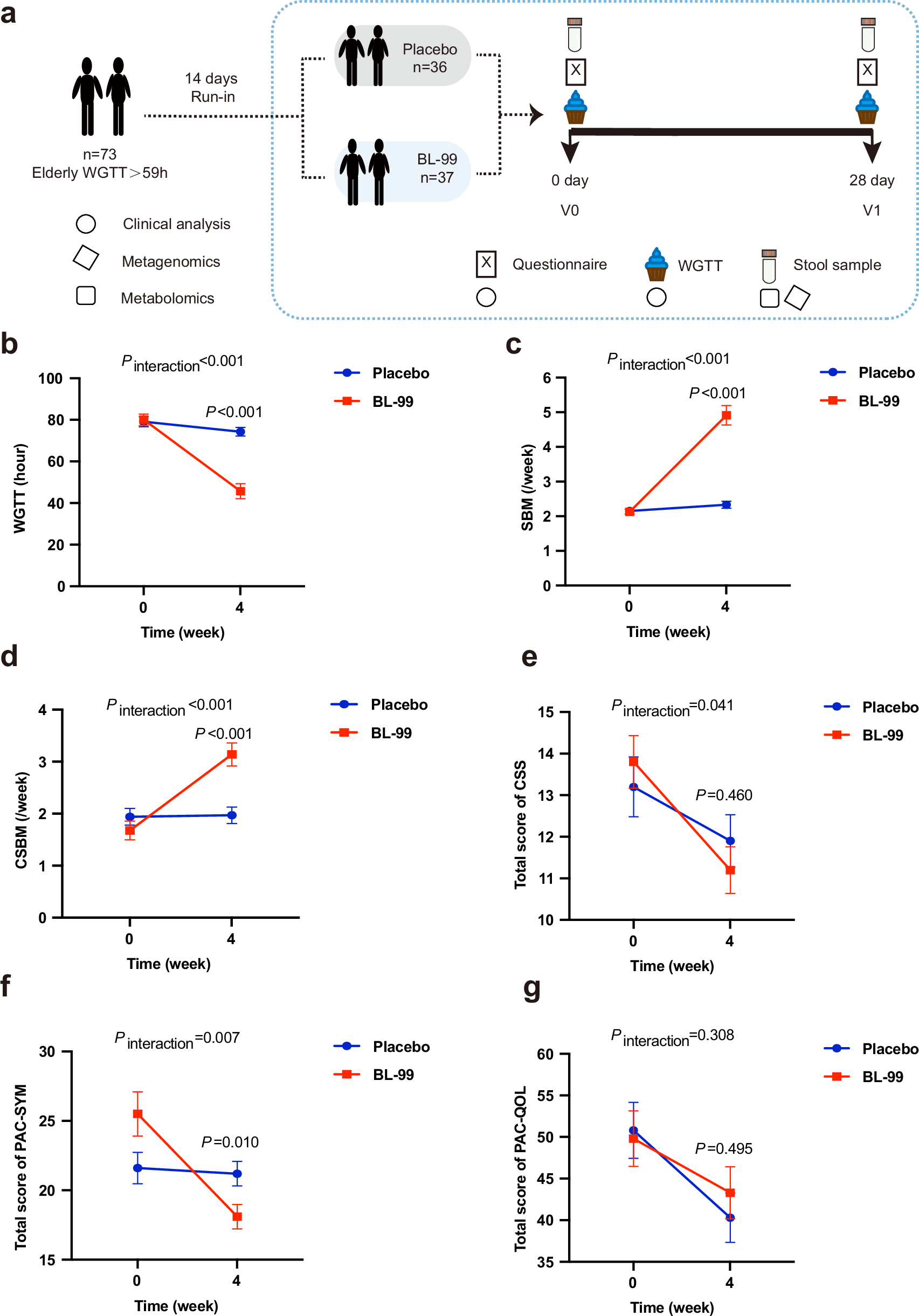
In a randomised, double-blind trial in older adults, researchers tested BL-99, a probiotic strain of the bacterium Bifidobacterium animalis subsp. lactis. The primary endpoint was whole-gut transit time, the time taken for material to move through the digestive tract. Secondary endpoints included bowel movement frequency, symptom severity, and quality-of-life measures. BL-99 significantly reduced whole-gut transit time and concurrently remodeled the gut microbiota. It suppressed bacteria expressing bile salt hydrolase, preserving conjugated bile acid pools. In experiments in naturally aged mice, BL-99 also reduced whole-gut transit time and altered the gut microbiota. Further mechanistic tests linked BL-99 to increased expression of contractile apparatus components in colonic smooth muscle cells.
Why it matters
Age-related weakening of intestinal smooth muscle contractions contributes to slowed transit in the gut. These findings suggest that targeting gut bacteria and bile acid signaling could offer a potential therapeutic strategy for age-related motility decline.
Caveats
The abstract does not report the trial's sample size, treatment duration, or results for the secondary symptom endpoints. The cellular mechanisms were investigated in aged mice and smooth muscle cells rather than directly in human trial participants.
The paper
Show 30 more authors
Liang Zhao, Juan Chen, Yinghua Liu, Qi Zhang, Hao Zhang, Zhi Zhao, Chengying Zhang, Yixuan Li, Wei‐Lian Hung, Rong Liu, Dekui Jin, Ming Zhang, Guang Li, Xinjuan Liu, Xiaoxia Li, Shaoyang Ge, Zhaozhong Zeng, Yong Zhang, Hanglian Lan, Qiuyue Jiang, Yanling Hao, Jie Guo, Huiyuan Guo, Yuyang Zhao, Wei Xiong, Xiaokang Niu, Liwei Zhang, Jian He, Jingjing He, Ran Wang,China Agricultural University
Nature Communications · 6 Oct 2026 · CC BY-NC-ND