Early overfeeding speeds muscle loss and shortens life in mice
Overfeeding young mice damaged gut microbes, impaired muscle cell energy production, and worsened age-related muscle wasting in later life.
Nature Communications
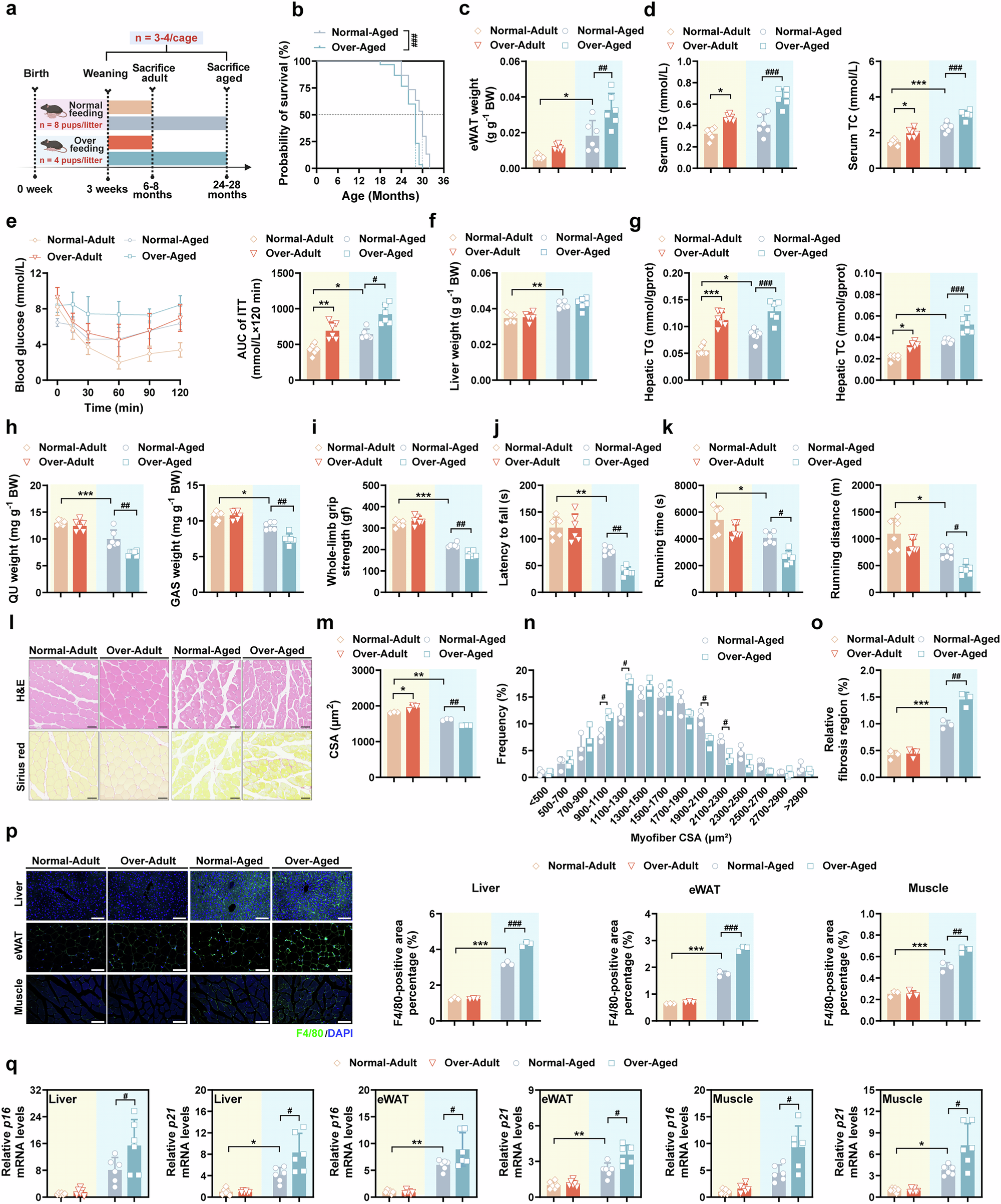
In experiments using different mouse models of both sexes, researchers tested how overfeeding during early life affected health in older age. Neonatally overfed mice had shorter lifespans, greater metabolic dysfunction, and accelerated sarcopenia, the age-related loss of muscle. Early overfeeding disrupted the development of goblet cells, leaving lasting gut barrier defects that reduced levels of the gut bacterium Akkermansia muciniphila in older mice. This loss reduced production of acetate, impairing muscle mitochondria—structures that produce energy in cells—at least in part by suppressing GPR43 signalling. Faecal microbiota transplants passed the muscle-wasting condition to recipient mice. Restoring A. muciniphila or supplementing older mice with acetate restored mitochondrial balance and improved muscle performance.
Why it matters
The findings describe a gut-muscle axis that connects early-life nutrition to muscle aging. They indicate that age-related sarcopenia may have developmental origins, pointing to early nutrition as a potential target to support healthy aging.
Caveats
The study was conducted entirely in mice, so whether early-life overnutrition causes identical lifelong gut defects and muscle loss in humans remains unconfirmed.
The paper
Show 13 more authors
Rong Yang, 马援第, Yi-Ming Hou, Yutang Cao, Jiaqi Li, Shuwu Yu, XinYu Liang, Yongxin Zhang, Kanglong Wang, Lijuan An, Yameng Liu, Zhuo‐Xian Meng, Jian-Gao Fan,Shanghai Jiao Tong University · Nanjing University of Chinese Medicine
Nature Communications · 7 Oct 2026 · CC BY-NC-ND