Gene variant linked to greater brain inflammation in aging mice
Experiments in mice aged 4, 12 and 20 months linked a human gene variant to greater buildup of sugar-modified molecules and inflammatory signaling.
Limit: Interferon bioactivity, neuronal viability, and cognitive function were not measured
Edited by Boris Djordjevic · AgingResearch.News
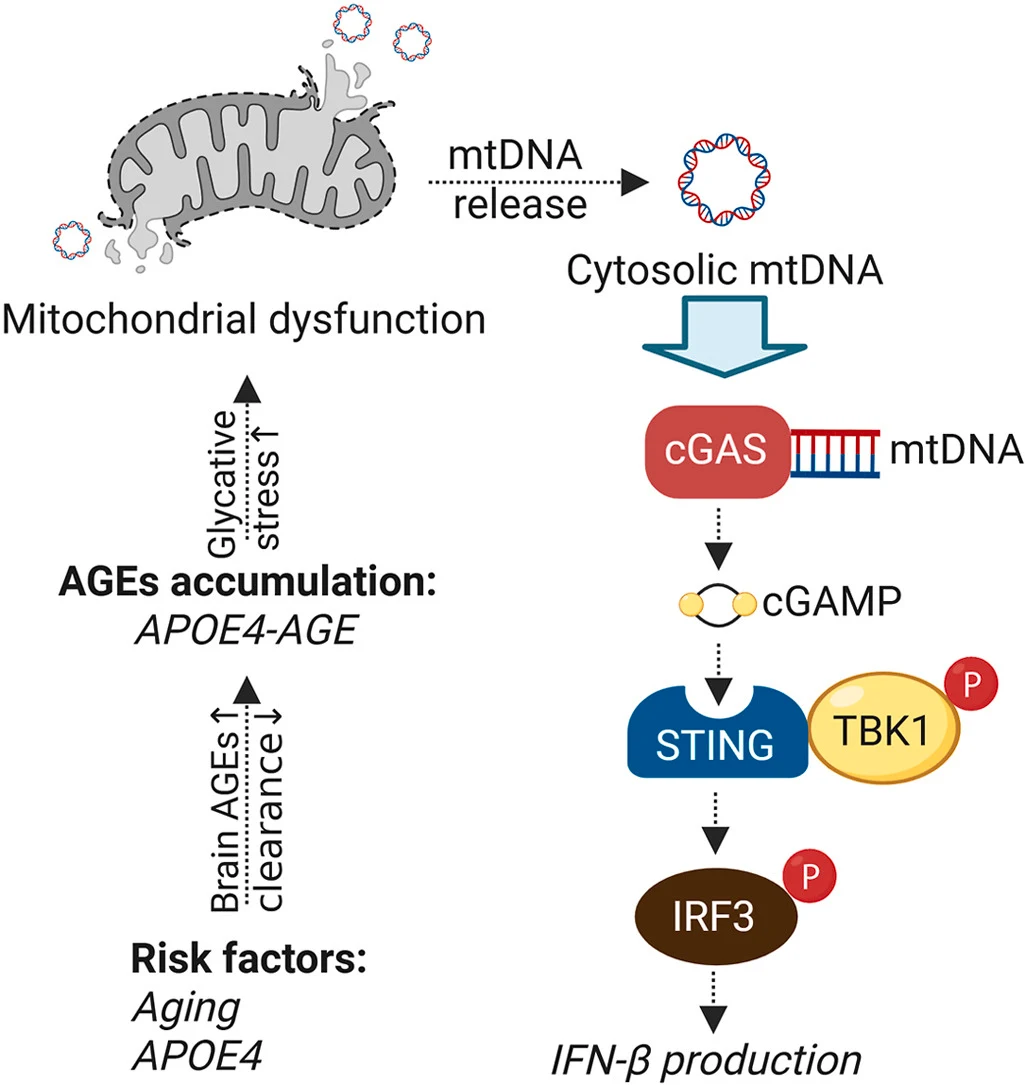
Experiments compared male and female mice carrying human APOE4 or APOE3, two versions of the apolipoprotein E gene, at 4, 12 and 20 months. APOE4 brains accumulated more advanced glycation end products—sugar-modified molecules—than APOE3 brains at 12 and 20 months. This accompanied impaired mitochondria, the cells’ energy-producing structures, and more mitochondrial DNA outside them. APOE4 brains also had stronger inflammatory responses. Activity in a DNA-sensing immune pathway was higher, particularly in microglia, the brain’s immune cells.
In separate experiments, microglia from newborn mice were grown in the lab and exposed to sugar-modified protein for 24 hours. This increased mitochondrial DNA release and activated the DNA-sensing pathway. A drug that inhibited the receptor for advanced glycation end products reduced these responses.
Why it matters
Sugar-modified molecules accumulate with age and have been implicated in neurodegeneration. The work addresses how inherited gene differences might shape the relationship between this buildup and the brain’s immune responses.
Caveats
The mouse brain comparisons showed associations, not the full causal chain. The receptor-blocking experiments used cells from newborn mice grown in the lab, not aging animals or people.
The paper
Stony Brook University
Free Radical Biology & Medicine, Aug 29, 2026, Open access


Comments
Be the first to comment.