Self-efficacy in adopting health-promoting behaviors and metabolic health outcomes: A comparative analysis across adults populations
Declared no competing interests
Abstract
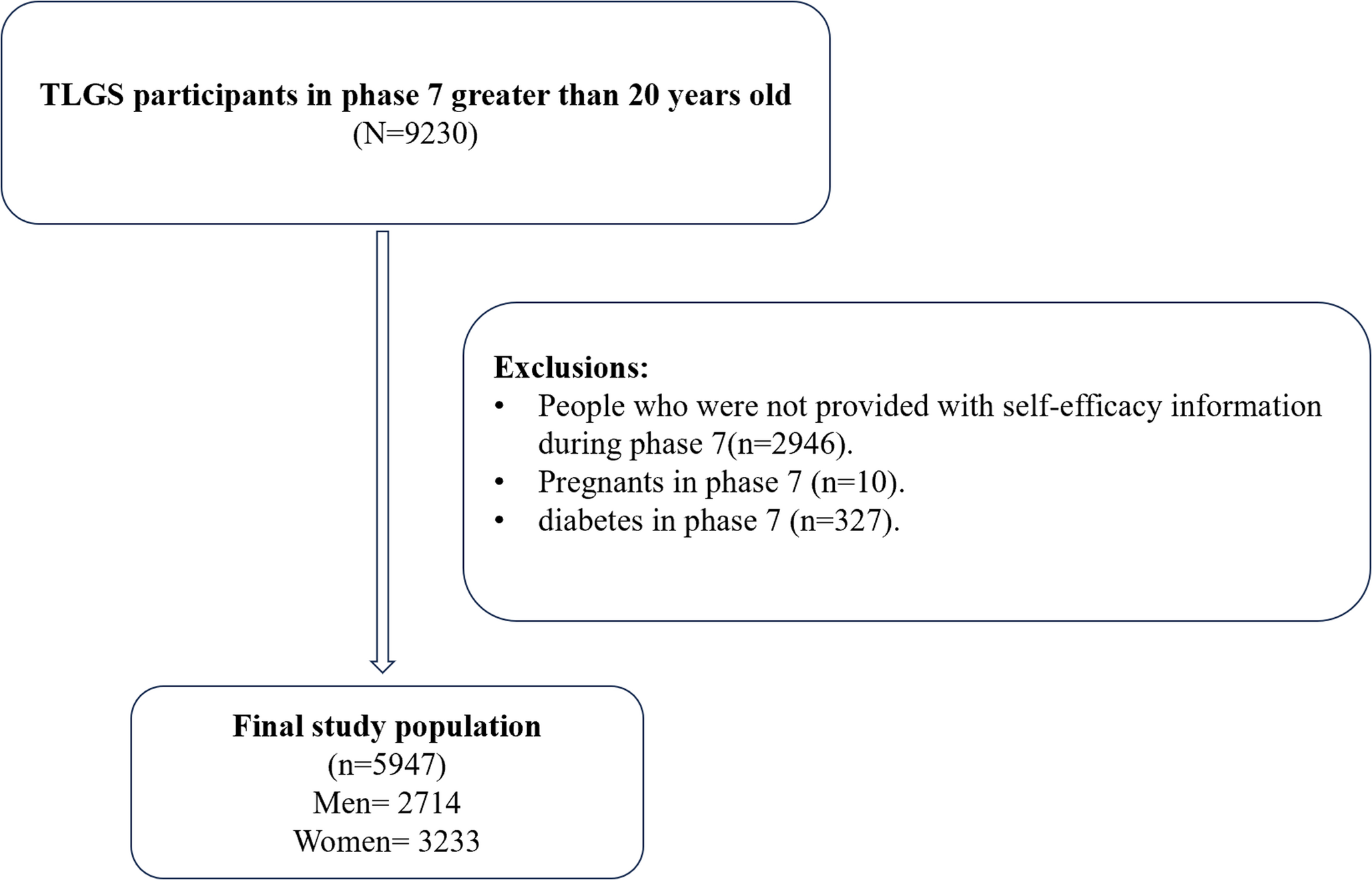
BACKGROUND AND AIMS: This study aimed to examine the association between self-efficacy in adopting health-promoting behaviors with metabolic syndrome (MetS) and its components in adults men and women. METHODS: This cross-sectional study was conducted using the Tehran Lipid and Glucose Study data, including 5,947 adults (54.3% females) aged ≥ 20 years. MetS was defined based on the Joint Interim Statement (JIS) criteria. Self-efficacy was assessed using the validated Persian Self-Rated Abilities for Health Practices (SRAHP) scale that evaluated four subscales: exercise, nutrition, responsible health practices, and psychological well-being. Logistic and linear regression were used to analyze the data. RESULTS: The MetS prevalence was significantly higher in men than in women (37.21% vs. 25.43%, p < 0.001). After adjusting for potential confounders, the association between self-efficacy and MetS remained significant only in men. Specifically, a higher perception of exercise self-efficacy was associated with decreased odds of MetS (OR = 0.98, CI: 0.96, 0.99, p = 0.018), whereas higher psychological well-being self-efficacy was associated with increased odds of MetS (OR = 1.02, CI: 1.00, 1.04, p = 0.027). A greater exercise self-efficacy was inversely associated with waist circumference and lipid-related profiles in both sexes. However, associations between other SRAHP subscales and MetS components differed between men and women. CONCLUSIONS: Self-efficacy was more strongly associated with MetS in men. Enhancing self-efficacy, particularly for exercise, may benefit the management of metabolic health, though approaches may need to be tailored between men and women. Given the cross-sectional design, these findings are exploratory and require longitudinal confirmation. SUPPLEMENTARY INFORMATION: The online version contains supplementary material available at https://doi.org/10.1007/s40200-026-02063-7.
The paper
Research Institute for Endocrine Sciences
Journal of Diabetes and Metabolic Disorders, 27 Aug 2026