Cumulative non-HDL cholesterol is linked to CVD risk
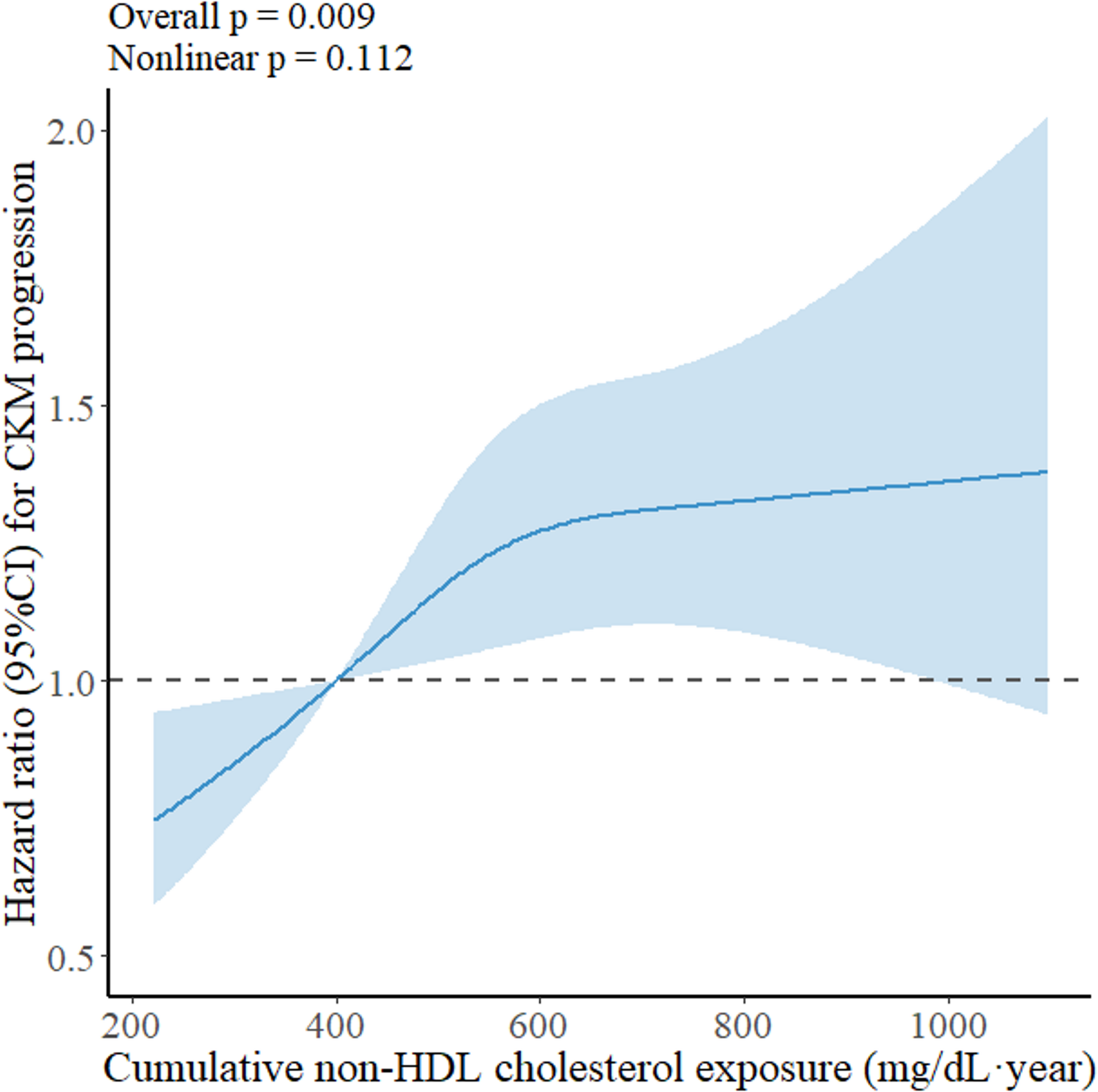
Each 100-unit increase in cumulative exposure was associated with an adjusted hazard ratio of 1.07 for cardiovascular disease over nine years, driven by earlier stages.
Journal of Diabetes and Metabolic Disorders
In a nationwide study of 5,283 middle-aged and older adults in China, cumulative exposure to non-HDL cholesterol was associated with a higher risk of developing clinical cardiovascular disease. Researchers tracked participants from the China Health and Retirement Longitudinal Study who had cardiovascular-kidney-metabolic (CKM) syndrome stages 0 through 3. Cumulative exposure was calculated from repeated lipid measurements in 2011 and 2015, with participants followed for a median of 9.0 years.
During follow-up, 948 individuals progressed to clinical cardiovascular disease (CKM stage 4). The risk increase per 100-unit rise in cumulative exposure was stronger among participants starting at stage 0 (hazard ratio 1.18) and stage 1 (hazard ratio 1.17), while weaker associations were found in stage 2 and stage 3 (hazard ratio 1.03 for each).
Why it matters
Cardiovascular-kidney-metabolic syndrome reflects interconnected organ dysfunction that worsens across the lifespan. The results suggest that long-term atherogenic lipid exposure in early stages may accelerate progression to overt disease, highlighting potential targets for early cardiometabolic intervention.
Caveats
Because the investigation was observational, it cannot establish a causal link, and unmeasured confounding factors may have influenced the outcome. The findings also rely on a Chinese cohort and may not directly reflect risk profiles in other populations.
- Cumulative non-hdl-c exposure
- Lipid and ceramide metabolism
- Non-HDL cholesterol
- Cardiovascular disease
- Cardiovascular-kidney-metabolic syndrome
- Humans
The paper
Nanfang Hospital
Journal of Diabetes and Metabolic Disorders · 24 Sep 2026