Geneformer-guided multiomics integration identifies Pbx1 as a network hub of hematopoietic stem cell aging
Abstract
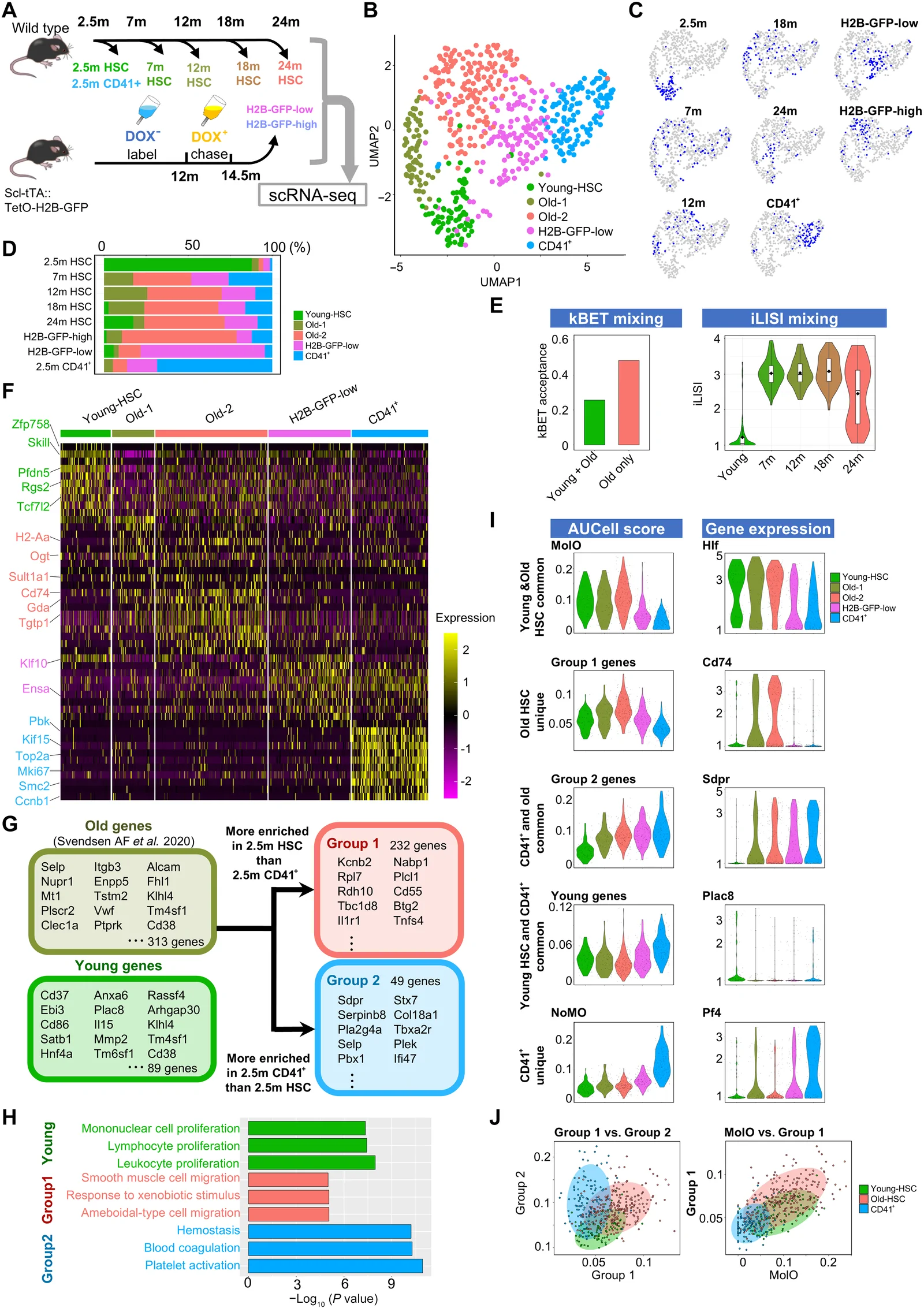
Hematopoietic stem cells (HSCs) constitute an organized hematopoietic system that undergoes age-related alterations, including increased platelet production and decreased erythropoiesis. The fundamental mechanisms driving these shifts remain incompletely understood. We used single-cell RNA sequencing data to show that old HSCs contain two distinct transcriptional programs: one shared with megakaryocytes and the other reflecting the most primitive HSC state. Developmental time-series profiling further suggests that the acquisition of these programs begins early in life, with the primitive module rising prenatally and megakaryocytic priming emerging after birth. Using a fine-tuned Geneformer (transformer-based deep learning model) to capture higher-order differences between young and old HSCs, coupled with transcriptomic and epigenetic profiling, as well as transcription factor screens, we identified Pbx1 as a key regulator of these age-related transcriptional and differentiation changes. Specifically, Pbx1 suppresses erythroid differentiation by repressing Gata1 expression. These findings provide insight into HSC aging and may inform approaches to modulate age-associated HSC dysfunction.