Older mouse muscle contained less of a compound called spermidine
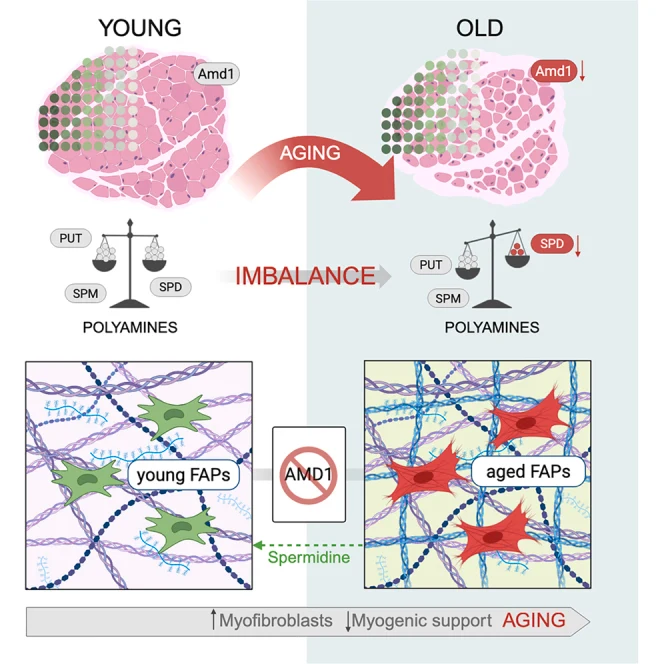
Gene-activity mapping in muscle from three young and four old mice revealed changes in the machinery that produces this compound.
Limit: Only three young and four old mice contributed to gene-activity mapping
Edited by Boris Djordjevic · AgingResearch.News
Researchers mapped gene activity across muscle tissue from three 5-month-old and four 24-month-old C57BL/6J mice, then ran experiments in mouse and human cells. Older mouse muscle showed reduced activity of genes for enzymes involved in polyamine production. Polyamines are a group of small molecules. The older muscle also contained less spermidine, one of these compounds. Gene-activity changes varied across muscle fiber types and tissue regions.
In separate experiments, restricting polyamine metabolism in mouse and human muscle-supporting cells grown in the lab induced aging-like features. These included changes in the material surrounding cells and a reduced ability to support muscle formation. The experiments implicated these supporting cells, alongside muscle fibers, in the effects of disrupted polyamine metabolism.
Why it matters
Sarcopenia is the age-related decline in muscle mass and function. The authors identified polyamine metabolism as a promising therapeutic target for this decline.
Caveats
The comparison of young and old mice cannot establish cause and effect; the pathway-disruption experiments used cells grown in the lab. The findings do not show that spermidine supplements prevent muscle decline in animals or people.


