Activity-limiting pain linked to muscle gene activity in older adults
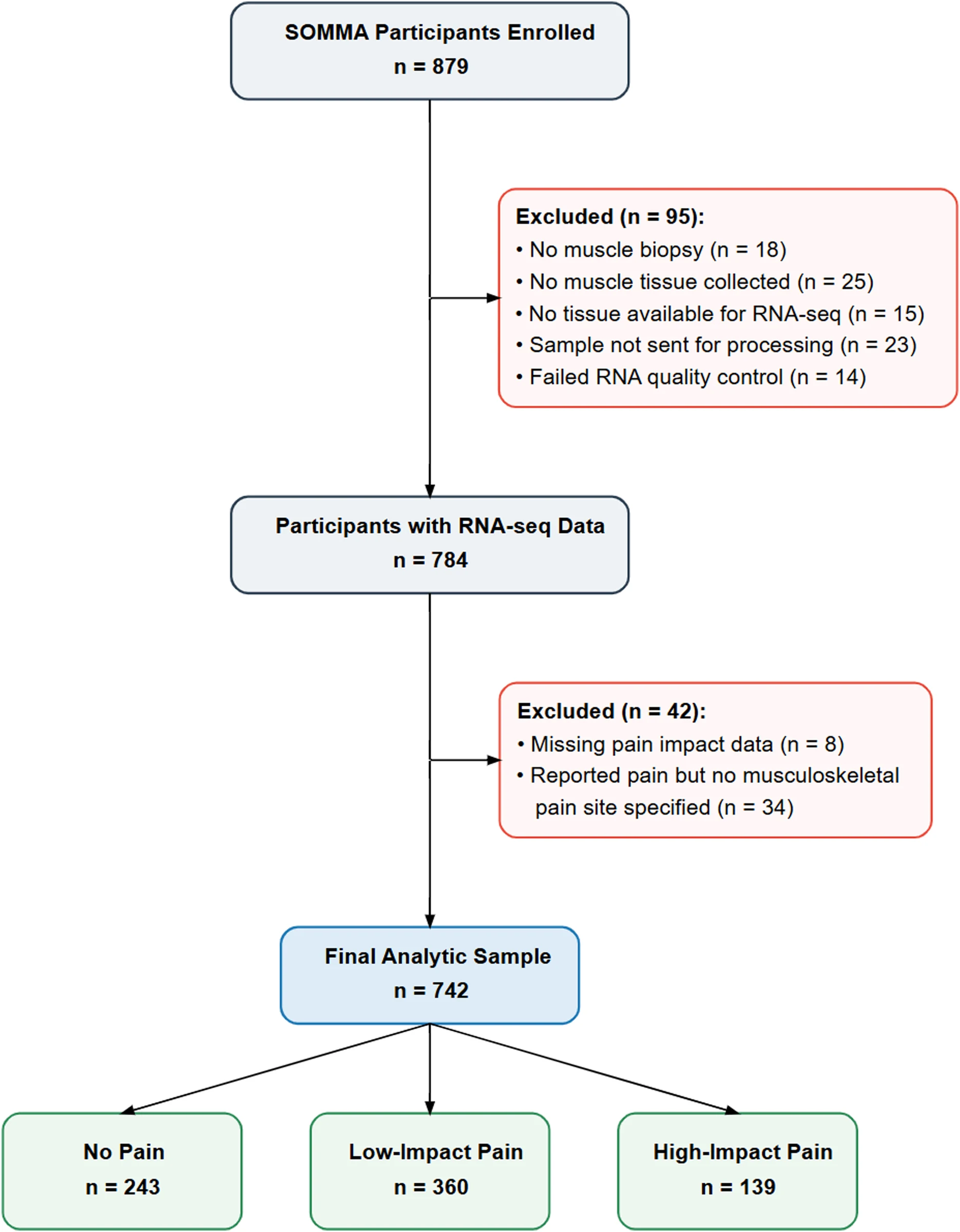
A cross-sectional study of 742 adults aged 70 or older linked activity-limiting pain to muscle gene activity patterns that differed between men and women.
Limit: Pain impact relied on self-reported pain and daily activity limitations
Edited by Boris Djordjevic · AgingResearch.News
In 742 community-dwelling adults aged 70 or older, researchers conducted a cross-sectional study of muscle gene activity and musculoskeletal pain. They analyzed gene activity in biopsies from a thigh muscle. They grouped participants by self-reported pain and limitations in daily activities.
High-impact pain, which limited daily activities and function, was associated with a distinct muscle gene activity pattern. The researchers observed minimal differences between low-impact pain and no pain. Patterns associated with high-impact pain differed between men and women. In men, they highlighted processes involving muscle and skeletal structure and the supporting material around cells. In women, differences involved a broader range of processes, including immune responses, inflammation, metabolism and cells’ internal structure.
Why it matters
Pain-related disability in aging raises questions about muscle’s molecular role. The findings highlight the importance of considering sex when investigating that role and approaches to chronic pain.
Caveats
The cross-sectional design could not establish cause and effect, and pain impact was self-reported. The findings concern community-dwelling adults aged 70 or older, not younger populations.
- Inflammation
- Extracellular matrix remodeling
- Immune response
- Low-impact musculoskeletal pain
- High-impact musculoskeletal pain
- Humans
The paper
University of Florida
Molecular Pain, Oct 18, 2026, Open access


