Collapsed cells linked to collagen changes in aged human skin
An observational comparison of young and aged human skin linked deterioration of its supporting framework to changes in the shape and function of support cells.
Limit: Cell collapse could precede framework deterioration rather than follow it
Edited by Boris Djordjevic · AgingResearch.News
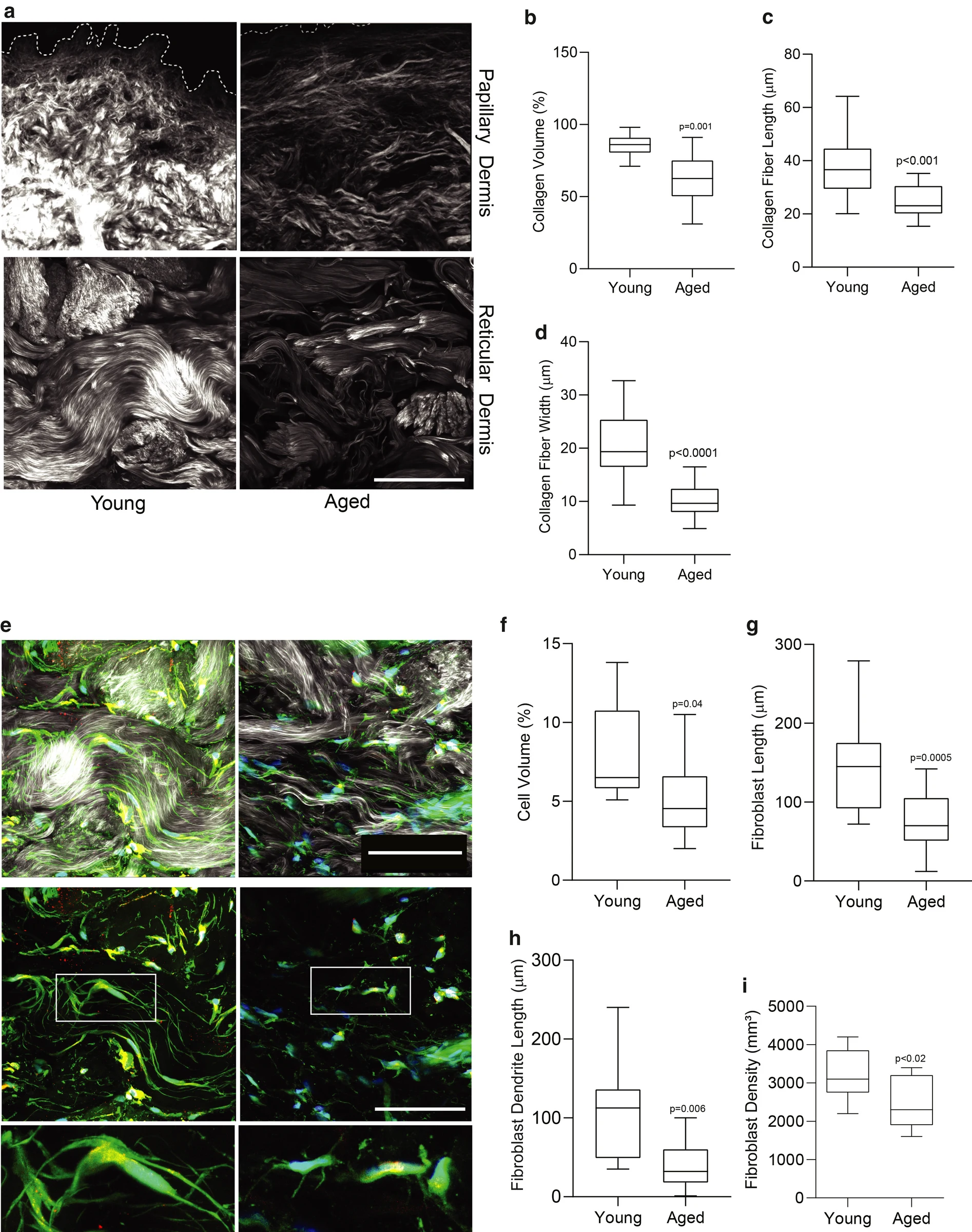
In an observational study of young and aged human skin, researchers examined fibroblasts, cells that maintain the tissue’s supporting framework. They used three-dimensional microscopy to image these cells and bundles of collagen, a structural protein. In aged skin, deterioration of the surrounding framework was associated with reduced cell attachment and a contracted, “collapsed” cell shape. Analyses of gene activity also indicated impaired signaling in two pathways that regulate this framework, alongside disrupted activity of related genes.
In separate experiments, human fibroblasts grown in the lab with a collapsed shape showed similar impairments. Restoring the cells’ spread-out shape fully normalized collagen maintenance.
Why it matters
The authors interpret the findings as highlighting how age-related changes in the environment surrounding cells may contribute to cellular aging.
Caveats
The observations in human skin cannot establish whether deterioration of the surrounding framework caused the cells to collapse. The restoration experiment involved lab-grown cells, not people.
- Extracellular matrix remodeling
- Hippo–YAP signaling
- Mechanotransduction
- TGF-β signaling
- Extracellular matrix
- Humans
The paper
Collapsed fibroblasts in aged human skin in vivo: A critical driver of dermal aging
University of Michigan
The Journal of Investigative Dermatology, Aug 12, 2026, Open access

