Senescent prostate cancer cells drive stromal remodeling through TGF-beta signaling
Researchers found that senescent epithelial cells secrete TGF-beta1 to reprogram fibroblasts into a matrix-remodeling state, which senolytic treatment can blunt.
Neoplasia
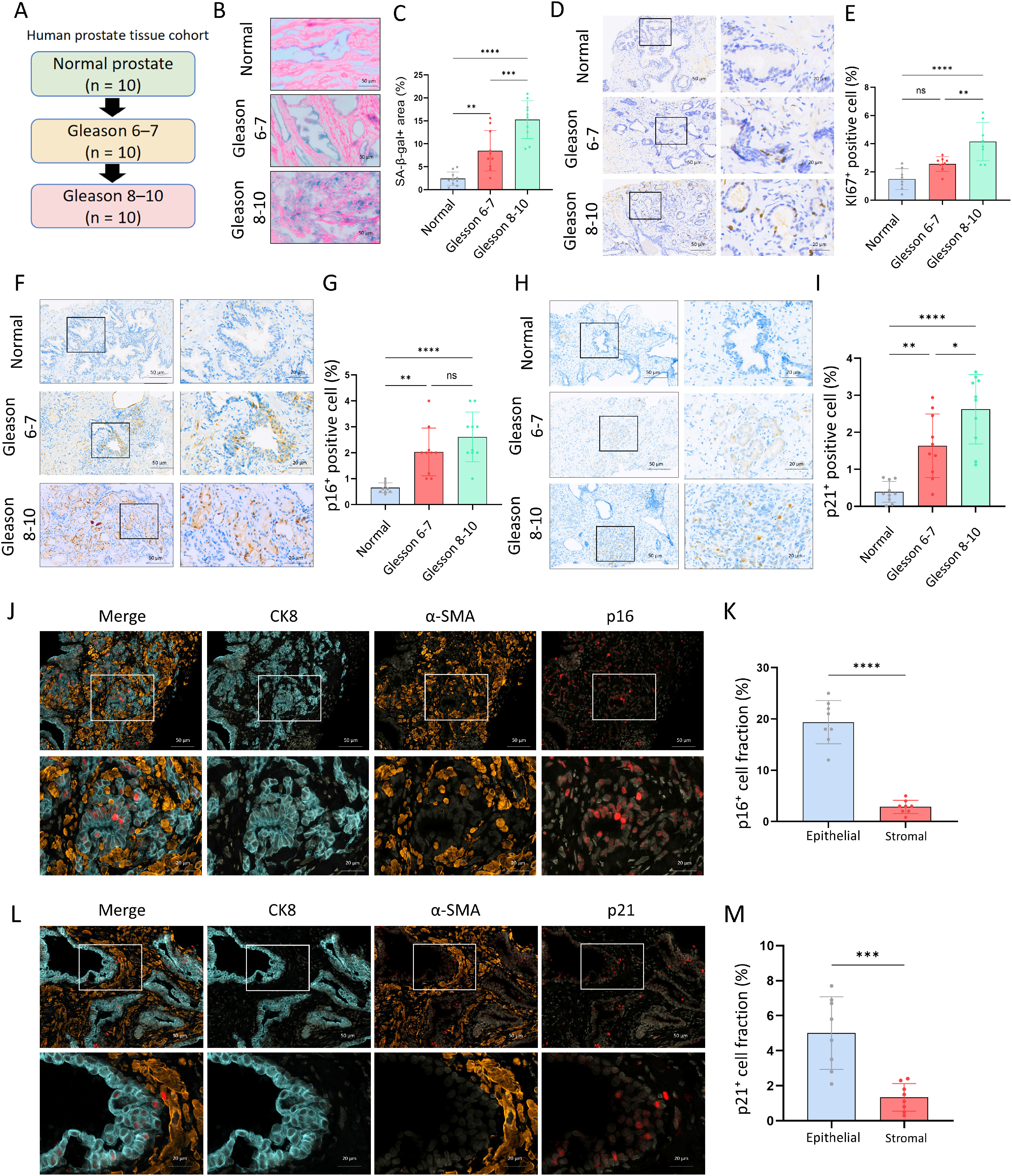
Using human prostate cancer specimens, single-cell datasets, Pten-deficient mice, and mouse cell cultures, researchers evaluated how senescent epithelial cells alter the tumor stroma. Senescence-associated markers increased with prostate cancer grade and concentrated primarily in epithelial cells. In both human datasets and Pten-knockout mice, epithelial senescence correlated with fibroblast matrix remodeling and collagen deposition. In cell culture experiments, doxorubicin-induced senescent mouse prostate cancer cells secreted elevated levels of TGF-beta1. Conditioned medium from these cells reprogrammed NIH/3T3 fibroblasts into a cancer-associated fibroblast-like state that boosted collagen deposition and matrix gene expression. Treating senescent cancer cells with the senolytic ABT-263 lowered their numbers, reduced TGF-beta1 release, and suppressed fibroblast activation. Furthermore, pharmacological inhibition of TGF-beta signaling decreased SMAD2 phosphorylation and partially reversed the matrix-remodeling phenotype.
Why it matters
The findings detail how the senescence-associated secretory phenotype directly remodels the extracellular matrix. They also demonstrate that senolytics can disrupt harmful epithelial-stromal communication in fibrotic microenvironments.
Caveats
Mechanistic experiments relied on in vitro mouse cell lines, drug-induced senescence models, and conditioned medium assays. Further research is needed to determine whether senolytic interventions effectively reverse stromal remodeling in vivo.
The paper
Shenzhen Pingle Orthopedic Hospital · Sun Yat-sen University
Neoplasia · 1 Oct 2026