Low oxygen extends life in mice with mitochondrial disease
Low oxygen extended median lifespan nearly threefold compared with normal oxygen in male and female mutant mice across two independent groups.
Limit: Mice had a severe, early-onset disease, not animals undergoing normal aging
Edited by Boris Djordjevic · AgingResearch.News
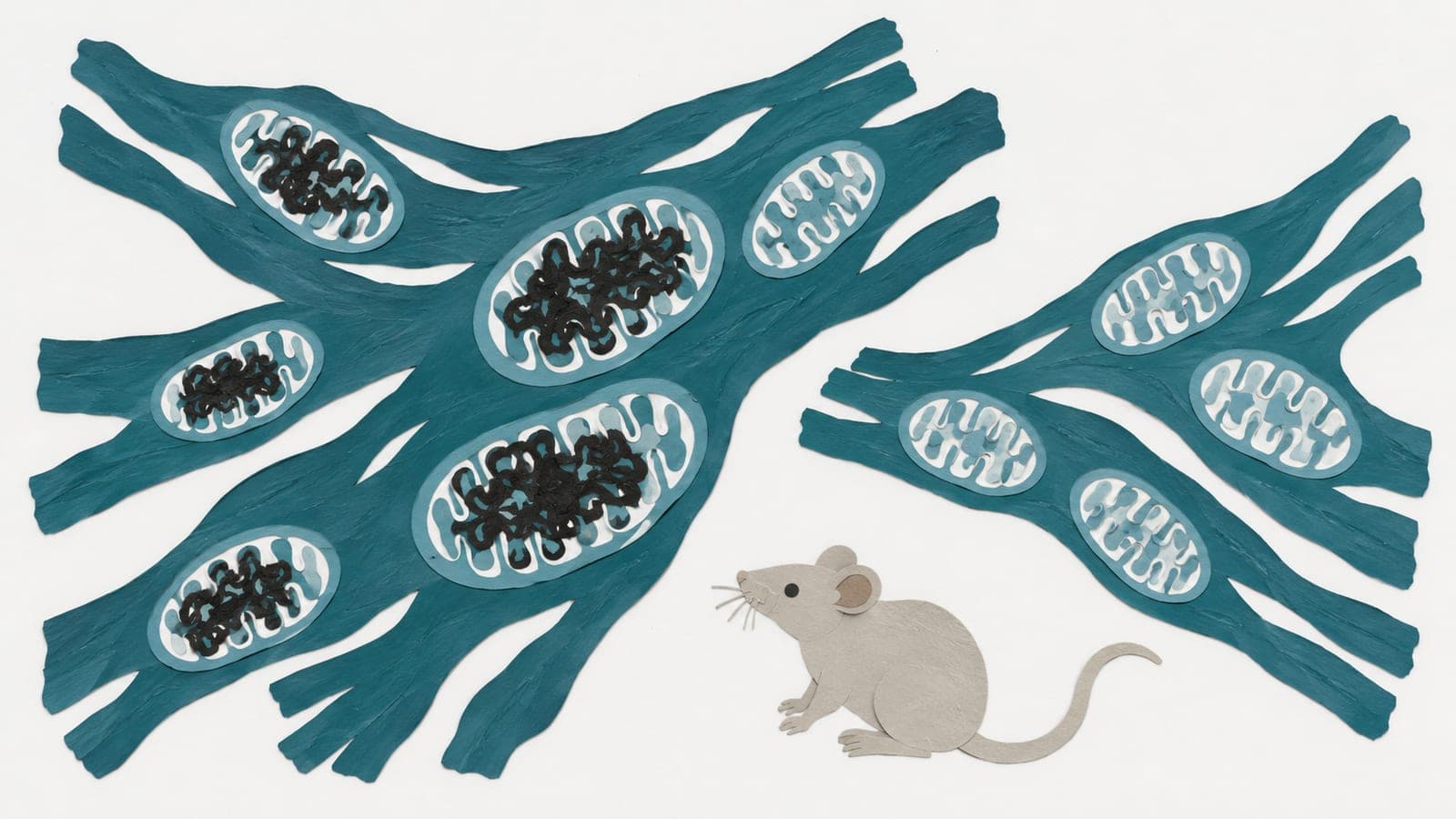
In an animal experiment, Htra2 mutant mice prone to severe nerve-cell degeneration and early death received continuous low oxygen. The mutation disabled the protein-cutting activity of HTRA2, an enzyme inside mitochondria, the cell’s energy-producing structures. Researchers exposed mice to 11% oxygen from 11 days after birth and tracked survival. Low oxygen extended lifespan, reduced degeneration in the striatum, a brain region, and improved performance on movement tests.
Separate experiments in cells grown in the lab found that losing HTRA2 or CLPB, a protein that breaks up protein clumps, caused a component of complex I to form clumps. Complex I is a group of proteins involved in cellular energy production. Low oxygen largely restored levels of complex I proteins in HTRA2-deficient cells but did not improve its activity.
Why it matters
The work addresses how failures in protein maintenance contribute to mitochondrial dysfunction and nerve-cell degeneration. The authors suggest that low oxygen may have potential for additional diseases involving impaired complex I function.
Caveats
The lifespan result came from mice with a severe, early-onset disease, not animals undergoing normal aging. These experiments did not test low oxygen in people.
The paper
Hypoxia rescues complex 1-associated disease caused by proteostatic defects
Gladstone Institutes
Nature Metabolism, Jul 8, 2026, Open access
Comments
Be the first to comment.