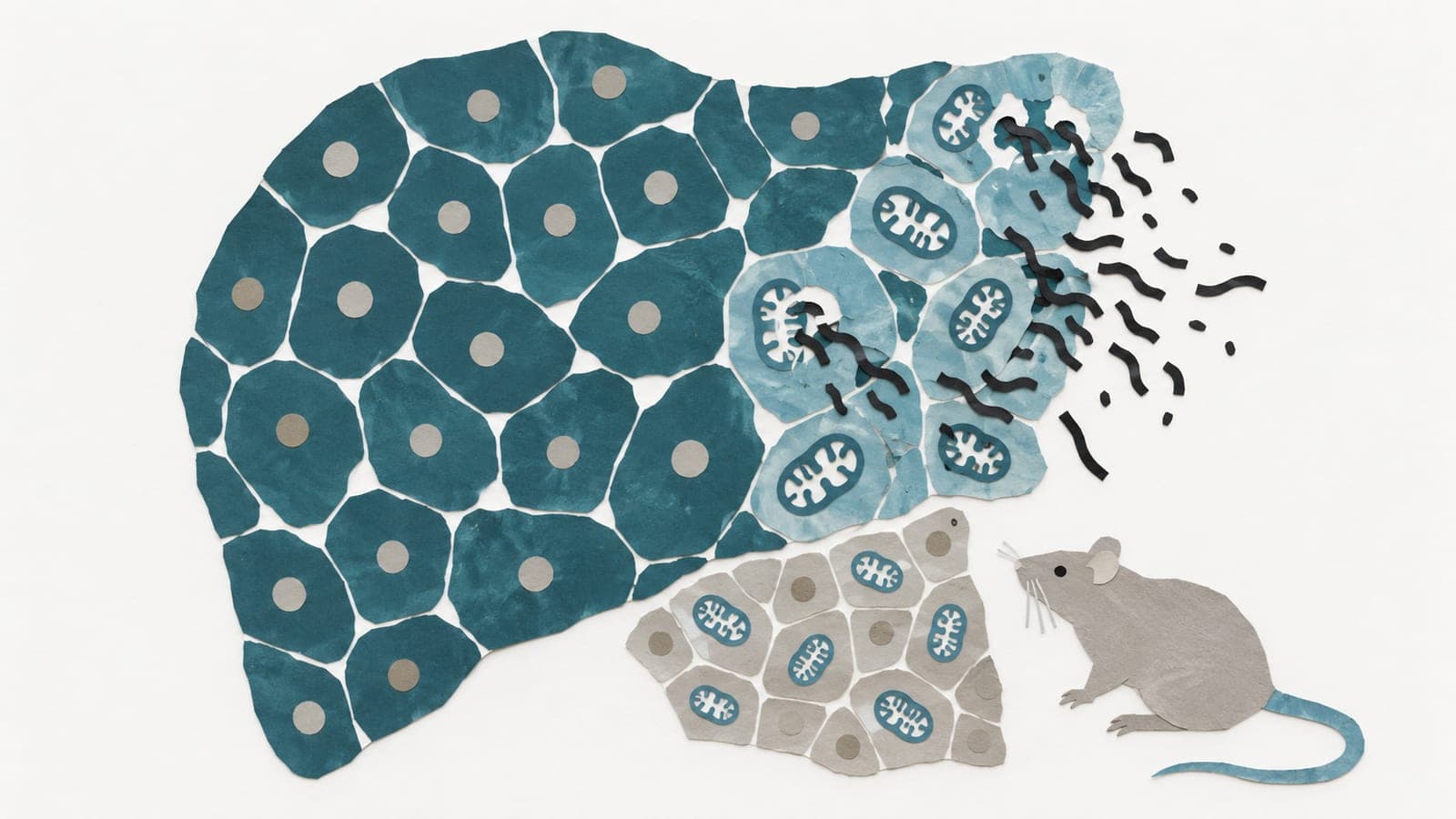
Compound improved coordination and endurance in aged mice
Long-term supplementation also preserved lean body mass and stabilized fat and blood sugar metabolism in an experiment in aged mice.
Limit: The abstract omits sample sizes, doses, and supplementation length
Edited by Boris Djordjevic · AgingResearch.News
In an experiment in aged C57BL/6J mice, researchers tested long-term supplementation with 4-N-furfurylcytosine, a compound derived from a DNA building block. It preserved lean body mass, meaning tissue other than fat, and improved coordination and endurance. It also stabilized fat and glucose metabolism and reduced markers of oxidative stress, an imbalance between reactive molecules and cellular defenses. Researchers detected no overt adverse effects in the measures they assessed.
The team also tested the compound in human fibroblasts, connective-tissue cells, and keratinocytes, skin cells, grown in the lab. In these cells, it improved survival and reduced signs of senescence, a state in which cells stop dividing. It reduced oxidative damage and altered energy production. The authors interpreted the findings as consistent with changes in the upkeep of mitochondria, cells’ energy-producing structures, and improved resilience to oxidative stress.
Why it matters
Disrupted mitochondrial function and oxidative damage are features of aging. The findings support further investigation of this compound as a candidate for modifying aging-related processes.
Caveats
Experiments in mice and cells grown in the lab cannot establish effects in people. The abstract does not report sample sizes, doses or the length of supplementation.
The paper
Institute of Bioorganic Chemistry, Polish Academy of Sciences
Free Radical Biology & Medicine, May 22, 2026