Silencing lipid catabolism determines longevity in response to fasting
Abstract
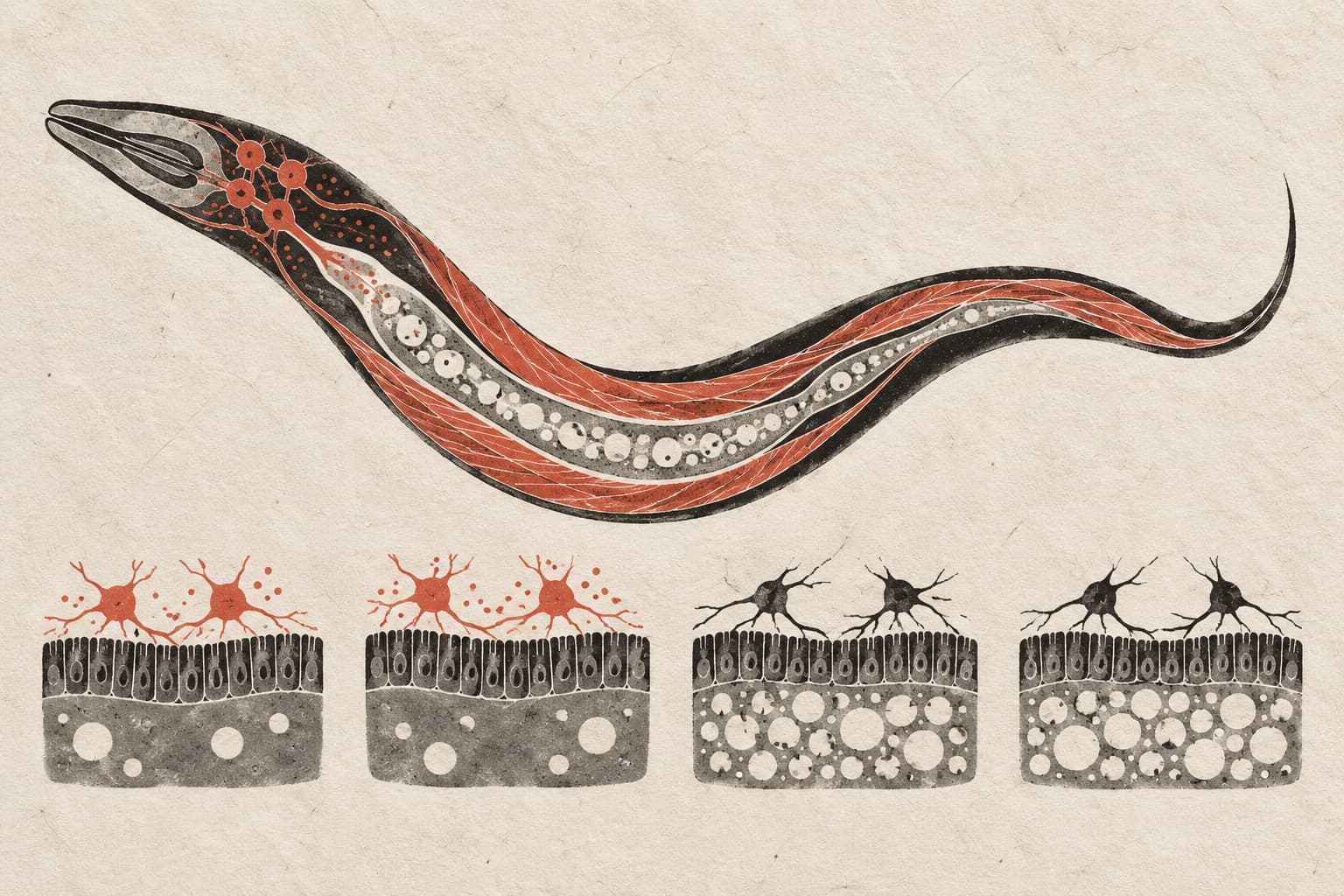
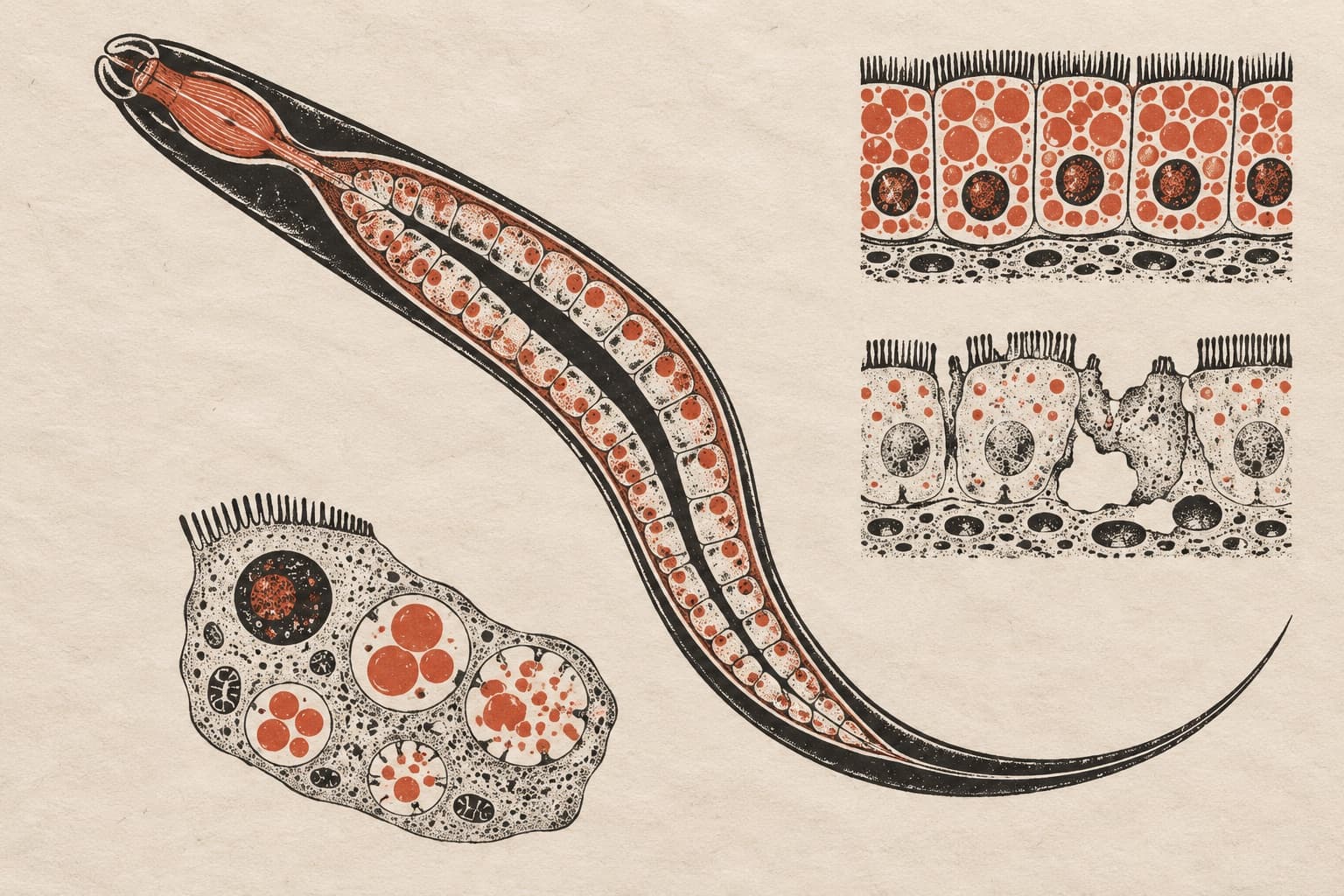
Oscillations between lipid anabolism and catabolism are essential for maintaining cellular health during metabolic fluctuations. Fasting, a conserved determinant of aging, improves disease outcomes and extends lifespan, yet the relative contributions of lipid catabolism versus its attenuation to fasting-induced longevity remain unresolved. The metabolic flexibility of C. elegans under variable nutrient availability provides a powerful system to address this question. We show that lifespan extension from fasting depends not on sustained activation of lipid catabolism, but on its silencing upon nutrient replenishment. The fasting-responsive nuclear hormone receptor NHR-49 activates β-oxidation; however, unlike classical ligand-regulated receptors, NHR-49 is regulated through ligand-independent mechanisms involving cofactor-mediated transcriptional attenuation and protein turnover. We identify casein kinase 1 alpha 1 (KIN-19) as a key regulator of metabolic plasticity and fasting-induced longevity that silences β-oxidation via primed phosphorylation of NHR-49. Thus, cooperative ligand-independent silencing of this conserved nuclear hormone receptor promotes fasting-associated longevity.
The paper
The University of Texas Southwestern Medical Center
Nature Communications, 22 Jan 2026