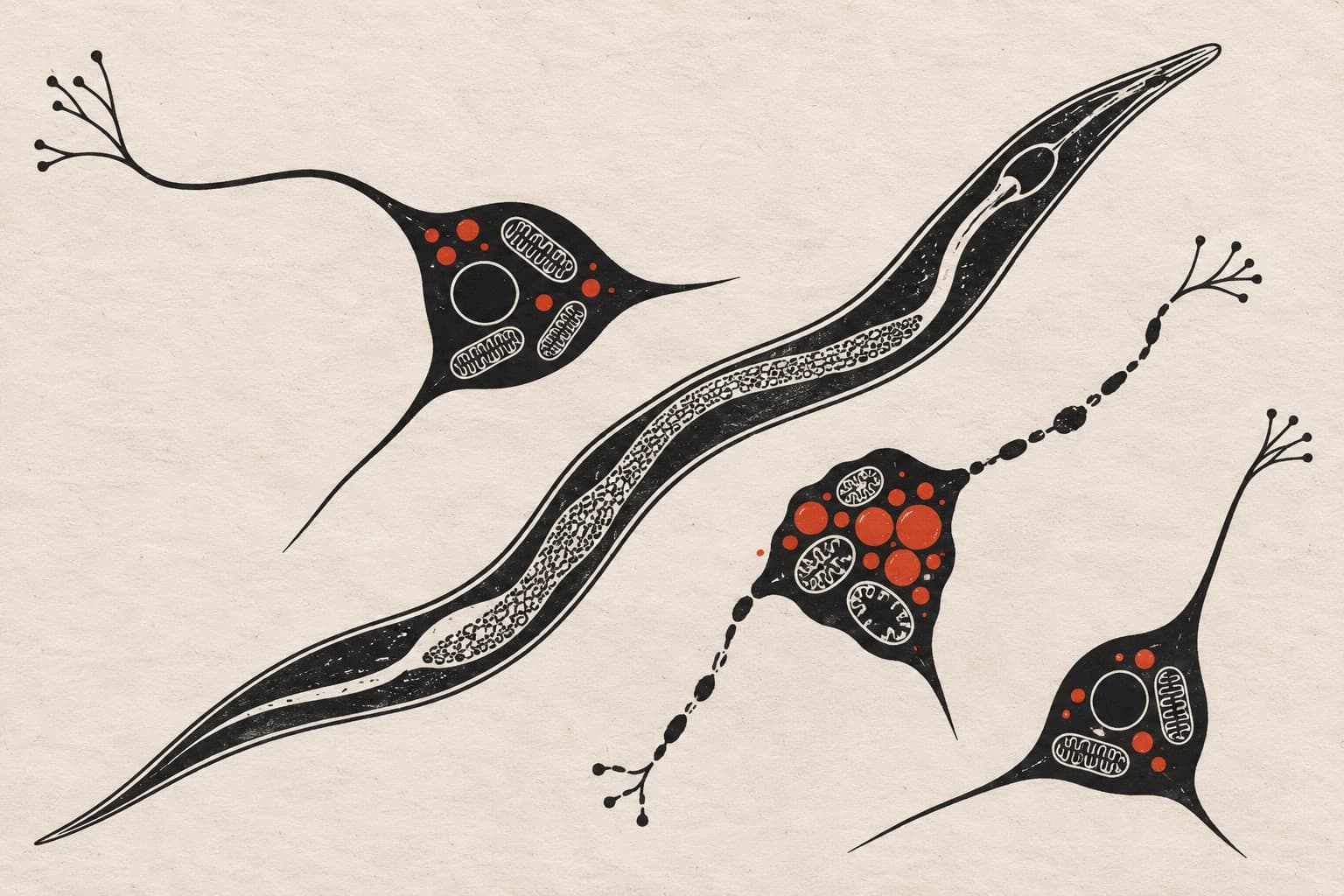
KLF-1 regulates SKN-1 activity and longevity in worms
In germline-deficient animals, KLF-1 was required for SKN-1 activation, oxidative stress resistance, and longevity without altering skn-1 transcript abundance.
Genetics
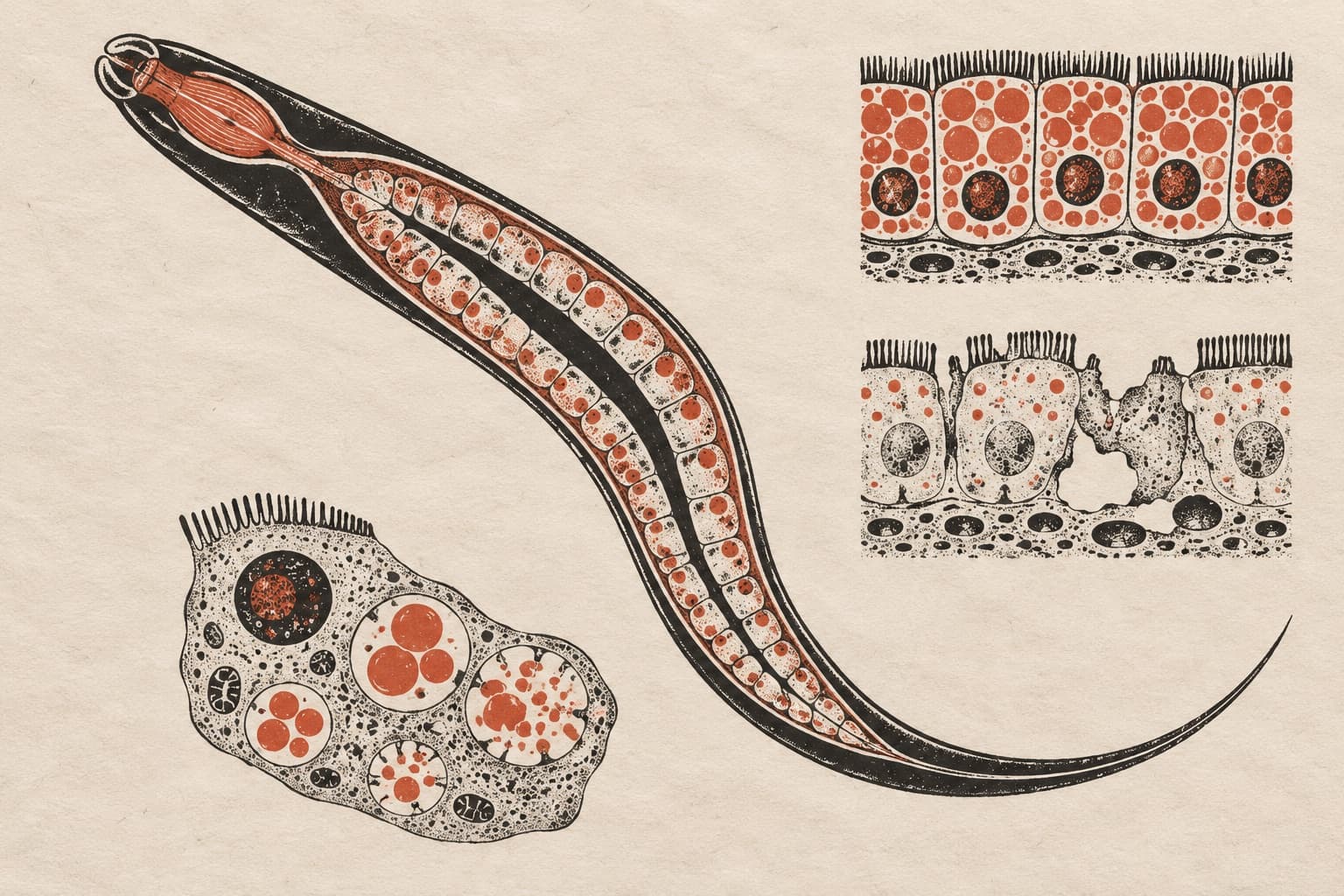
In Caenorhabditis elegans, researchers investigated how Krüppel-like factors coordinate lipid metabolism with stress resistance and lifespan. They found that KLF-1 regulates lipid accumulation to modulate the transcription factors SKN-1A/Nrf1 and SKN-1C/Nrf2. KLF-1 was required for activating both SKN-1 isoforms, as well as for oxidative stress resistance and longevity in germline-deficient worms, without changing skn-1 transcript levels. It selectively influenced SKN-1A activation through lipid accumulation while sparing its proteasome recovery response. For SKN-1C, regulation involved both lipid-dependent and lipid-independent mechanisms. Furthermore, KLF-1 and KLF-2 exerted opposite effects on lipid accumulation and oppositely regulated lipophagy-associated genes, including unc-51, atg-9, and lipl-1, independently of the lipogenic regulator SBP-1.
Why it matters
The findings link Krüppel-like factor regulation of lipid homeostasis to SKN-1/Nrf activity. This suggests a functional mechanism connecting lipid storage pathways to oxidative stress defenses and organismal lifespan.
Caveats
Longevity and stress resistance were tested specifically in germline-deficient models rather than wild-type backgrounds. The experiments were conducted entirely in nematodes, meaning the findings may not translate to mammalian physiology.
The paper
Show 8 more authors
Katherine Gilmore, Arlette Cabral, Justin Mejia, Julia Barrett, Maria La Terza, Emma Johnson, Allison Carroll, Jean E. Schaffer,Joslin Diabetes Center · Emmanuel College - Massachusetts
Genetics · 29 Sep 2026