Effects of moxibustion on delaying ovarian aging in mice by activating mitochondrial unfolded protein response and enhancing granulosa cell mitochondrial function
Randomised
Abstract
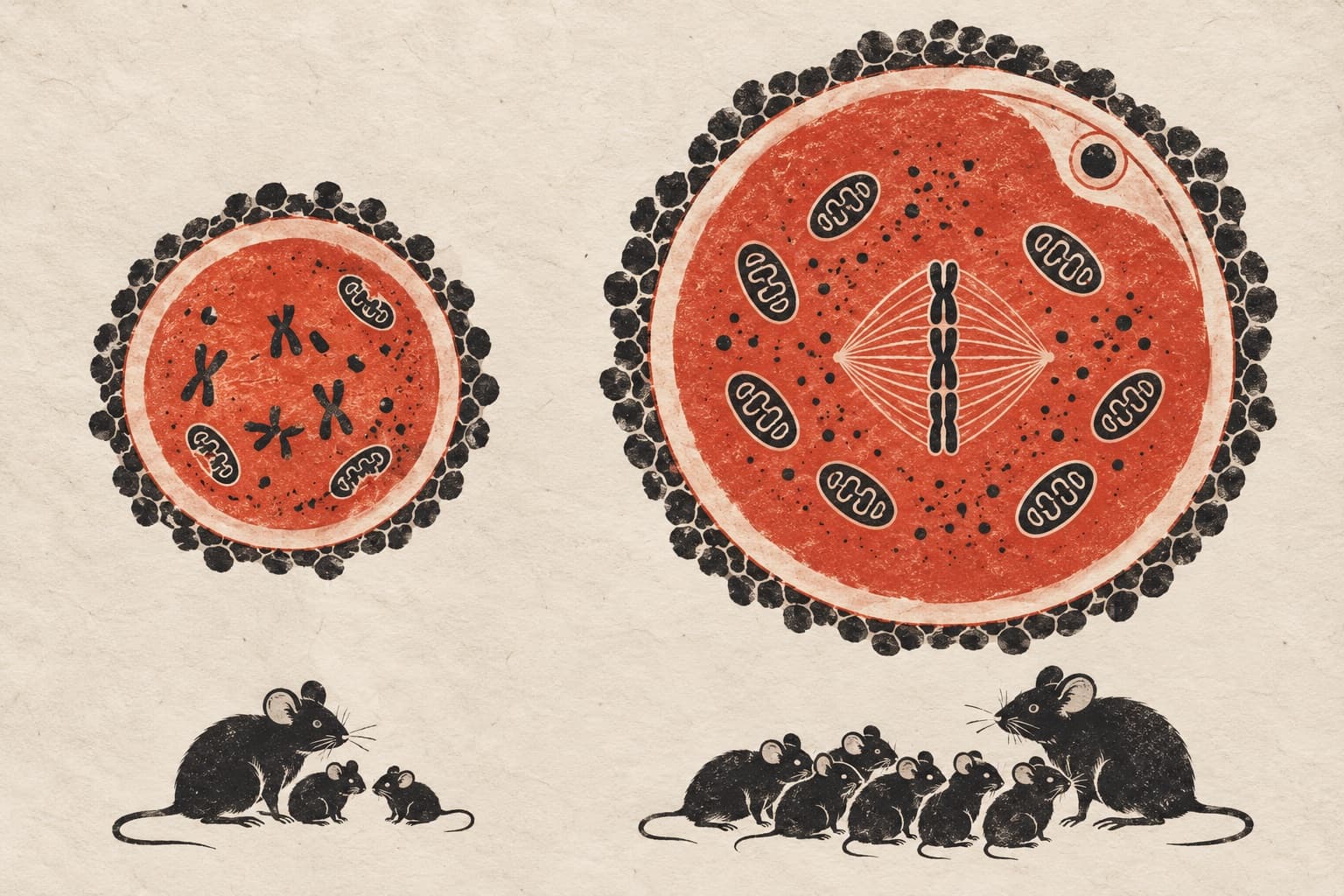
OBJECTIVES: To investigate the effect of moxibustion on delaying ovarian aging in naturally aging mice and to explore the underlying mechanisms. METHODS: Fifteen 2-month-old female SPF ICR mice with regular estrous cycles were included in a 2-month-old group. Thirty 10-month-old female SPF ICR mice were randomly divided into a 10-month-old group and a moxibustion group, with 15 mice in each group. The moxibustion group received alternating moxibustion on bilateral "Shenshu"(BL23) and "Zhongwan" (CV12), "Guanyuan" (CV4) for 10 min every other day, for 21 consecutive days. The vaginal smears were used to observe the estrous cycle irregularities of mice. The serum contents of estradiol (E₂), follicle-stimulating hormone (FSH), and anti-Müllerian hormone (AMH) were measured by ELISA. The ovarian morphology was observed by hematoxylin-eosin staining. The contents of adenosine triphosphate (ATP) in granulosa cells were measured by luminescence-based ATP assay. The levels of mitochondrial membrane potential (MMP) of granulosa cells were measured by JC-1 staining. The real-time fluorescence quantitative PCR, Western blot, and immunohistochemistry were used to assess the mRNA and protein expression levels of mitochondrial unfolded protein response (UPRmt)-related signaling pathway components, including activating transcription factor 5 (ATF5), caseinolytic protease P (ClpP), and Lon protease 1 (LONP1) in the ovarian tissues. RESULTS: Compared with the 2-month-old group, the 10-month-old group exhibited an increased rate of estrous cycle irregularity (P<0.01), elevated serum FSH contents (P<0.01), decreased E₂ and AMH contents (P<0.01), reduced number of follicles at all stages (P<0.01), reduced granulosa cell ATP content and MMP level (P<0.01), decreased positive expression levels of ATF5, ClpP, and LONP1 protein, and diminished expression levels of ATF5, ClpP, and LONP1 mRNA and protein in ovarian tissue (P<0.01). Compared with the 10-month-old group, the moxibustion group showed a lower rate of estrous cycle irregularity (P<0.01), decreased serum FSH content (P<0.01), increased E₂ and AMH contents (P<0.01), increased the number of primordial, growing and antral follicles (P<0.05, P<0.01), elevated granulosa cell ATP content and MMP level (P<0.01), increased ATF5, ClpP, and LONP1 protein positive expression levels, and enhanced ATF5, ClpP, and LONP1 mRNA and protein expression levels in the ovarian tissue (P<0.01, P<0.05). CONCLUSIONS: Moxibustion can delay ovarian dysfunction related to natural aging in mice and modulate hormonal levels. Its mechanism may involve regulating the expressions of UPRmt-related signaling molecules such as ATF5, ClpP and LONP1, and enhancing mitochondrial function in granulosa cells.
The paper
Nanjing University of Chinese Medicine
Zhen Ci Yan Jiu, 22 Jan 2026