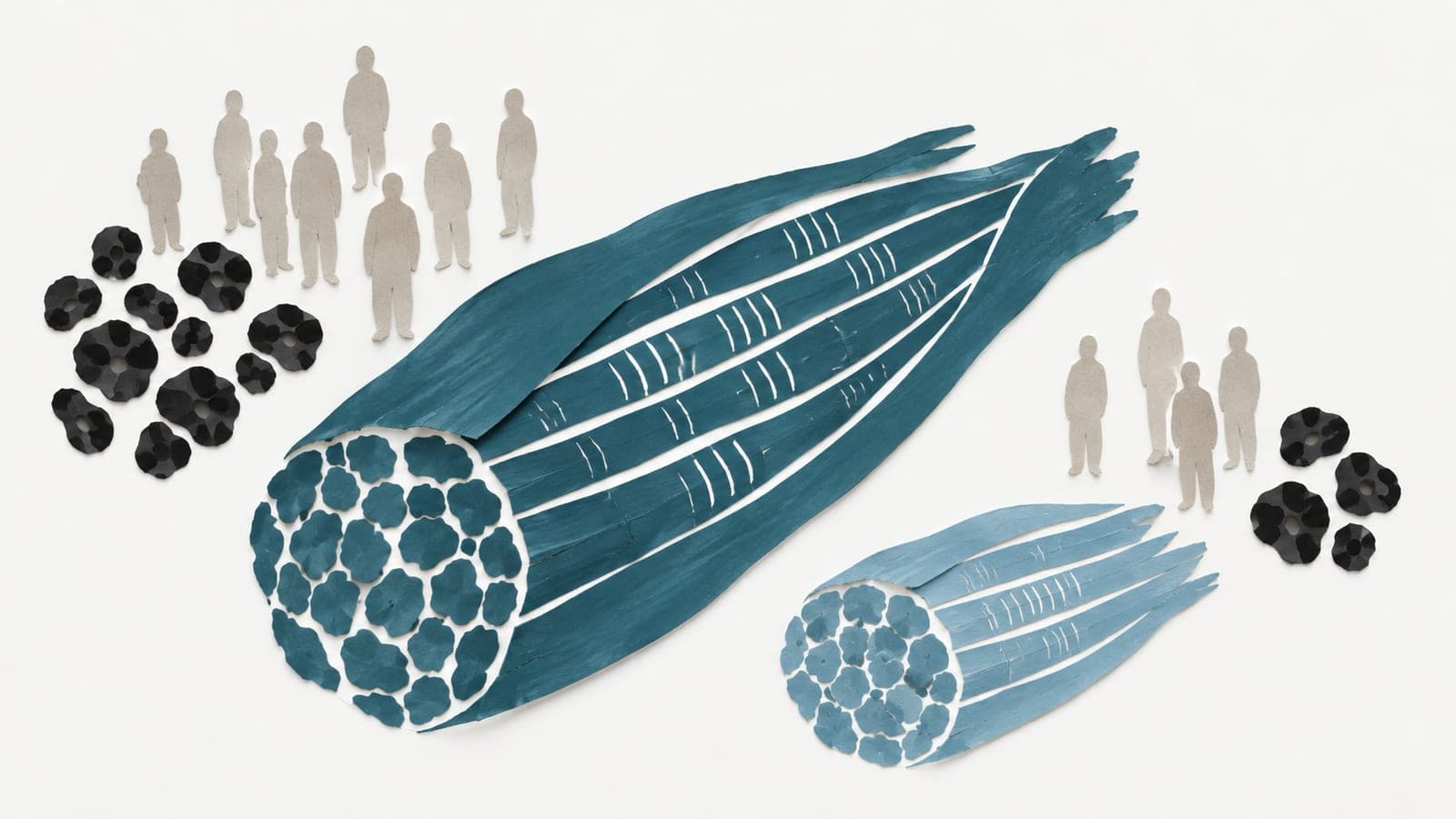
Association between dietary behavior and sarcopenia in older adults aged 65 years and above in longevity areas of China: a latent class analysis
Abstract
Objective: To investigate the relationship between dietary behavior and sarcopenia in older adults aged ≥65 years in longevity areas of China based on latent class analysis. Methods: A total of 4 358 older adults aged ≥65 years were selected from the 2021 Healthy Aging and Biomarkers Cohort Study. The information about their demographic characteristics, lifestyles, and chronic disease histories were collected. A simplified food frequency questionnaire was used to collect information about their dietary intake in the last month. The food intake frequency and food category score were calculated, and the higher the food category score, the richer the dietary intake. Latent class analysis was used to identify the latent classes of the dietary behavior. Sarcopenia was diagnosed using the SARC-CalF. Multivariate logistic regression model was used to analyze the association of food category scores and different latent classes of the dietary behavior with the risk for sarcopenia. Results: In 4 358 older adults, 1 841 (42.24%) had sarcopenia. The frequencies of intakes of cereals and potatoes, vegetable and fruit, meat and bean products were lower in the sarcopenia group than in the non-sarcopenia group. The risk for sarcopenia decreased with the increase of food category score in older adults (OR=0.850, 95%CI: 0.796-0.907). Latent class analysis identified 4 latent classes of the dietary behavior. Compared with those with class 1 (frequency of intake of all 5 food species was higher probability in T₃ group), those with class 2 (frequency of intake of vegetables and fruits and energy-only foods were less likely to be in the T₃ group) and class 3 (frequency of intake of all 5 food species was lower probability in T₃ group) had significantly increased risk for sarcopenia (OR=1.377, 95%CI: 1.131-1.676) and (OR=1.354, 95%CI: 1.091-1.680), 37.7% and 35.4% increased risk for sarcopenia, respectively. Conclusion: Increasing dietary intake category and sufficient intake of various foods for a balanced dietary pattern can reduce the risk of sarcopenia in older adults.
The paper
Chinese Center For Disease Control and Prevention
Zhonghua Liu Xing Bing Xue Za Zhi, 10 May 2025
doi.org/10.3760/cma.j.cn112338-20241117-00729PubMed 40494780