Low muscle mass linked to later cancer reports in Chinese adults
Compared with participants without low muscle mass, those with it had a hazard ratio of 2.02, indicating a higher rate of later self-reported cancer.
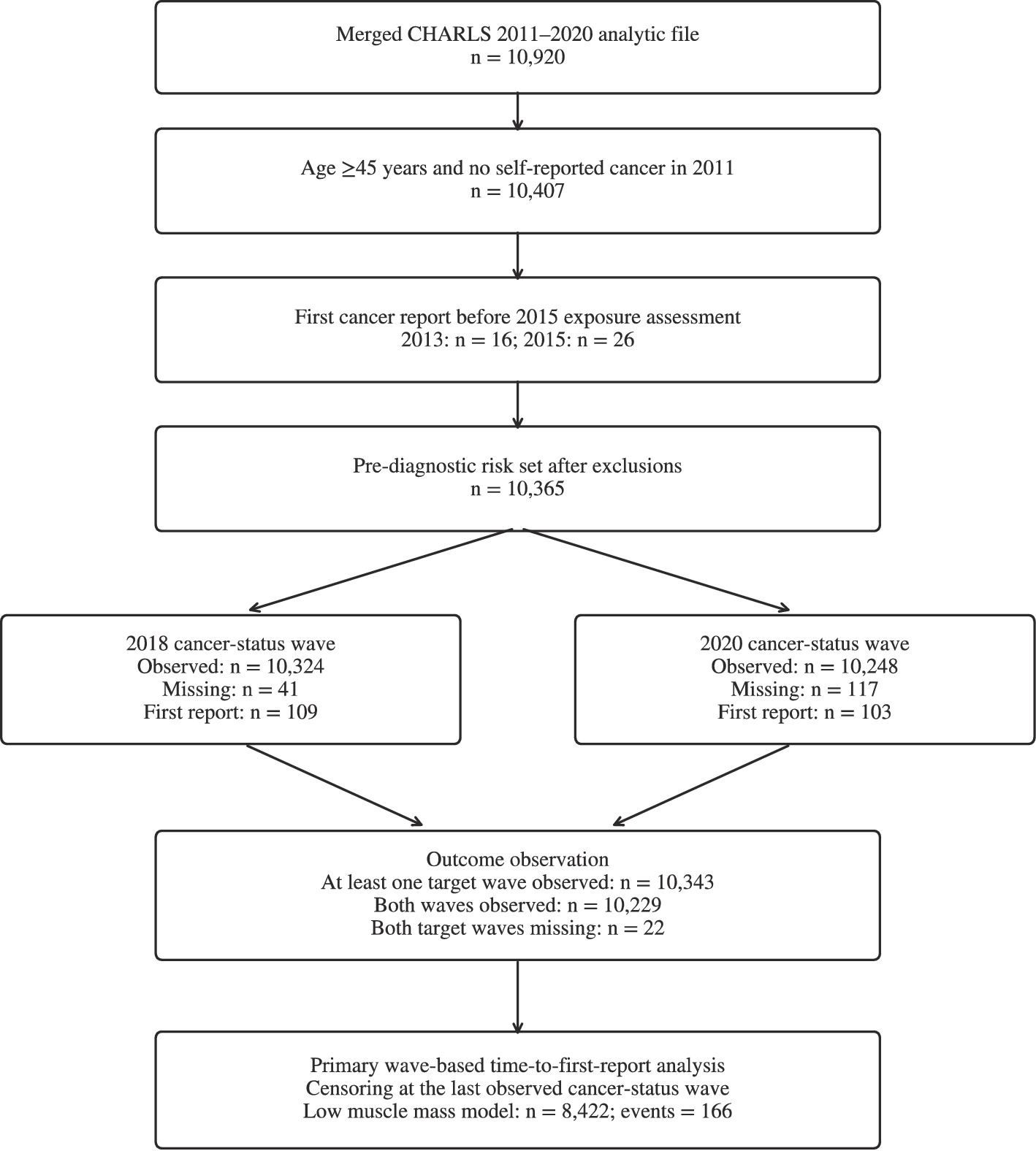
In an observational study, researchers analysed data from 10,407 Chinese adults aged 45 or older who reported no cancer in 2011. They used survey data from 2011 to 2020. Their main analysis compared muscle status in 2015 with first cancer reports in 2018 or 2020. It excluded participants who first reported cancer in 2013 or 2015.
Low muscle mass and sarcopenia, a condition involving loss of muscle mass and strength, were associated with later cancer reporting. The hazard ratio, which compares rates over time, was 2.02 for low muscle mass and 2.33 for sarcopenia, compared with participants without each condition. The models accounted for demographic factors, smoking, drinking and several health conditions. New or worsened low muscle mass and sarcopenia showed the strongest associations.
Why it matters
Muscle loss in middle-aged and older adults may reflect wider physiological vulnerability. The study addresses whether muscle health can mark this vulnerability before cancer is recognised.
Caveats
This observational study could not establish causation and relied on self-reported cancer. Cancer reports were uncommon; other factors or cancer already present but unrecognised could have contributed to the associations.
- Cancer
- Sarcopenia
- First self-reported cancer
- Grip strength
- Height-adjusted appendicular skeletal muscle mass
- Humans