Interleukin 8 as a Causal Link Between Aging and Impaired Influenza Antibody Responses in Older Adults
Abstract
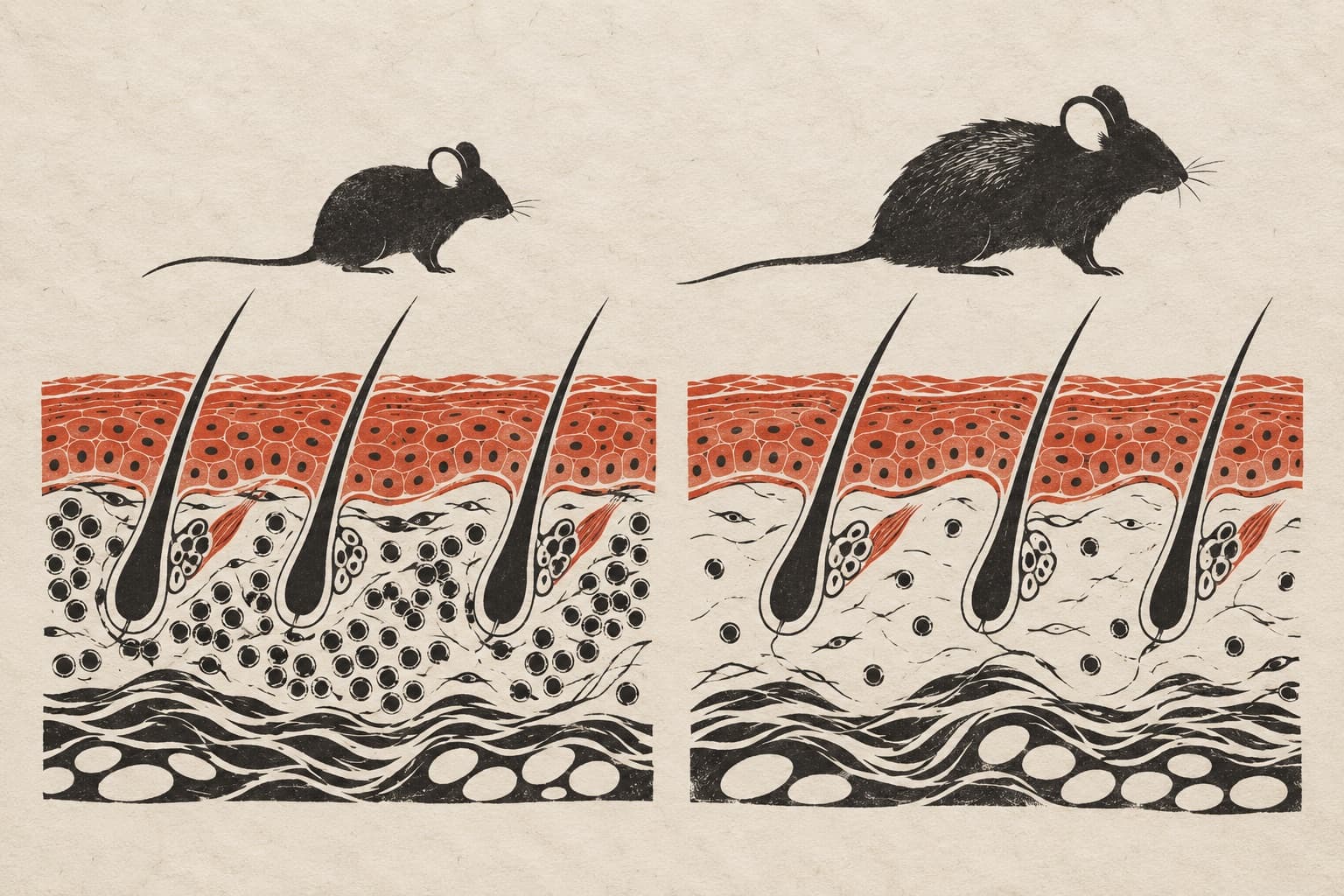
BACKGROUND: Antibody responses to MF59-adjuvanted (MF59Flu) and high-dose (HDFlu) influenza vaccines have been well-characterized in older adults, yet corresponding cellular immune response data remain limited. METHODS: Blood samples were collected from 106 MF59Flu recipients and 112 HDFlu recipients at 4 time points: before vaccination (day 0) and on days 1, 8, and 28 postvaccination. Antibody responses were assessed in serum samples using a hemagglutination inhibition assay. Eight proinflammatory cytokines and chemokines, including IFN-α2a, IFN-γ, IP-10, MCP-1, MIP-1α, IL-1β, IL-6, and IL-8, were quantified from peripheral blood mononuclear cells using a multiplex assay. Associations between cytokine/chemokine secretion levels and antibody responses were examined, along with the effect of sex, age, body mass index (BMI), and cytomegalovirus infection status. RESULTS: Age was positively correlated with IL-8 levels on day 1 (r = 0.24, P < .001) and the change in IL-8 levels from day 0 to day 1 (r = 0.16, P = .021). Notably, the change in IL-8 levels was negatively associated with day 28 hemagglutination inhibition titers (r = -0.15, P = .026). Causal mediation analysis demonstrated that IL-8 exerted significant causal mediation effects on antibody responses at both day 8 (P = .046) and day 28 (P = .0045). No significant effects of other cytokines and chemokines, vaccine type, sex, or BMI on antibody responses were observed. CONCLUSIONS: Our findings underscore IL-8 as a potential mediator of antibody responses to influenza vaccination in older adults, suggesting that IL-8 inhibition could serve as a molecular intervention to improve antibody responses in this high-risk population.
The paper
Mayo Clinic
The Journal of Infectious Diseases, 17 Mar 2025