Aging reshapes challenge-specific skin immunity in mice
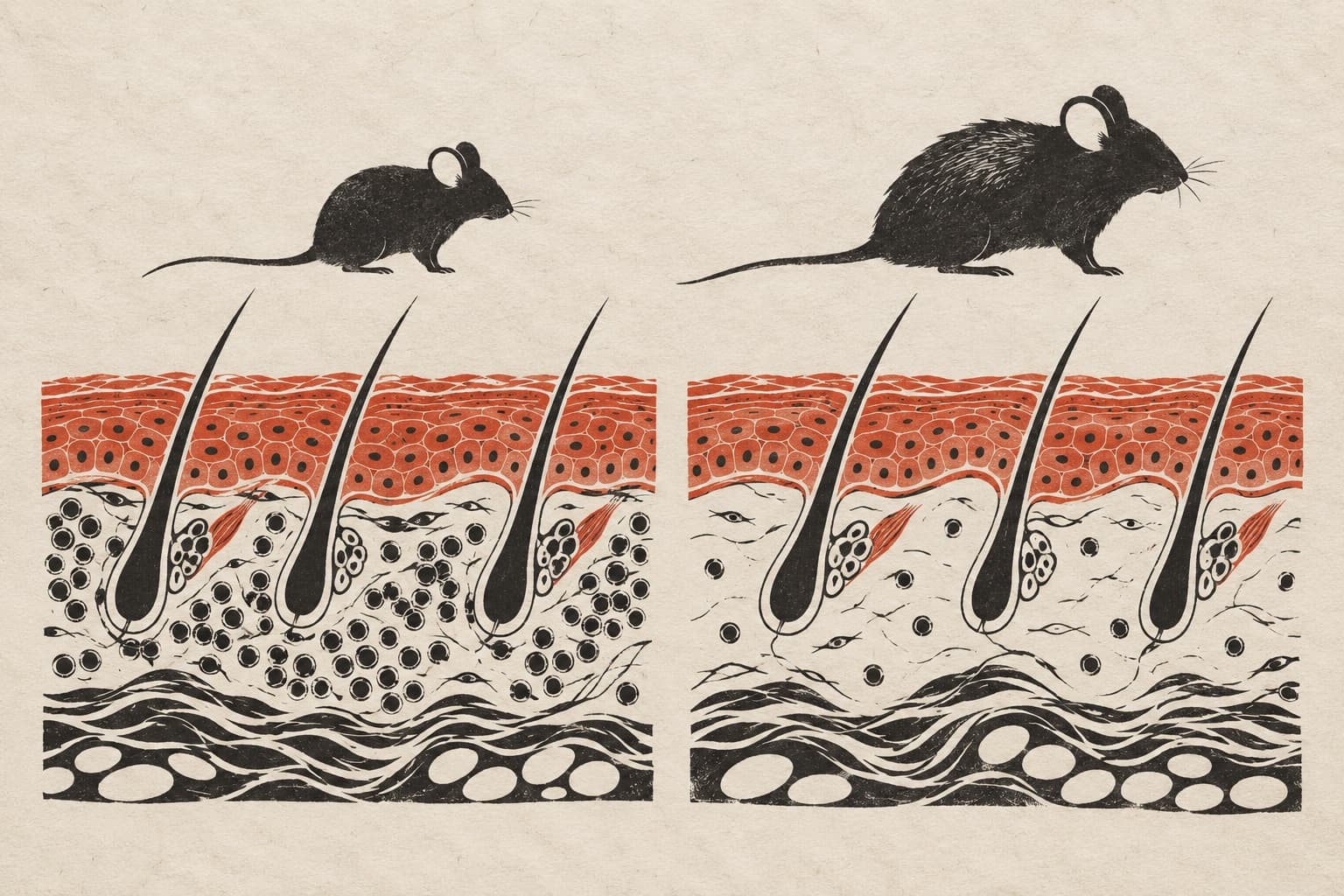
In mice challenged with bacteria or sensitization, local fluid profiling revealed age-altered immune cell recruitment despite preserved overall transcriptional responses to infection.
bioRxiv
In a preprint study, researchers tracked cutaneous immune responses in mouse models subjected to epicutaneous Staphylococcus aureus infection or ovalbumin-induced sensitization. Bulk RNA sequencing of infected skin showed that transcriptional variation was driven mostly by infection rather than age, suggesting that aged skin keeps a broadly inducible response to microbial challenge. However, microneedle patch sampling of skin interstitial fluid revealed age-dependent differences in local immune cell dynamics after bacterial infection. Older mice displayed altered magnitude and kinetics of cellular recruitment, including an attenuated cutaneous T cell response. Interstitial fluid profiling also revealed that ovalbumin sensitization triggered a distinct localized immune program that was incompletely reflected in systemic measurements.
Why it matters
The findings suggest that age-related vulnerability to skin infections may stem from altered local cellular kinetics rather than an inability to launch a transcriptional defense. This underscores the need to profile localized tissue environments instead of relying solely on systemic blood measurements.
Caveats
The study was conducted in mouse models, and findings from skin interstitial fluid sampling have not yet been tested in humans. Additionally, the research is a preprint that has not yet undergone peer review.
The paper
Infection and sensitization reveal stimulus-specific immune remodeling in aged skin
Duke University
bioRxiv · 7 Sep 2026 · Preprint, not peer-reviewed