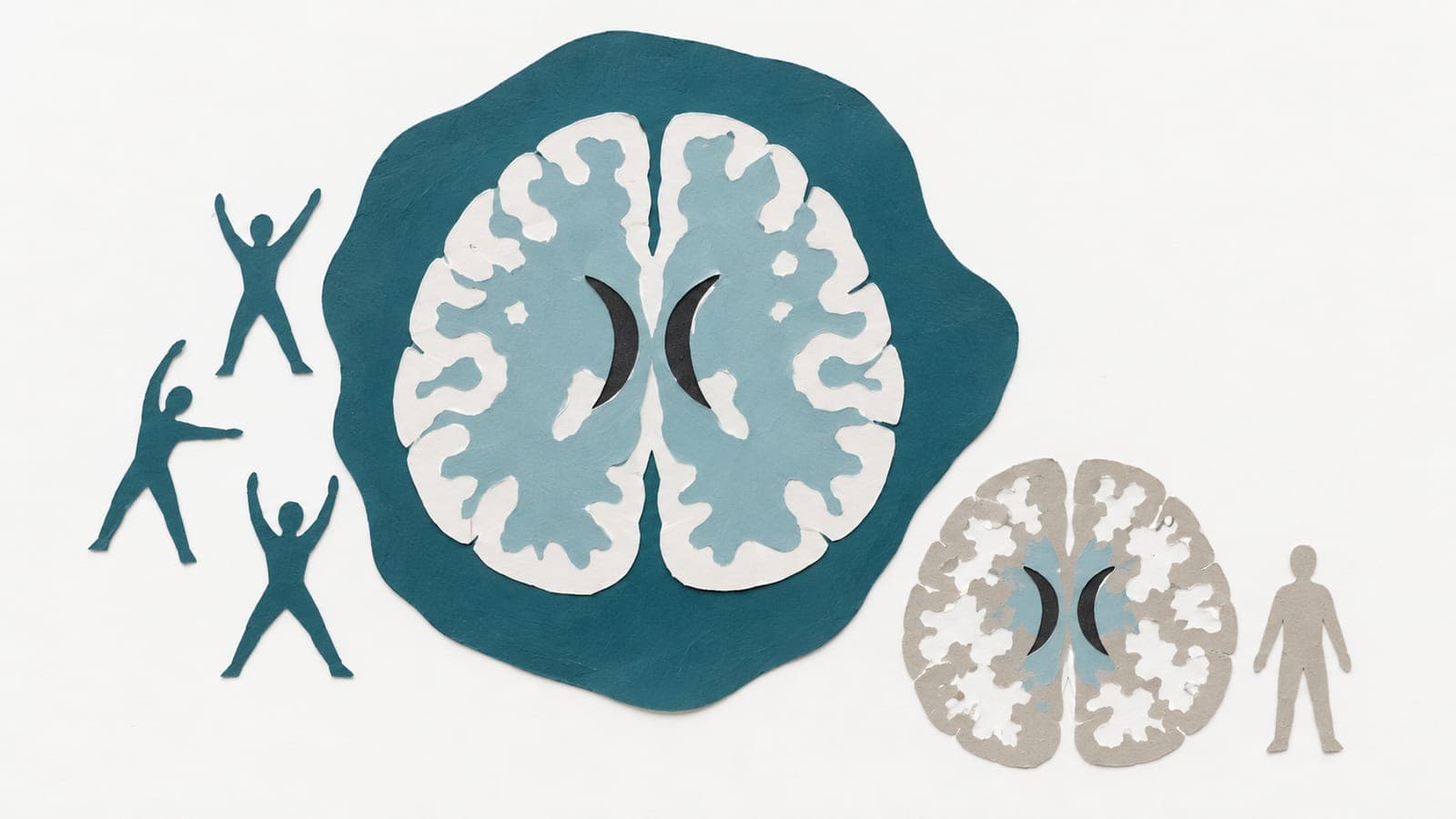
Interrelation between domains of functioning and white matter hyperintensities in geriatric memory clinic patients: a holistic approach through network analysis
Abstract
OBJECTIVES: To explore interrelations between cognitive, physical, affective, and daily functioning, quality of life and white matter hyperintensities (WMH) in a geriatric memory clinic sample. METHOD: Participants received brain imaging, comprehensive geriatric assessment and neuropsychological evaluation including measurements of cognitive, physical, affective, and daily functioning and health-related quality of life. Data was analyzed using multiple linear regressions and network analysis using (moderated) mixed graphical models. RESULTS: The total sample included 932 patients (age: 79.6 ± 6.0, 49% women). In regression analyses, severe WMH (Fazekas 3) was associated with decreased cognitive (attention/speed, language) and physical functioning, more apathy symptoms and more (instrumental) activities of daily living dependency (All β's -0.40 to -0.24). Within the network analysis, daily functioning was directly associated with memory, attention/speed, and gait speed, while quality of life was associated with gait speed and affective functioning. WMH had no direct network associations with domains of functioning. CONCLUSION: Cognitive, physical, and affective changes associated with severe WMH co-occur with decreased daily functioning and lower quality of life in a geriatric memory clinic sample. However, relationships between domains of functioning are independent of WMH. This warrants a holistic and symptom-based approach in clinical care and post-diagnostic support.
The paper
Amsterdam Public Health; Oslo University Hospital
Aging & Mental Health, 20 Jan 2025, Open access