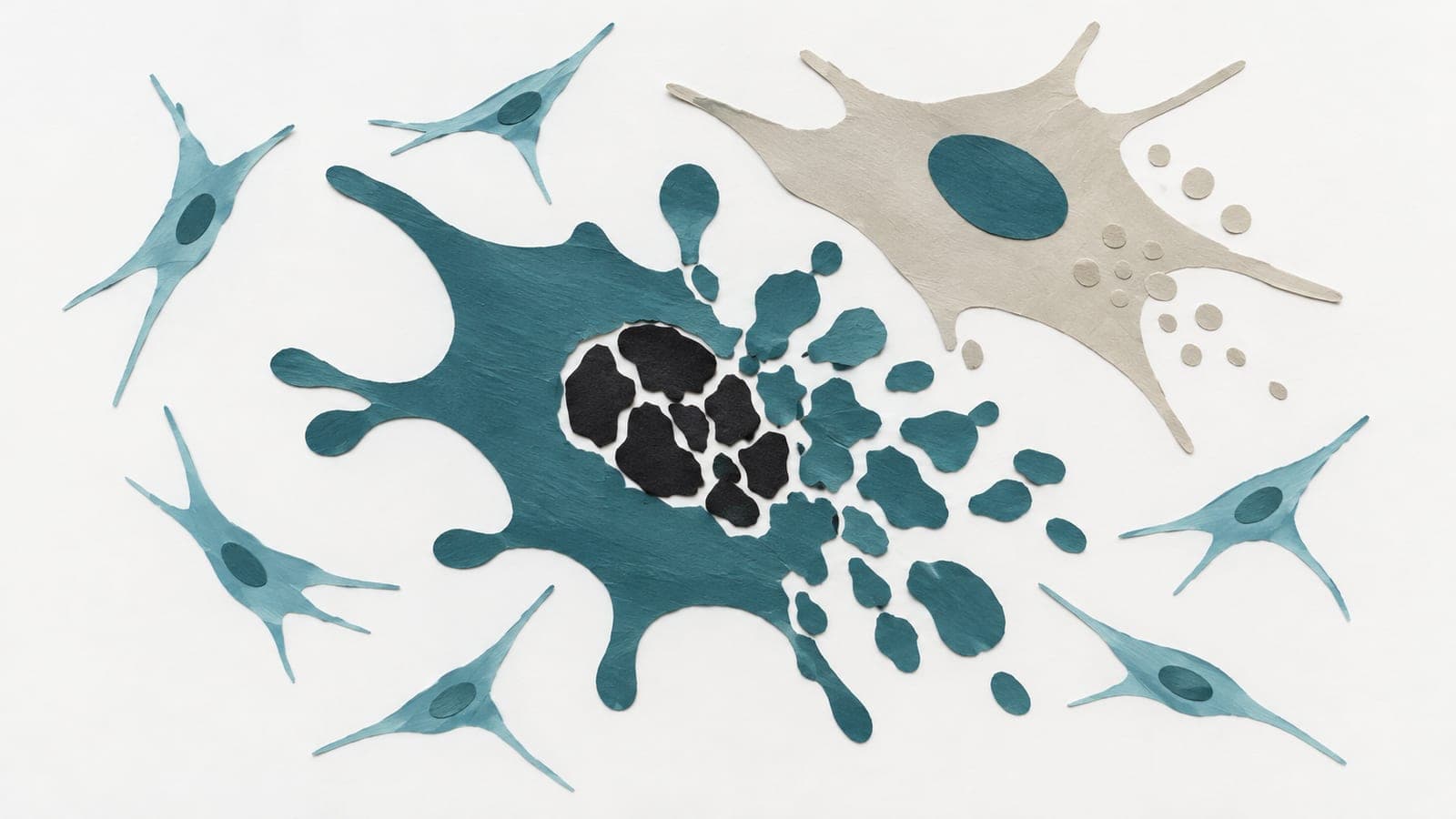
An APOC1 + inflammatory CAF-like state drives a senescent, treatment-resistant niche in rheumatoid arthritis
Abstract
Abstract Objectives Rheumatoid arthritis (RA) synovitis frequently persists despite cytokine-targeted therapies, suggesting the existence of pathogenic stromal programs that sustain chronic inflammation independently of canonical immune pathways. Although synovial fibroblasts (SF) are increasingly implicated in treatment resistance, the pathogenic fibroblast states driving refractory disease and their therapeutic vulnerabilities remain poorly defined. Methods We integrated multimodal single-cell and spatial profiling of synovial tissue from 54 patients with RA with prospective treatment-response data and functional studies in human fibroblasts and experimental arthritis models. Results We identified a C-X-C motif chemokine 12 (CXCL12) hi Apolipoprotein C1 (APOC1) + fibroblast population selectively enriched in treatment-refractory synovitis. Spatial analyses demonstrated that these fibroblasts establish CXCL12-dependent plasmablast niches within inflamed synovium, resembling inflammatory cancer-associated fibroblasts (iCAF) that orchestrate immune cell recruitment in the tumor microenvironment. CXCL12 hi APOC1 + fibroblasts exhibited a senescence-associated iCAF-like transcriptional program characterized by STAT3-C/EBP activation and APOC1 expression and were associated with poor response to TNF and IL-6 pathway inhibition. Mechanistically, APOC1 knockdown in RA-SF attenuated invasive mesenchymal behavior and disrupted senescence-associated inflammatory programs, identifying APOC1 as a central regulator of pathogenic fibroblast reprogramming. Importantly, genetic or pharmacological elimination of senescent cells ameliorated experimental arthritis and enhanced the efficacy of TNF blockade. Conclusions These findings implicate iCAF-like fibroblasts with senescent properties as a mechanistic driver of refractory RA synovitis and highlight stromal senescence programs as preclinically actionable therapeutic targets beyond cytokine inhibition.
The paper
The University of Tokyo
bioRxiv, 21 Apr 2026, Open access, CC BY, Preprint, not peer-reviewed