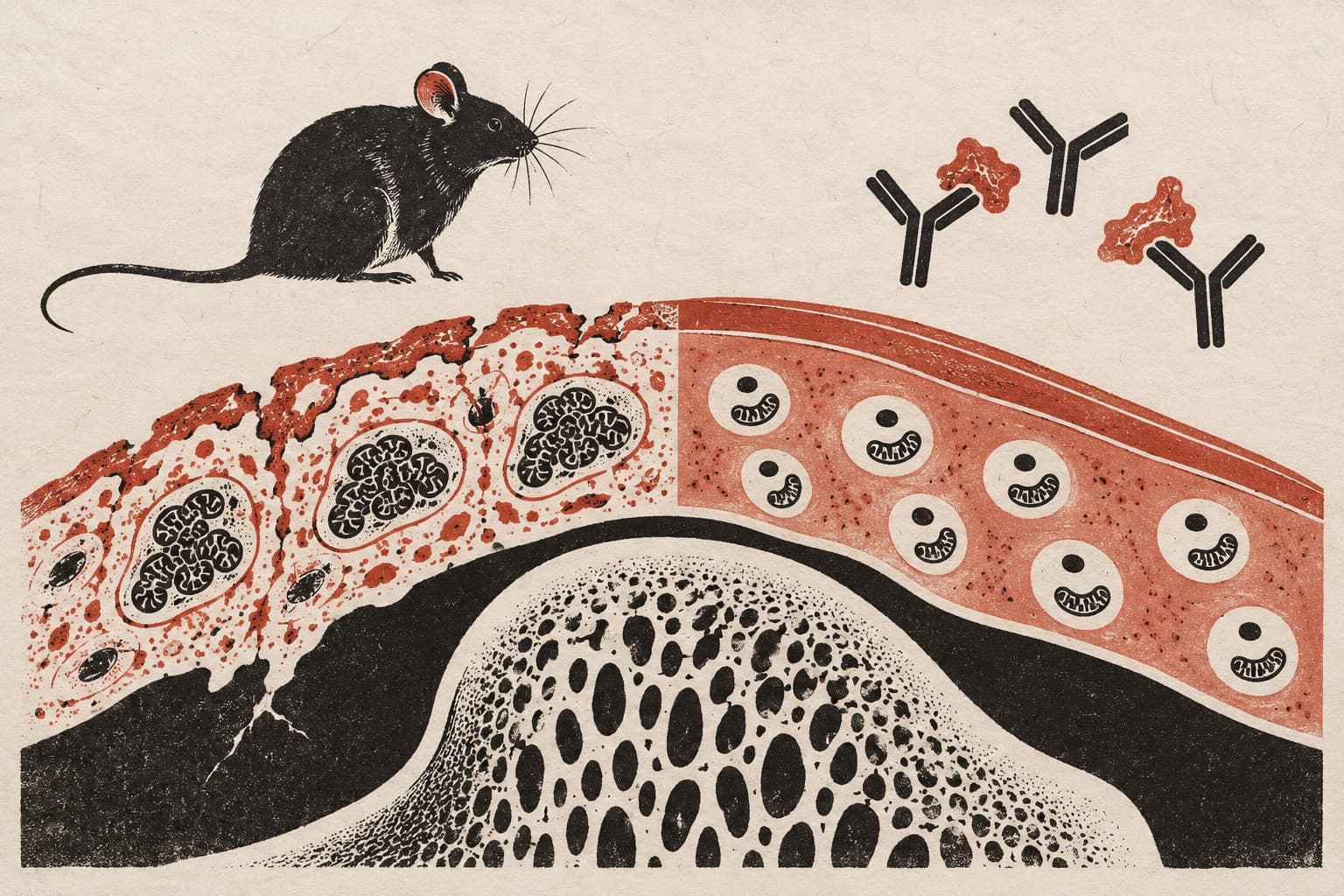
Sunitinib selectively killed senescent cells in the lab
A drug screen in human connective-tissue cells linked the selective killing effect to a protein that receives growth signals.
Biomedicine & Pharmacotherapy
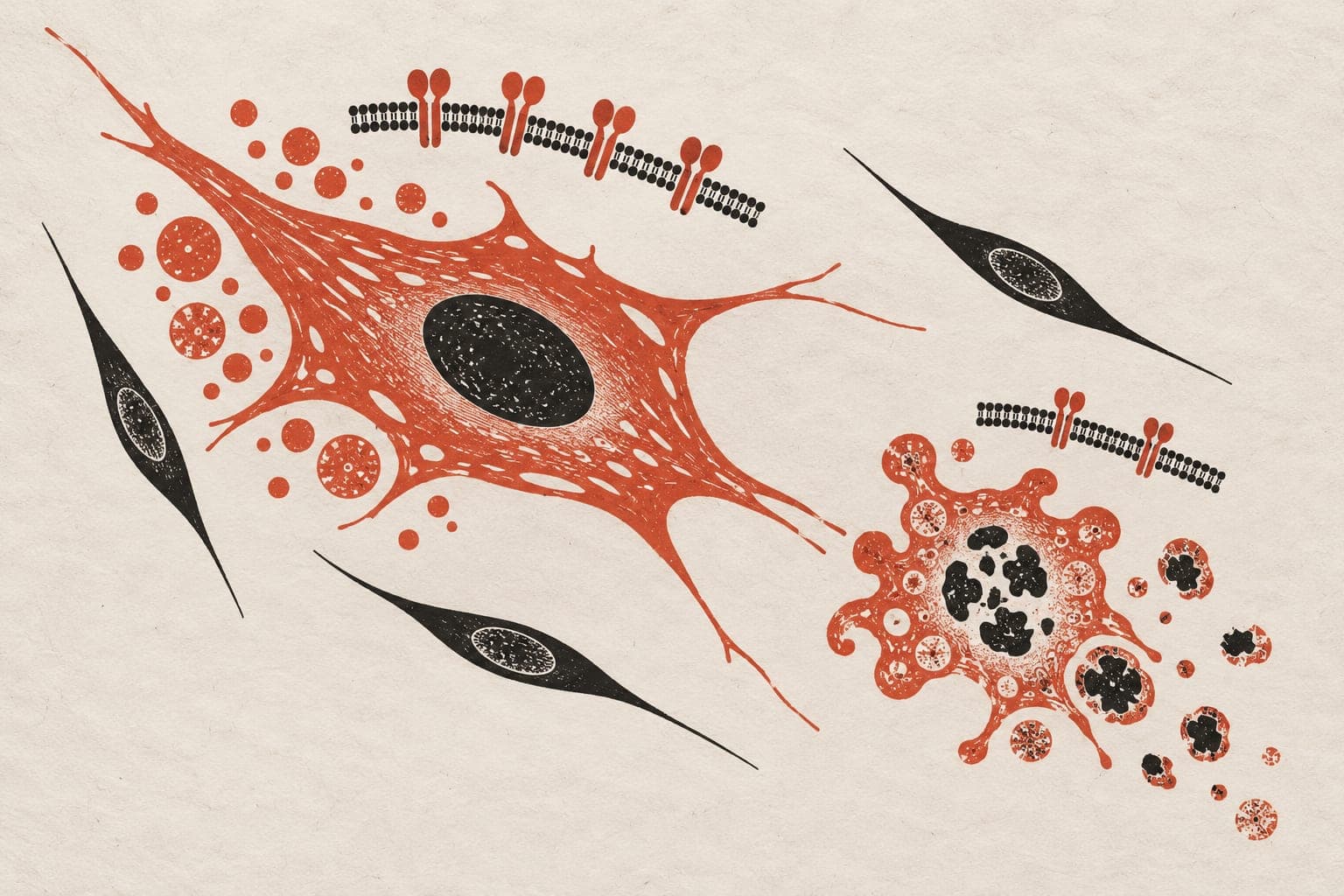
In experiments with human fibroblasts, cells that help form connective tissue, researchers screened drugs for effects on senescent cells. Senescence is a state in which cells stop dividing. They identified sunitinib, which inhibits several proteins that receive growth signals. It triggered programmed cell death specifically in senescent fibroblasts.
The researchers linked this response to platelet-derived growth factor receptor beta, a protein that receives growth signals. Reducing production of this receptor made senescent cells more sensitive to cell death, with minimal effects on non-senescent fibroblasts. In a separate experiment in mice with chemically induced lung scarring, sunitinib reduced senescent cells. The findings suggested that targeting this receptor may offer an approach to selectively killing senescent cells.
Why it matters
Senescent cells are a target for drug development aimed at age-related diseases. The researchers suggested that targeting this growth-signal receptor may offer a strategy for diseases associated with chronic inflammation.
Caveats
The main finding came from cells grown in the lab, with supporting experiments in mice with chemically induced lung scarring. These experiments do not establish safety or benefits in people.
The paper
Show 9 more authors
Jeong-A Hwang, Ahyeon Yun, Eok-Cheon Kim, Jae-Ryong Kim, Tae Jun Park, Sung Bae Lee, Young Zoon Kim, Yun-Il Lee, Sang Chul Park,Well Aging Research Center
Biomedicine & Pharmacotherapy · 5 Oct 2026