Gene variant linked to lower brain scan signals in women
An observational study of 101 adults aged 30–85 without cognitive impairment found no overall sex differences in a small brain region’s signals or activity.
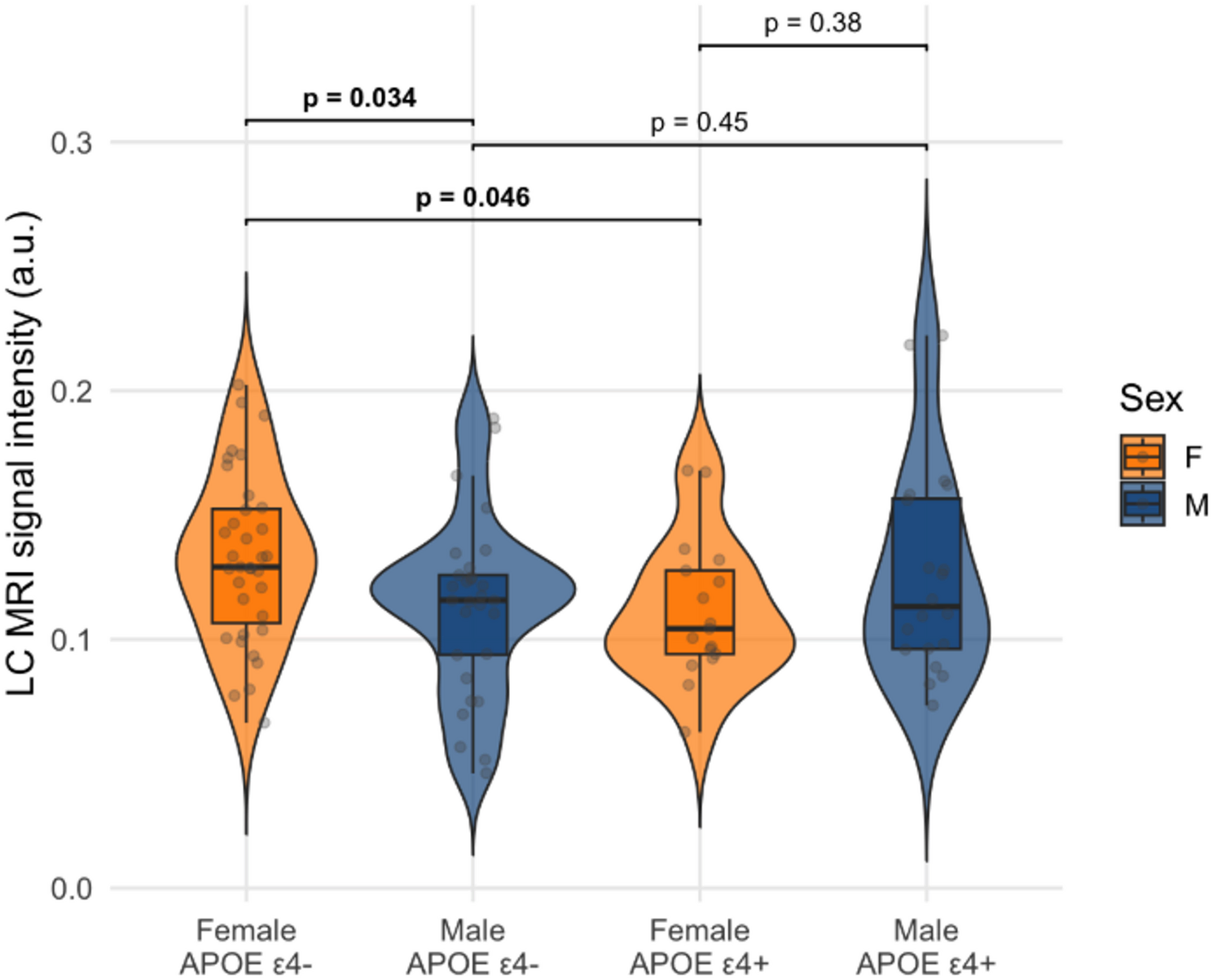
In 101 adults aged 30–85 without cognitive impairment, researchers used brain scans and blood tests in an observational study. They measured signals from the locus coeruleus, a small brain region, and its activity during a task designed to evoke emotion. Neither measure differed overall by sex.
Women carrying the ε4 variant of the apolipoprotein E gene had lower signals than women without it. Among non-carriers, women had higher signals than men; carriers showed no sex difference. In women older than approximately 56, a higher ratio of estrone to estradiol, two forms of estrogen, was linked to lower signals. Women also showed greater activity than men in response to emotional stimuli when two blood markers of Alzheimer’s-related changes were elevated.
Why it matters
Early Alzheimer’s-related disease processes involve the locus coeruleus. The findings support investigating this brain region as a target for Alzheimer’s prevention strategies tailored by sex.
Caveats
The observational design cannot establish cause and effect. The findings came from adults without cognitive impairment, not people with Alzheimer’s disease.
- Sex hormone signalling (oestrogen, androgen)
- Estrone
- Estradiol
- Alzheimer's disease
- Estrone-to-estradiol ratio
- Humans
The paper
Harvard University
Alzheimer's Research & Therapy, 6 Oct 2026, Open access, CC BY-NC-ND


