Modality-specific, deficit-targeted exercise prescriptions for physical function in sarcopenia and frailty: a network meta-analysis
Dose-response
Abstract
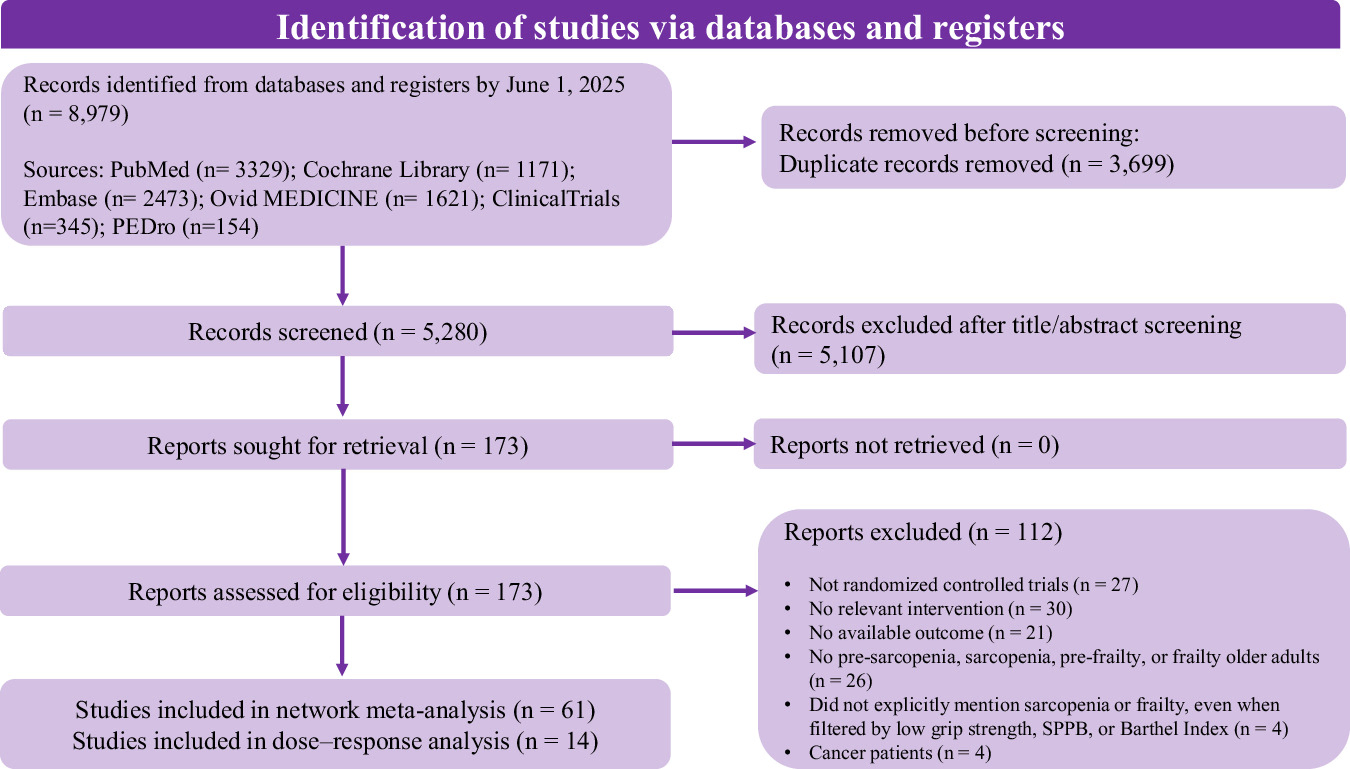
Exercise is the primary non-pharmacological intervention for sarcopenia and frailty; however, the comparative effects and optimal prescription parameters of specific exercise modalities remain unclear. We compared exercise interventions and examined prescription parameters using network meta-analysis and dose–response analyses. We searched PubMed, Ovid MEDLINE, Embase, ClinicalTrials.gov, PEDro, and Cochrane Library for studies published up to June 1, 2025. A frequentist random-effects network meta-analysis was conducted to compare interventions. Intervention rankings were determined using the surface under the cumulative ranking curve (SUCRA). The certainty of evidence supporting the intervention rankings was evaluated using the GRADE minimally contextualized framework. The analysis included 61 randomized controlled trials involving a total of 3,706 participants. Multicomponent training with resistance training provided the most comprehensive benefits, particularly for functional mobility, although the certainty of this evidence was low. Elastic band resistance training was among the most effective interventions for handgrip strength by 1.95 kg (mean difference [MD]; 95% confidence interval [CI], 1.13 to 2.76; SUCRA: 98.6%), with moderate-certainty evidence according to network GRADE. Machine-based resistance training showed possible intermediate effectiveness for knee extension strength by 2.96 kg (MD; 95% CI, 1.59 to 4.34; low GRADE certainty; SUCRA: 65.3%). Dose–response analysis showed greater strength gains with higher-volume elastic band resistance training, whereas machine-based resistance training was more effective at high intensity. Multicomponent training including resistance training may provide overall benefits, particularly for functional mobility (low GRADE certainty). Specific resistance modalities may provide targeted strength gains (elastic band: moderate GRADE certainty; machine-based: low GRADE certainty). These findings support a modality-specific, deficit-targeted approach to exercise prescription for older adults with sarcopenia and frailty. Not applicable.
- Exercise
- Elastic band resistance training
- Machine-based resistance training
- Sarcopenia
- Functional mobility
- Humans
The paper
Dong-A University
BMC Geriatrics, 16 Oct 2026, Open access, CC BY-NC-ND