Domestic sensor-based monitoring for supporting independent-living older adults: A scoping review
Abstract
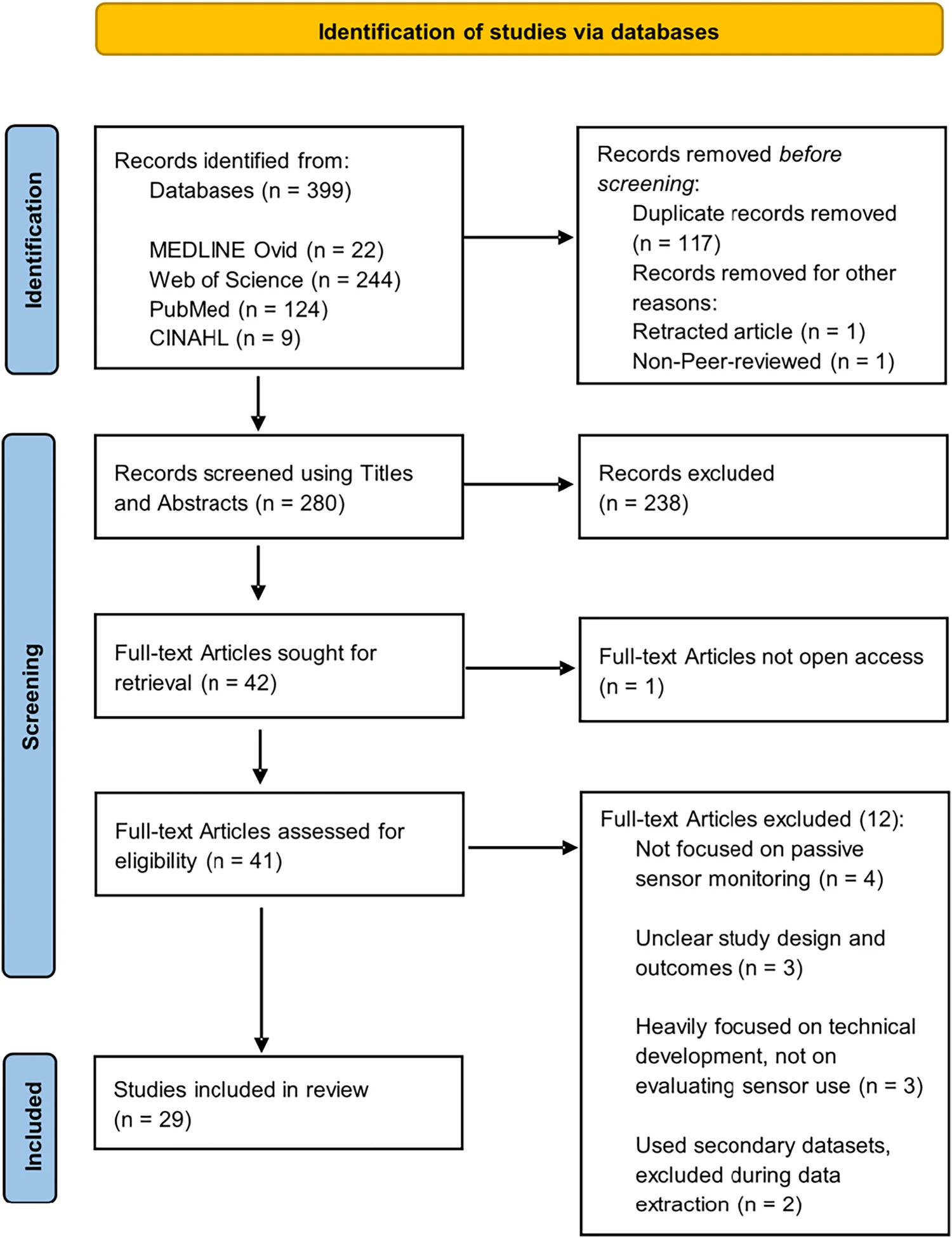
Population ageing is accelerating globally, placing increasing pressure on local health and social care systems. Older people who remain living independently generally have better health outcomes and use fewer care resources. Moreover, many older people express a preference for living independently. Therefore, supporting independent living represents a cost-effective objective for health and care systems. One potential means for supporting such ageing in place is domestic sensor-based activity monitoring technologies; however, to date evidence on their effectiveness, usability, and real-world implementation has been inconclusive. A scoping review has been undertaken following PRISMA-ScR guidance to map the latest evidence on domestic passive sensor-based monitoring for older adults. Twenty-nine studies met the inclusion criteria; the evidence they provide suggests domestic sensors can support monitoring of activities of daily living, detect early functional or cognitive decline, and are generally acceptable to users. However, robust evidence for improved clinical outcomes, cost-effectiveness, and effective integration into health systems remains limited.
The paper
University of Sheffield
Journal of Ambient Intelligence and Smart Environments, 12 Oct 2026, CC BY