A heart support cell group sustains nerves and pumping in mice
Loss of the cell group reduced the share of blood pumped out of the left ventricle per beat from 84.0% to 68.8%.
Our read
Mechanisms- Studied:
- Experiments in mice, against control mice
- What changed:
- Ejection fraction fell from 84.0 ± 1.3% to 68.8 ± 3.6% with loss of the cell group
- The catch:
- Only 7 mice per group in the pump function test
Editor of record: Boris Djordjevic · AgingResearch.News
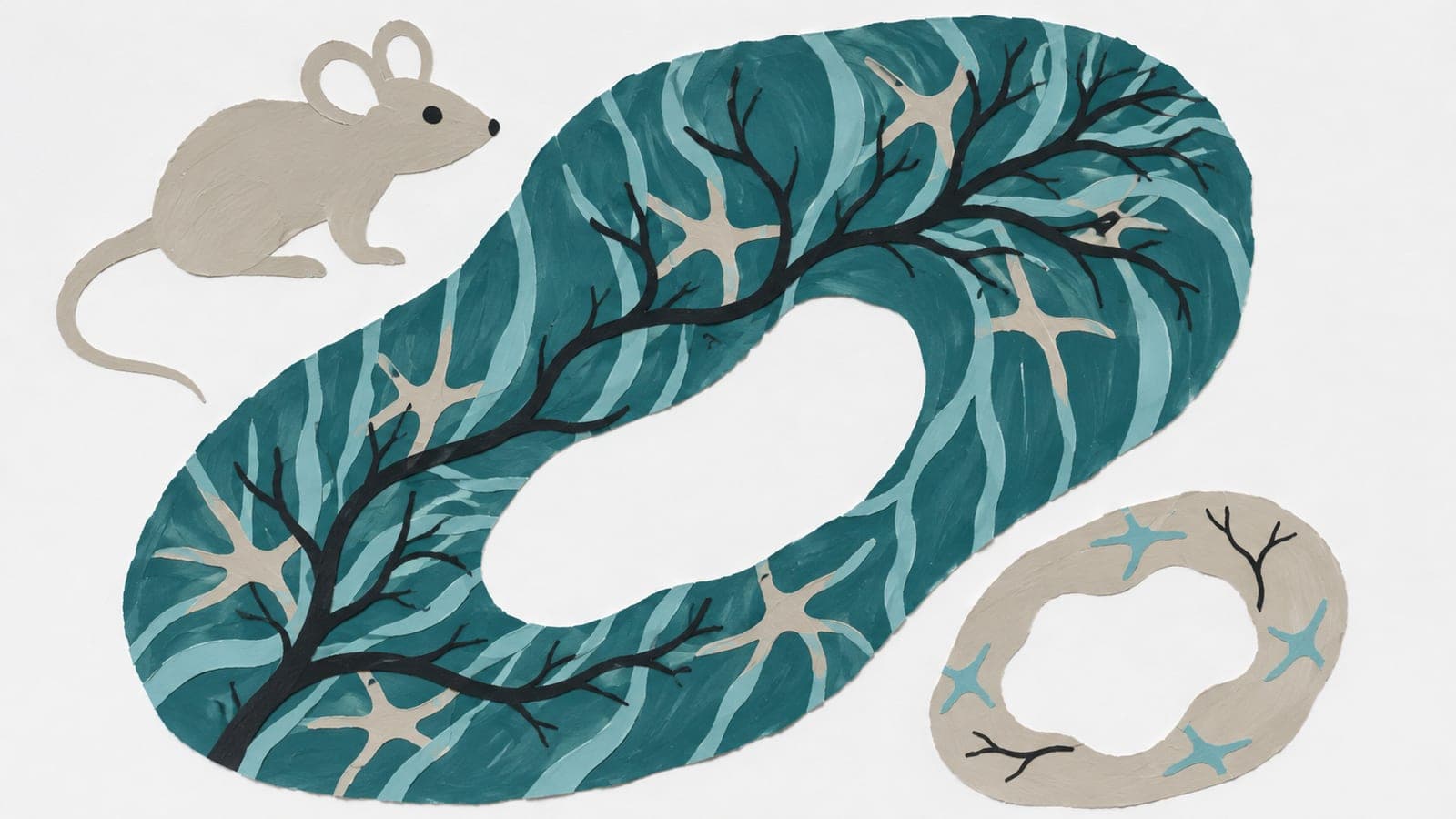
In mouse experiments, a group of fibroblasts—cells that support heart tissue—and sympathetic nerves, which help control heartbeat, depended on one another. Deleting Sema3c, a gene encoding a signaling protein, from fibroblasts reduced nerve density in the heart’s main pumping chamber. Removing a nerve cluster reduced Sema3c and Wnt gene activity in fibroblasts.
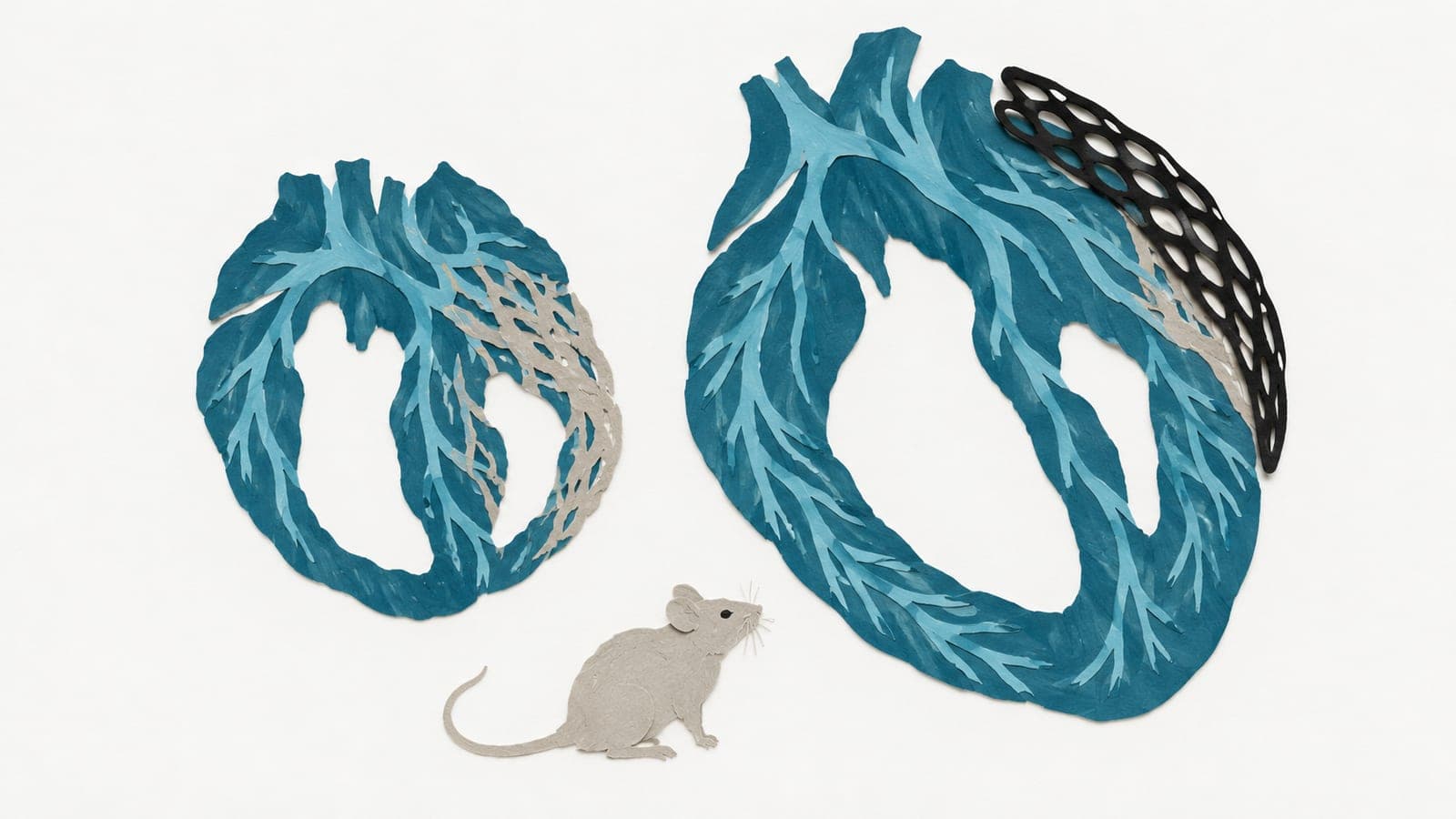
Losing the cell group also weakened pumping, in a comparison with seven mice per group. Activating Wnt signaling, a cell communication system, restored contraction in deficient mouse hearts, with nine mice per group. Blocking this signaling in healthy mouse hearts reproduced the deficit. Human heart gene-activity maps revealed a corresponding cell group. Its proportion stayed constant, but activity of the human version of Sema3c fell with aging and heart failure.
Why it matters
The authors propose that this circuit links the heart’s nerve supply to its reserve pumping capacity. Its reduced gene activity in aging and failing human hearts points to a possible role in age-related changes in heart function.
Caveats
Functional restoration was tested in mice, while human analyses measured gene activity. The conference abstract does not give the Wnt-activating drug’s dose or treatment duration.
- Superior cervical ganglionectomy
- SEMA3C
- Extracellular matrix remodeling
- Heart failure
- Ejection fraction
- Mice
The paper
A Fibroblast Subpopulation at the Crossroads of Cardiac Innervation and Contraction
Institute of Science Tokyo; The Univ of Tokyo
AHA Scientific Sessions 2026 Abstract, Nov 2, 2026
Presented at AHA Scientific Sessions 2026, abstract 9876

Comments
Be the first to comment.