Heart scan measures linked to wider gaps in cardiovascular risk
Over a median 12.6 years, cardiovascular disease incidence was 8.7% among people with no counted scan abnormalities versus 11.3% among those without counted conventional risk factors.
Our read
Biomarkers- Studied:
- Cohort study of 7,531 asymptomatic participants, median 12.6 years
- What changed:
- Cardiovascular disease incidence was lower: 8.7% with no counted scan abnormalities against 11.3% without counted conventional risk factors
- The catch:
- Other health differences could have contributed to the age- and sex-adjusted associations
- In the record:
- One of 3 papers on AI-CAC on record: 3 with results in people.
Editor of record: Boris Djordjevic · AgingResearch.News
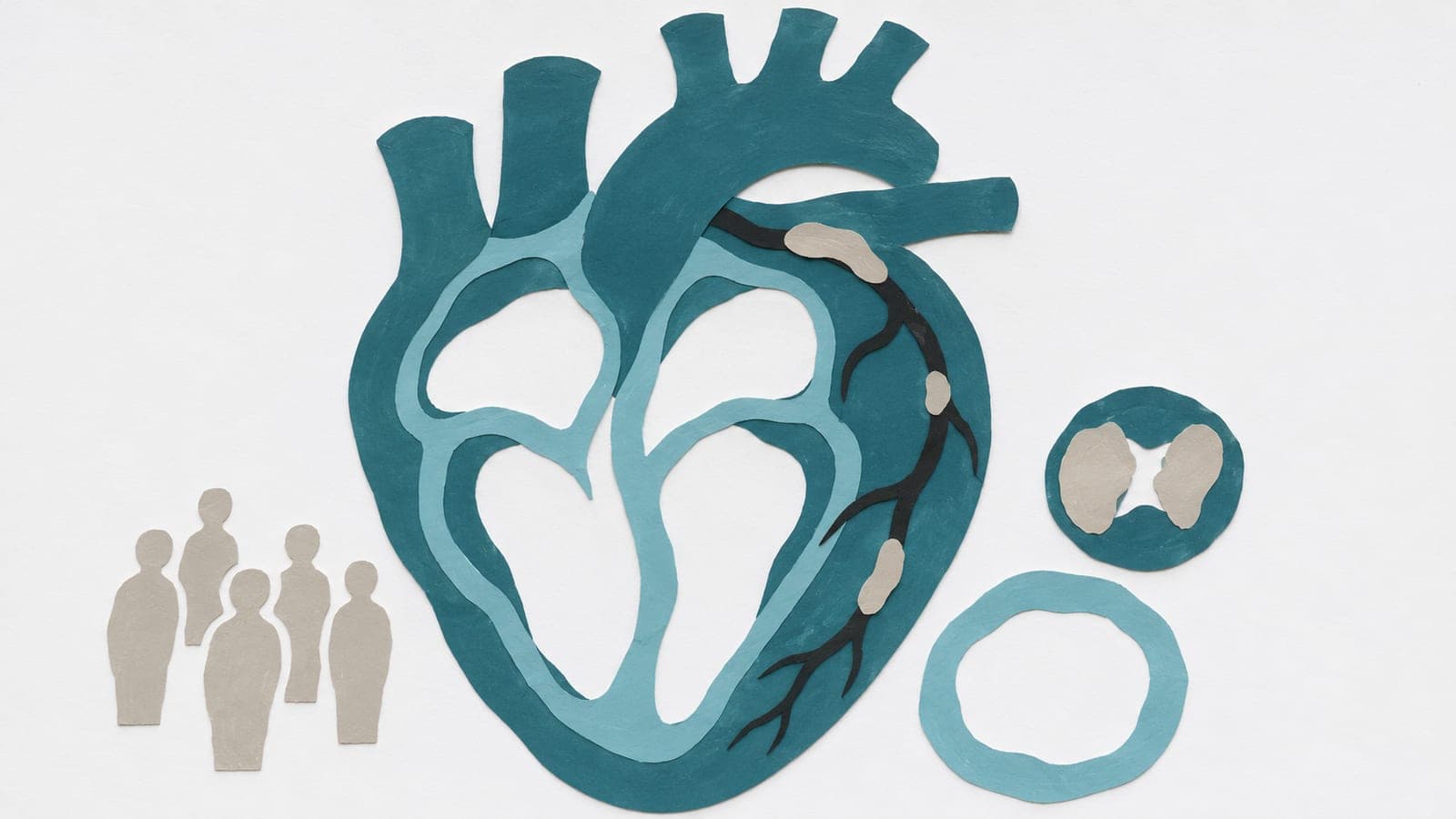
Among 7,531 symptom-free participants averaging 60.8 years old, 48.2% male, an observational analysis compared artificial-intelligence measurements from heart artery calcium scans with conventional cardiovascular risk factors. Participants came from the Multi-Ethnic Study of Atherosclerosis and the Framingham Heart Study. Over a median 12.6 years, 1,879 cardiovascular events occurred. The outcome combined plaque-related artery disease, heart failure and atrial fibrillation, an irregular heartbeat.
Individual scan measures and conventional factors performed comparably in distinguishing who developed disease. However, counts of abnormal scan measures separated low- and high-risk groups more sharply. Counts used extreme quarters of scan measurements and established clinical thresholds for conventional factors. Disease incidence reached 51–56% among people with at least seven scan abnormalities, versus 39–44% among those with at least seven conventional risk factors.
Why it matters
For cardiovascular prevention around age 60, the work raises the question of whether using more information from existing scans could help guide risk management.
Caveats
Other health differences could have contributed to the age- and sex-adjusted associations, and the analysis did not test whether scan-guided care prevented disease. The findings concern symptom-free participants and were reported in a conference abstract.
- Extracellular matrix remodeling
- Cardiovascular disease
- Heart failure
- Atrial fibrillation
- Atherosclerotic cardiovascular disease
- Humans
The paper
HeartLung.AI; HeartLung Technologies
AHA Scientific Sessions 2026 Abstract, Nov 2, 2026
Presented at AHA Scientific Sessions 2026, abstract 18127



Comments
Be the first to comment.