LSD in rats opposed gene activity patterns of human brain aging
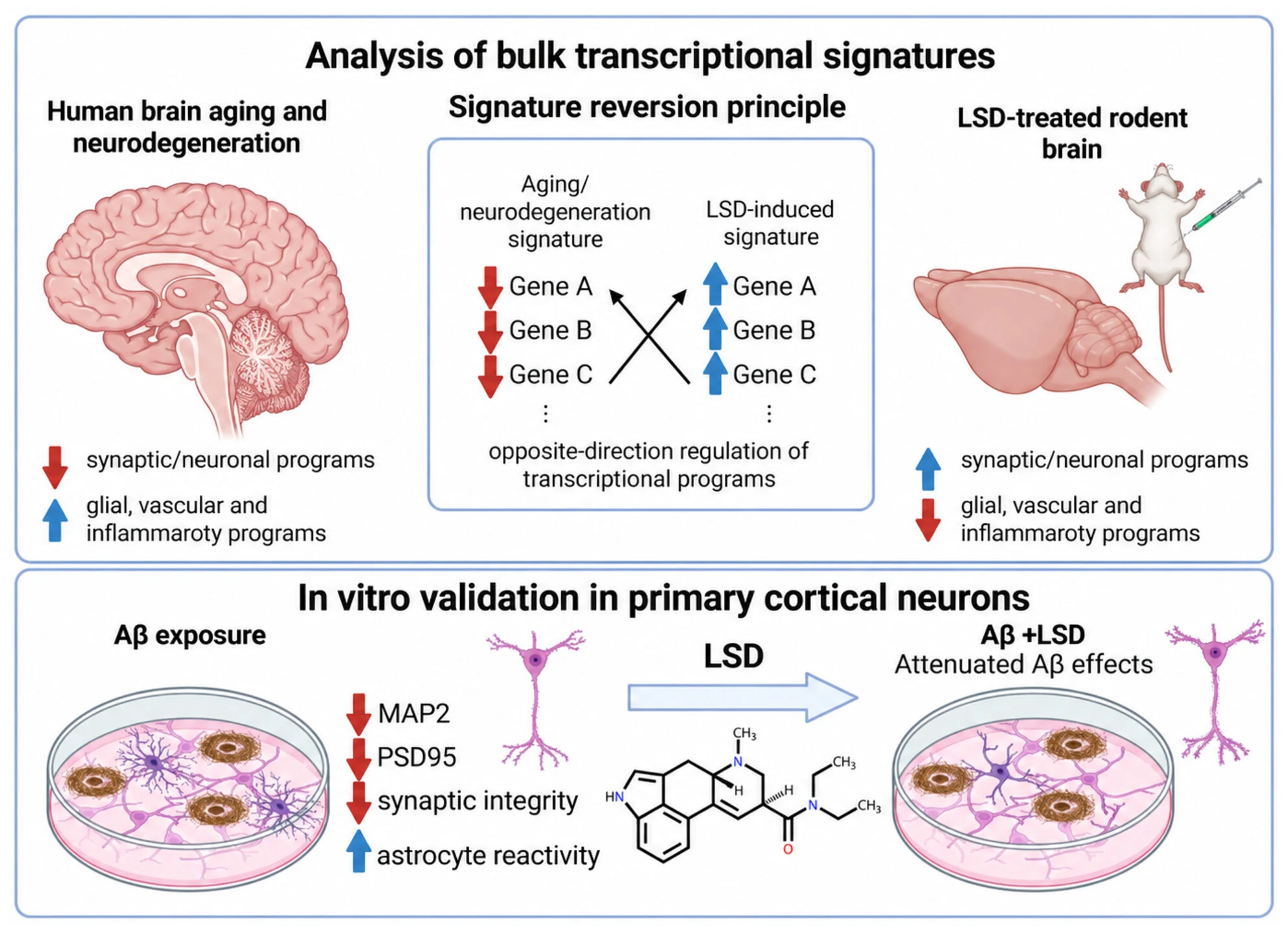
An experiment in rats found that repeated LSD treatment produced gene activity patterns opposite to those associated with aging in a human brain region.
Our read
Interventions- Studied:
- Computational study of LSD-treated rats and healthy human brain donors
- What changed:
- LSD-induced gene activity changes in rats ran opposite to those associated with aging in the human prefrontal cortex
- The catch:
- Bulk tissue mixes cell types whose proportions change with age, potentially distorting aging signatures
- In the record:
- One of 10 papers on lysergic acid diethylamide on record: none yet with results in people, 4 in animals.
Editor of record: Boris Djordjevic · AgingResearch.News
Rats received repeated lysergic acid diethylamide (LSD) treatment in an animal experiment. Their gene activity patterns ran counter to aging-associated changes in the human prefrontal cortex, a region at the front of the brain. The relationship recurred across datasets and species. The opposition was stronger than for a broad range of other drugs, but less pronounced for dementia-associated patterns.
A separate mouse experiment found that acute LSD treatment also produced patterns opposing aging-associated gene activity across several doses. In cells from the brain’s cortex grown in the lab, short-term LSD treatment reduced structural, molecular and gene activity changes caused by amyloid-beta, a protein fragment.
Why it matters
Brain aging and dementia involve changes in gene activity. The authors see these results as a rationale for investigating LSD and related compounds in age-associated cognitive decline.
Caveats
Opposing gene activity patterns do not show whether LSD slowed brain aging or improved cognition. The LSD experiments involved rats, mice and cells grown in the lab, not people.
Where the evidence stands
Lysergic acid diethylamide
- 2 independent labs in 2 countries
- 1 finding against
- 21 trials, 8 with no results posted
- Funders: Coordenação de Aperfeiçoamento de Pessoal de Nível Superior and 2 more
- 6 of 21 trials sponsored by its developers
From the paper
- Limitation
The human transcriptomic analyses are based on bulk tissue, and age-related changes in cell-type composition may contribute to the observed signatures; single-cell or single-nucleus data will be required to resolve the cellular origin of these effects.
Quoted word for word from the full text on onlinelibrary.wiley.com.
- Lysergic acid diethylamide
- Dementia
- Neurodegenerative disease
- Aging-associated transcriptional signatures
- Dementia-associated gene expression signature
- Rats
The paper
Human Technopole Milan Italy
Aging Cell, Nov 10, 2026, Open access, CC BY

Comments
Be the first to comment.