Psychedelic drug extended lifespan in worms
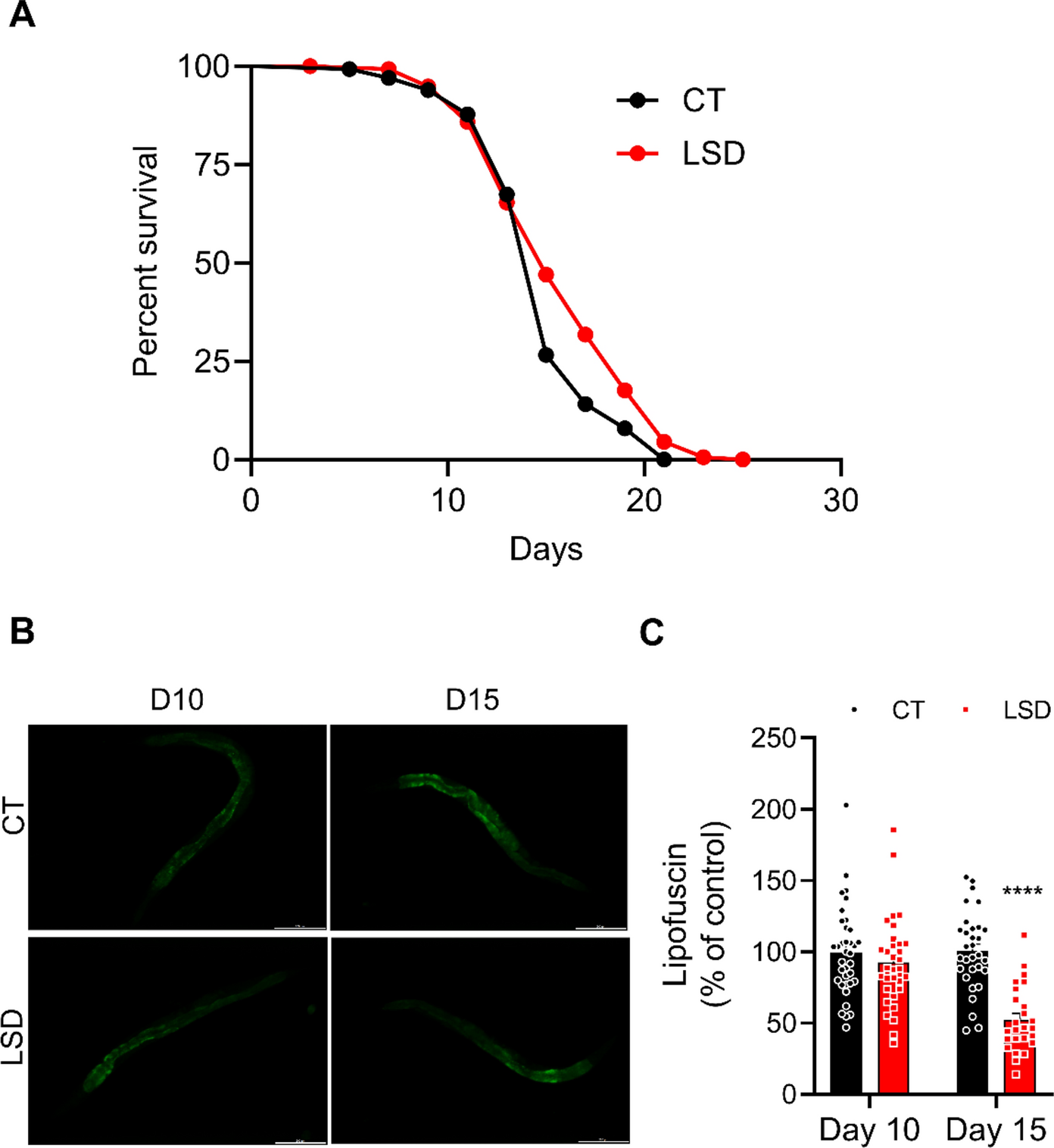
Compared with untreated worms, LSD extended the time until only 25% remained alive by up to 17.6%.
Limit: The progeny suppressant 5-fluorouracil could interact with LSD and affect lifespan
Edited by Boris Djordjevic · AgingResearch.News
In laboratory experiments, researchers exposed Caenorhabditis elegans worms to low concentrations of lysergic acid diethylamide (LSD), a psychedelic drug. Prolonged exposure extended lifespan and reduced the age-related buildup of lipofuscin, a pigment that accumulates in cells.
Genetic experiments implicated signaling through receptors for serotonin, a chemical messenger, in the lifespan response. LSD also reduced reproduction and body size, changes that overlapped with those seen under calorie restriction. Yet adult feeding tests detected no reduction in food consumption under the conditions tested. When researchers diluted the bacteria the worms ate, the lifespan benefit disappeared and LSD instead shortened lifespan. Exposure limited to early adulthood was enough to extend lifespan.
Why it matters
Nutrient-sensing pathways help regulate aging and lifespan. The findings identify LSD as a research tool for investigating how serotonin signaling connects with these longevity-related pathways.
Caveats
These experiments tested lifespan in worms, not people. The 17.6% figure described the time until only 25% remained alive, not average lifespan.
The paper
Lysergic acid diethylamide extends lifespan in Caenorhabditis elegans
Universidade Federal do Rio de Janeiro
Biogerontology, Oct 22, 2026, Open access


