Shielded iron storage helps cells resist a form of death
Cell experiments linked protected iron storage to senescence, a state in which cells stop dividing, and resistance to iron-dependent cell death.
Edited by Boris Djordjevic · AgingResearch.News
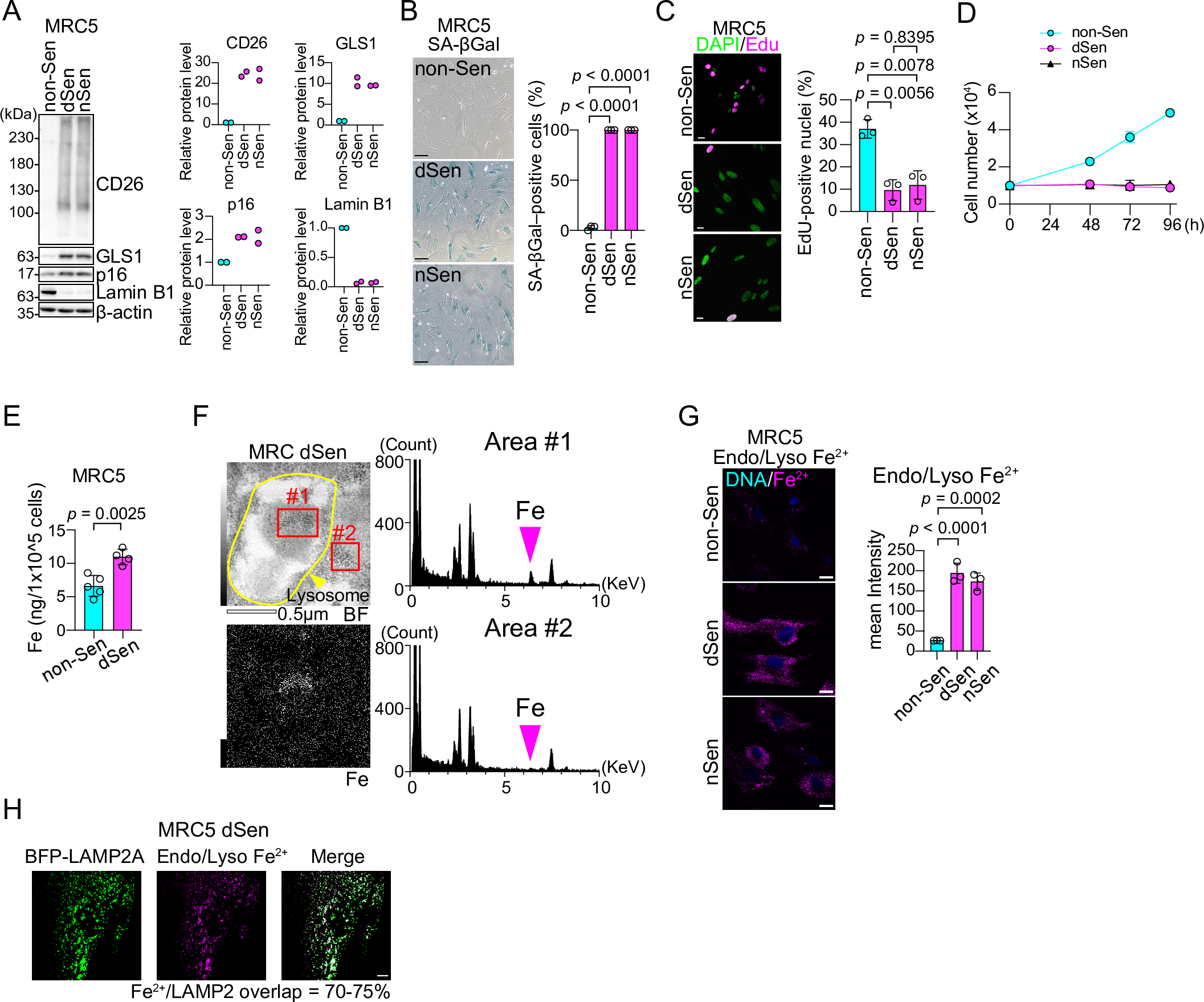
In experiments with senescent cells—cells that have stopped dividing—researchers studied how iron storage affected features of senescence. They found that buildup of ferrous iron, a form of iron, in lysosomes—the cell’s recycling compartments—was crucial for several of these features.
The iron buildup made lysosomes less acidic and led cholesterol to accumulate there. Cholesterol strengthened the compartments’ membranes against becoming leaky. Senescent cells also moved polyunsaturated fatty acids, a type of fat, into storage droplets. This depleted cell membranes of fats susceptible to ferroptosis, a form of iron-dependent cell death. Together, these adaptations enabled safe iron storage and strong resistance to ferroptosis. The authors suggested that modifying this iron-centered pathway may offer ways to control the behavior of senescent cells.
Why it matters
Iron accumulation accompanies both cellular and organismal aging. Understanding how senescent cells handle that iron may inform efforts to control their behavior.
Caveats
The evidence came from cell experiments, not studies of aging or health in animals or people. The abstract does not identify the cell types studied.
From the paper
- Limitation
We demonstrate that the principal features of lysosomal Fe2+ accumulation are conserved across primary fibroblasts and endothelial cells and are recapitulated in the aged mouse spleen.
Quoted word for word from the full text on link.springer.com.


Comments
Be the first to comment.