Protein recycling decline hinders senescent cell clearance in mice
In experiments in mice, blocking a protein-recycling pathway in immune cells increased the build-up of senescent cells, which had stopped dividing.
Nature Aging
In experiments in mice and cells, researchers examined chaperone-mediated autophagy, a pathway that selectively breaks down proteins inside cells. They studied its role in senescence, a state in which cells stop dividing.
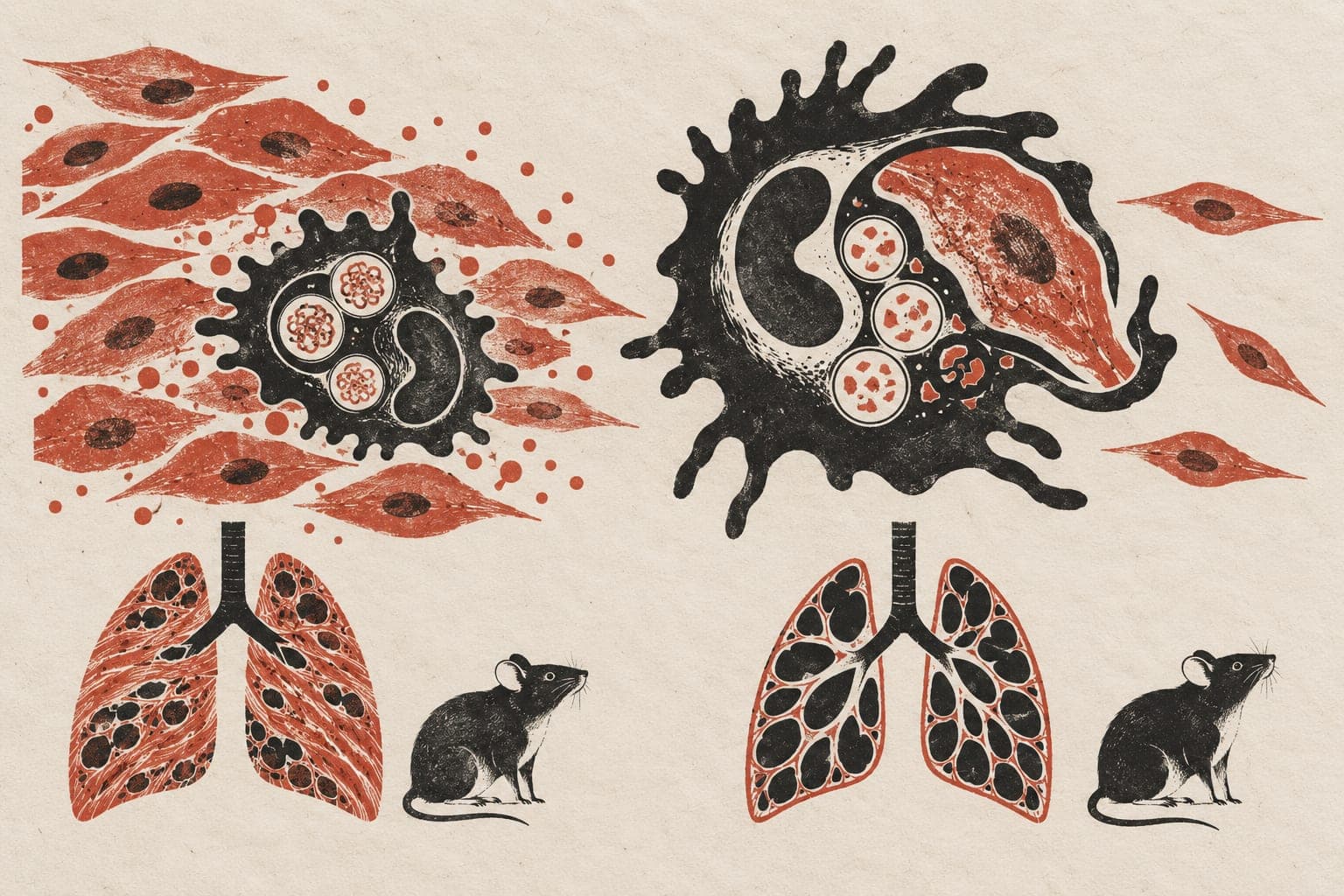
Cells lacking this pathway developed features resembling those of aged senescent cells, including changes in their proteins, internal chemistry and secretions. Their secretions more strongly promoted senescence in neighbouring cells and inhibited the pathway in macrophages, immune cells that engulf other cells. This impaired the macrophages’ ability to engulf senescent cells. Blocking the pathway specifically in macrophages increased senescent cell accumulation in mice and delayed senescence resolution during wound healing. Activating it with a drug reduced senescent cell burden in aged mice and disease severity in mice with pulmonary fibrosis, a disease involving lung scarring.
Why it matters
The work addresses why senescent cells persist with age by examining the interaction between senescence and faulty protein recycling, both established drivers of aging.
Caveats
These experiments in mice and cells do not establish whether activating the pathway would reduce senescent cells or disease severity in people.
The paper
Decline of chaperone-mediated autophagy in aging impairs macrophage clearance of senescent cells
Show 20 more authors
Zhaohui Liu, Olaya Santiago-Fernández, Rabia R Khawaja, Ronald Cutler, Jazmin Calyeca, Mericka McCabe, Sylvére Durand, Fanny Aprahamian, Natalia Del Pilar Vanegas, Hu Chen, Felipe Vilicich, Bhakti Chavda, Yair Botbol, Guido Kroemer, Toren Finkel, Evripidis Gavathiotis, Simone Sidoli, Ana L Mora, Mauricio Rojas, Susmita Kaushik,Albert Einstein College of Medicine
Nature Aging · 5 Oct 2026