Ivacaftor reduced experimental lung scarring in mice
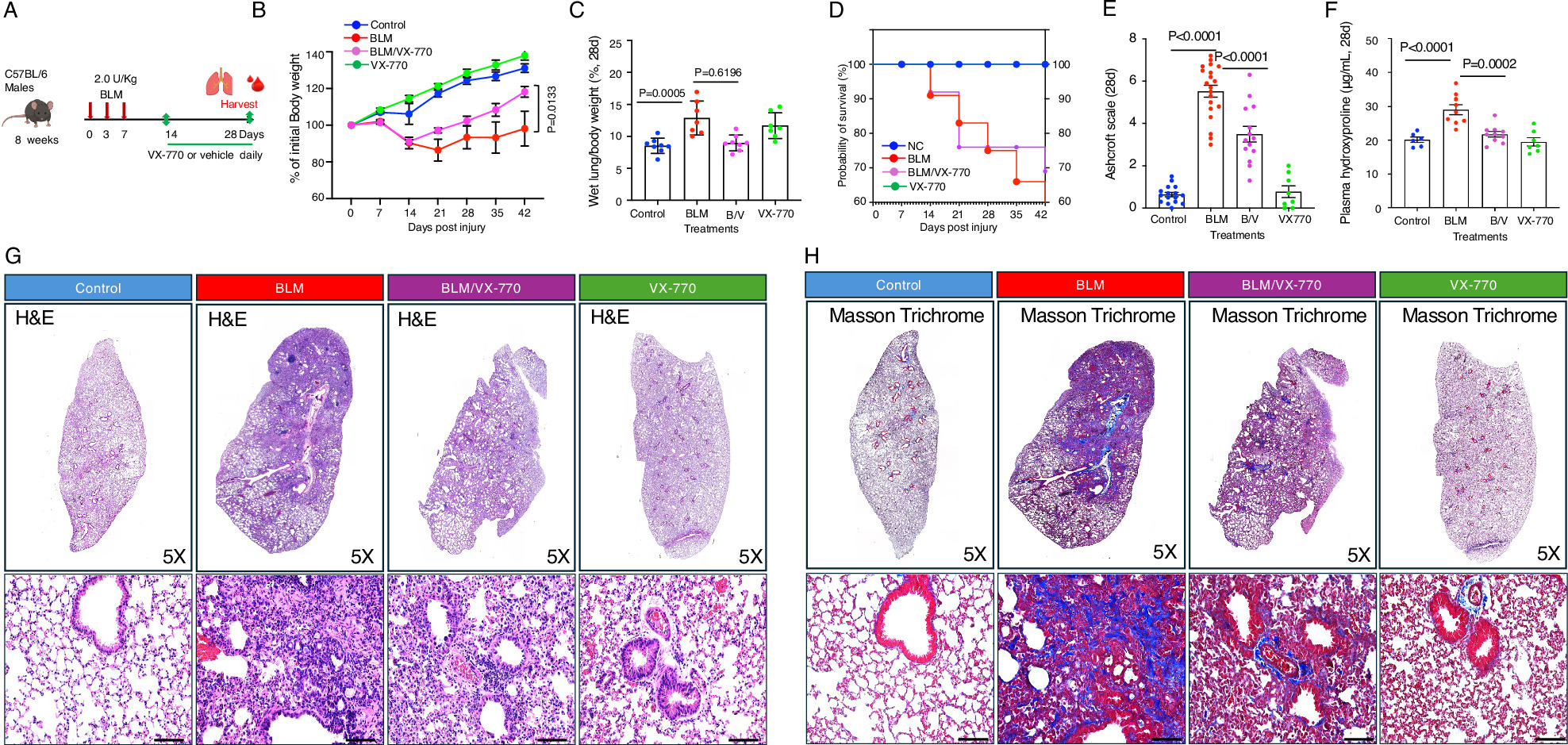
In mice with chemically induced lung scarring, the drug reduced collagen buildup and restored normal lung structure and function.
Limit: Persistence of reduced lung scarring after treatment ended was not reported
Edited by Boris Djordjevic · AgingResearch.News
In mice with lung scarring induced by the chemical bleomycin, researchers tested the drug ivacaftor in an animal experiment. Treatment reduced collagen deposition—the buildup of a structural protein—and restored normal lung structure and function. It also restored the balance of cells lining the lung’s air sacs and prevented the loss of alveolar type 1 cells, which form part of that lining.
Ivacaftor reduced signs of senescence, a state in which cells stop dividing, in both the mice and lab-grown organoids, three-dimensional cell models made from alveolar type 2 cells, another air-sac cell type. Treatment lowered senescence markers and reduced the scarring-promoting pattern of secretions associated with senescence.
Why it matters
Aging air-sac cells contribute to idiopathic pulmonary fibrosis, a deadly lung disease. The work addresses whether targeting cell senescence might offer an approach to treating the disease.
Caveats
The main results came from a chemically induced mouse model, not a clinical trial in people with idiopathic pulmonary fibrosis.
Where the evidence stands
CFTR
- 6 independent labs in 3 countries
- 1 trial
- Funders: Food and Health Bureau and others
- 1 of 1 trial sponsored by developers of drugs on it
Cellular homeostasis
- 73 independent labs in 17 countries
- 1 finding against
- Funders: National Institutes of Health and others
- 11 of 81 findings with company ties


Comments
Be the first to comment.