SASP factors drive growth of altered cancer cells in culture
Using a microarray platform, researchers identified shared growth drivers in breast and lung cancer cells that required cellular alterations to promote proliferation.
Cell Death & Disease
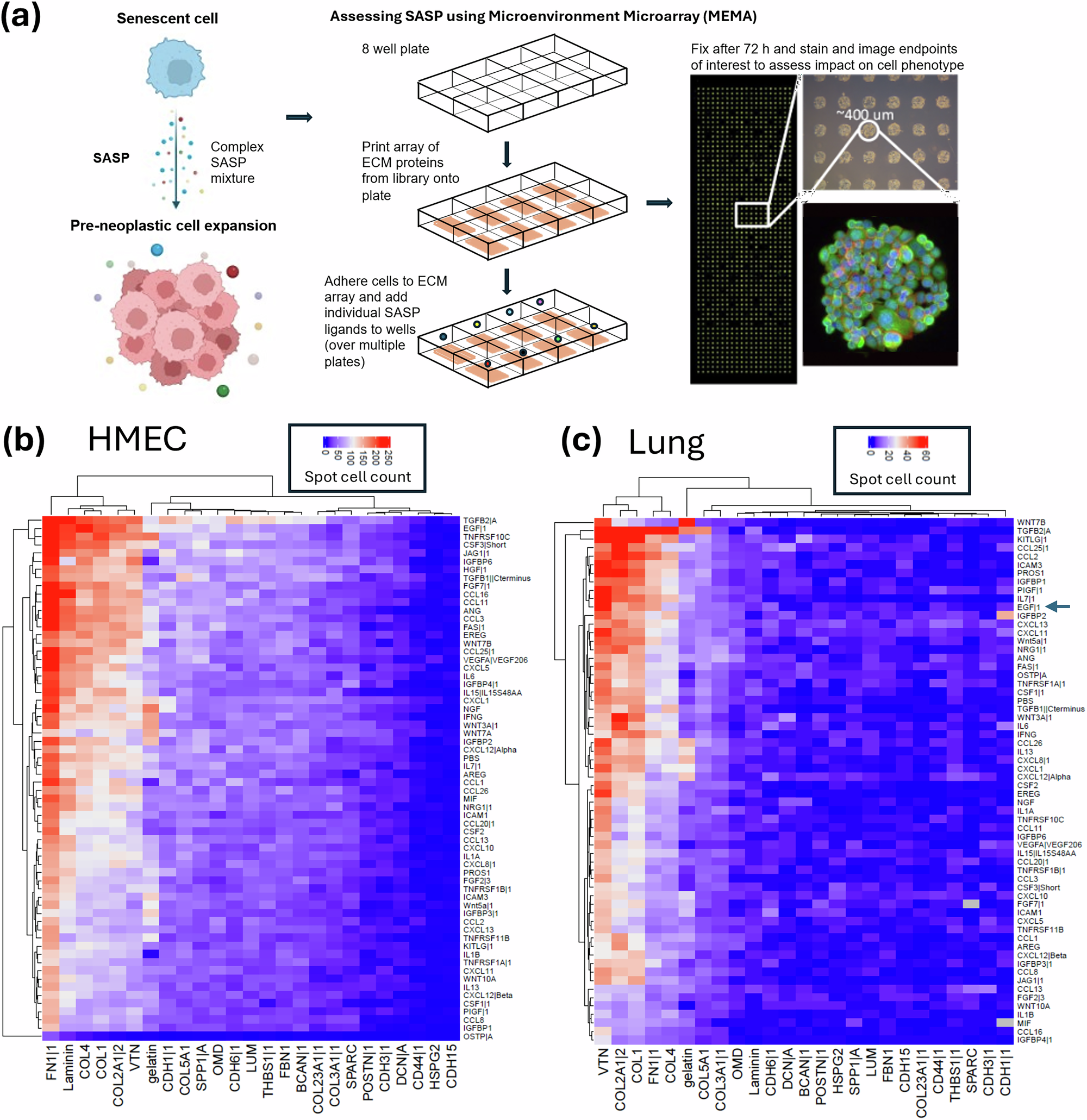
In cultured breast and lung cells and mouse xenografts, researchers used a microenvironment microarray platform to systematically screen canonical senescence-associated secretory phenotype (SASP) factors. Multiple factors boosted proliferation and overall cell numbers across both cell types. The researchers validated several shared growth drivers, including IL-6, TGF-β, and EGF, which supported the growth and survival of immortalized or transformed cells but not normal cells. These factors also affected breast cells differently depending on the age of the patient. RNA sequencing revealed upregulation of wound-healing and stem-cell programs in treated cells. Conditioned media from senescent cells similarly enhanced cell growth, while inhibitors of specific factors partially reduced this effect. In mice, targeted inhibition of EGF partially reduced lung tumor growth when cells were co-implanted with senescent fibroblasts.
Why it matters
The findings suggest that the senescent secretome may promote cancer progression by acting selectively on already altered target cells rather than healthy tissue. This helps clarify how accumulating senescent cells might support tumor development during aging.
Caveats
Most results were observed in vitro in cultured cell models, and the findings depend on specific pre-selected SASP factors. In vivo evidence was limited to lung cancer xenografts co-implanted with fibroblasts in mice.
- Senescence-associated secretory phenotype (SASP)
- Cell cycle regulation
- Cellular senescence
- Lung cancer
- IL-6
- Mice
The paper
Ou HL, Hoffmann R, Smith R et al.
Cell Death & Disease · 5 Oct 2026 · CC BY