UHRF1 levels drive distinct senescent states in zebrafish liver cells
High UHRF1 expression causes stable senescence sensitive to Navitoclax, while cells with lower expression proliferate if tp53 is mutated.
EMBO Reports
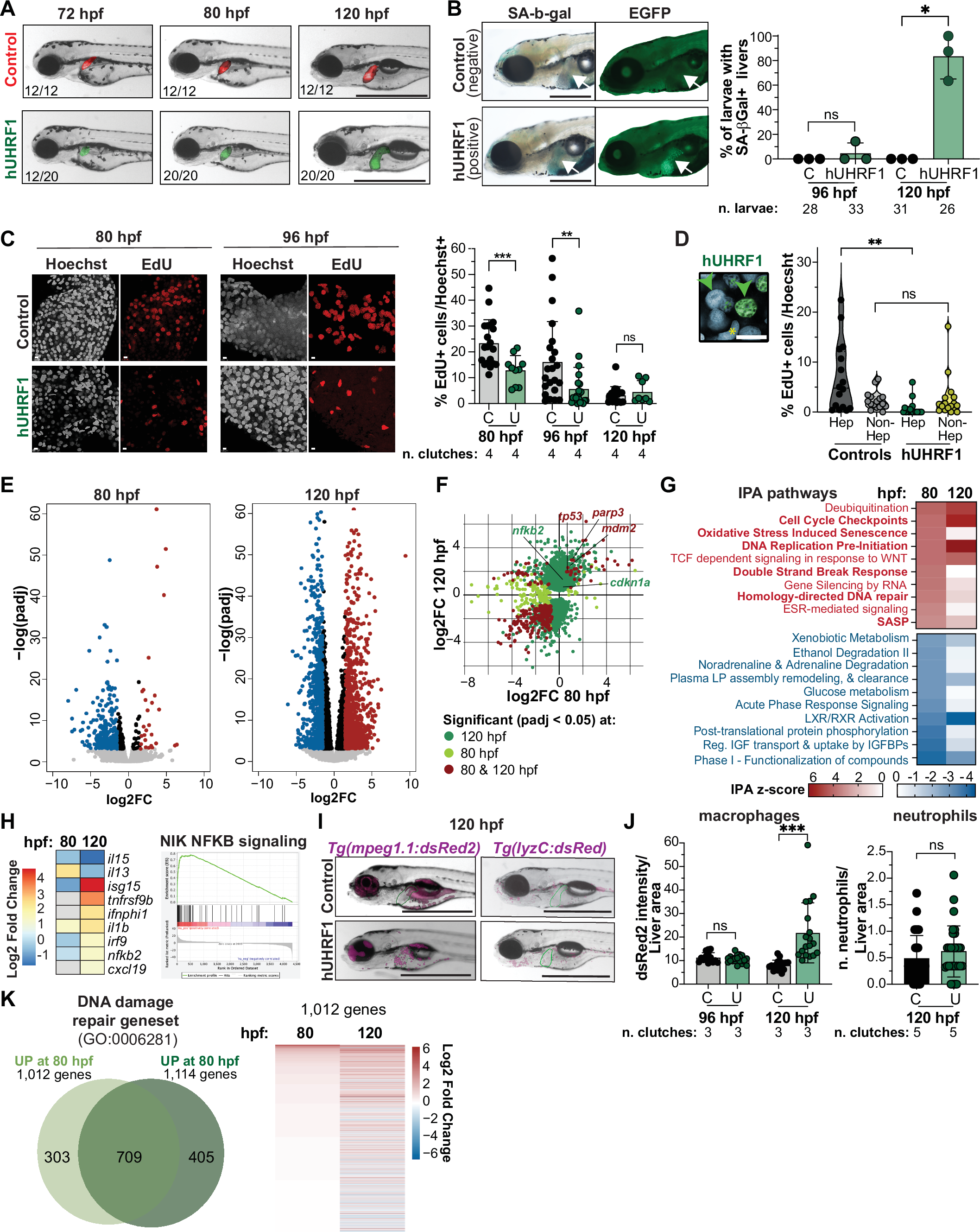
In zebrafish hepatocytes, researchers examined how overexpressing the epigenetic regulator UHRF1 drives senescent cell diversity during preneoplastic liver cancer development. Early responses to UHRF1 overexpression included DNA damage, DNA methylome repatterning, retrotransposon derepression, cell cycle withdrawal, and senescence dependent on atm and tp53. Single-cell RNA sequencing revealed distinct senescent cell subsets, with some populations expressing immunogenic and anti-apoptotic genes while others expressed proliferation genes. The resulting phenotypes varied according to UHRF1 dosage. Hepatocytes with low UHRF1 levels re-entered the cell cycle and proliferated in tp53 mutants. In contrast, cells with high UHRF1 levels remained permanently arrested and were selectively cleared by the senolytic drug Navitoclax.
Why it matters
Senescence can both suppress and promote tumor development depending on cell fate and persistence. These findings demonstrate that epigenetic regulators can dictate senescent cell heterogeneity and determine susceptibility to senolytic therapies.
Caveats
The experiments were restricted to a preneoplastic liver model in zebrafish hepatocytes, so findings may not translate directly to mammalian or human senescence.
The paper
UHRF1 overexpression generates distinct senescent states with different Tp53 dependencies
New York University Abu Dhabi
EMBO Reports · 28 Sep 2026