Compound pair linked to better mitochondrial upkeep in mice
In a four-month mouse experiment, adding epigallocatechin-3-gallate to urolithin A was associated with broader improvements in mitochondrial and neuronal measures.
Our read
Interventions- Studied:
- Experiments in humanized amyloid-β knock-in mice, four months, against urolithin A alone
- What changed:
- Mitochondrial upkeep measures improved more with urolithin A plus EGCG than with urolithin A alone
- The catch:
- Markers stood in for direct measurements of mitochondrial clearance
Editor of record: Boris Djordjevic · AgingResearch.News
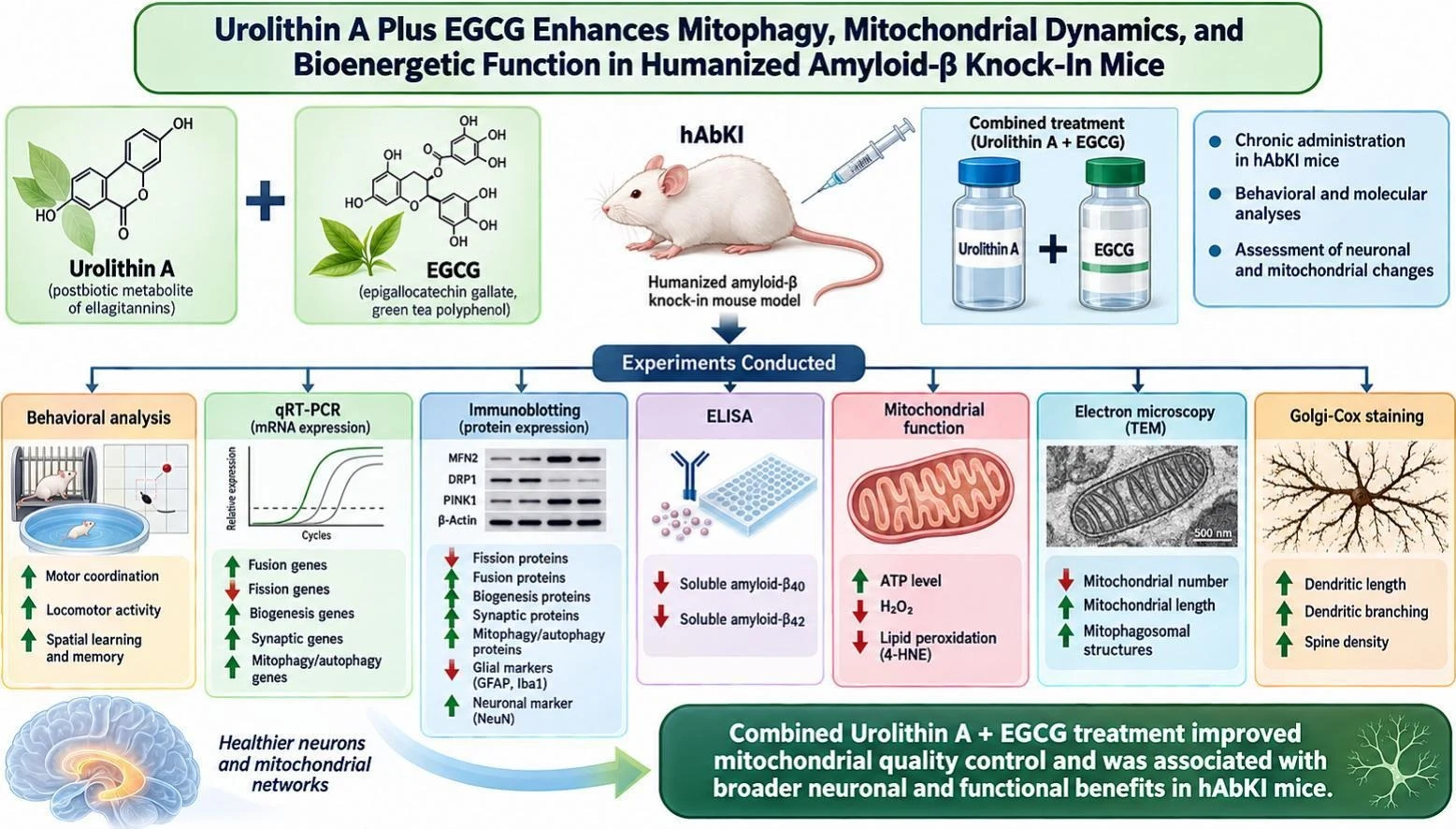
Humanized amyloid-β knock-in mice, engineered to carry a human version of a protein fragment linked to Alzheimer’s disease, received urolithin A alone or with epigallocatechin-3-gallate in an animal experiment. Starting at three months old, mice received abdominal injections three times weekly for four months. Doses were 2.5 milligrams per kilogram for urolithin A and 25 milligrams per kilogram for the second compound.
Both regimens increased markers associated with clearing mitochondria, the cell’s energy-producing structures, and gene activity associated with making them. Mitochondria were longer and less fragmented. Mitochondrial levels of ATP, a molecule that supplies cellular energy, increased. Both regimens were also associated with lower soluble amyloid-β levels and better performance on several behavioral tasks. Across multiple mitochondrial and neuronal measures, responses were greater with the combination.
Why it matters
Mitochondrial dysfunction and impaired mitochondrial quality control are implicated in Alzheimer’s disease, an age-related disorder. The work addresses whether these processes can be modified alongside disease-related changes in nerve cells and behavior.
Caveats
The marker measurements did not directly assess how quickly cells cleared mitochondria or how mitochondria used oxygen to produce energy. These mouse results do not establish benefits in people with Alzheimer’s disease.

Comments
Be the first to comment.